Apple Vision Lite Rumors: Price, Specs & Cut Features
Discover the latest Apple Vision Lite rumors. Learn about the expected price, release date, and which premium hardware features Apple might cut to make its spatial headset affordable.




 by Simo Naboussi
 A few decades ago, the concept of a fully immersive, 360-degree digital world belonged firmly in the realm of science fiction. Today, that world—Virtual Reality (VR)—is not merely a novelty for gamers; it is a profound, life-altering tool systematically dismantling old methodologies and forging new pathways in medicine.
The transition from abstract possibility to clinical reality has been astonishingly swift, establishing The Influence of Virtual Reality on Healthcare Innovation as one of the most exciting and critical narratives in modern science. This technology is not just an add-on; it’s a catalyst, fundamentally reshaping how medical professionals learn, how patients heal, and how we conceive of wellness in the 21st century.
The magic of VR in a clinical context lies in its ability to hijack the user’s sensory perception, offering a controlled escape or a critical training ground. By convincing the brain it is elsewhere, VR can manage pain, treat phobias, and provide an unparalleled level of detailed instruction. This deep dive will explore the multiple fronts where this revolution is taking hold, offering a comprehensive look at the technology, its implementation, and the monumental potential it holds for a better, more humane future in global health.
Perhaps the most immediate and least debatable area where The Influence of Virtual Reality on Healthcare Innovation is profound is in the training of the next generation of doctors and nurses. The traditional "see one, do one, teach one" model is inherently risky and relies heavily on available resources, such as donated cadavers or patient volume. VR simulations offer a safer, scalable, and statistically superior alternative.
Imagine a medical student practicing an intricate heart bypass surgery not once, but a hundred times, perfecting every suture and incision before ever touching a live patient. VR makes this possible. High-fidelity surgical simulators—often integrated with haptic feedback systems that allow the user to feel the texture and resistance of tissue—provide an environment of unparalleled realism.
These simulations are not mere video games; they track performance with granular detail, offering immediate and objective feedback on efficiency, accuracy, and decision-making under stress. This meticulous, data-driven practice is proven to shorten the learning curve for complex procedures, turning nervous novices into skilled practitioners far quicker than traditional methods allow.
The ability to rehearse rare, high-stakes scenarios—such as an unexpected arterial bleed or a complex tumor removal—without risk to a patient is a fundamental shift in patient safety protocol.
Beyond the OR, VR transforms the foundational study of human anatomy. Instead of memorizing flat textbook diagrams or observing static specimens, students can literally walk through a fully rendered, dynamic 3D human body. They can isolate organ systems, simulate the progression of a disease like metastatic cancer, or view the internal effects of a traumatic injury.
This spatial understanding is crucial for diagnostics, allowing future doctors to see the body not as a collection of parts, but as an interconnected, three-dimensional system. Furthermore, collaborative VR platforms enable medical teams from different specialties or even different continents to meet in a virtual emergency room to practice coordinated responses to a mass casualty event, ensuring seamless teamwork when real-world crises hit.
One of the most human-centered aspects of The Influence of Virtual Reality on Healthcare Innovation is its role in managing pain. For decades, the primary tool for severe or chronic pain has been pharmacological intervention, particularly opioids—a necessity that has simultaneously fueled a global crisis of addiction. VR offers a fascinating, drug-free alternative by exploiting a quirk of human cognitive function: the brain can only process a finite amount of information at any given time.
When a patient with severe burns is undergoing the excruciating process of wound dressing, or a child is having a painful bone marrow aspiration, a VR headset can effectively perform a cognitive 'magic trick.' By immersing the patient in a compelling, resource-intensive virtual environment—perhaps a serene underwater ocean or a whimsical arctic world—the brain's attentional resources are fully diverted away from the pain signals flooding the nervous system.
The result is not an elimination of pain, but a significant, measurable reduction in the subjective experience of pain intensity and distress. Studies consistently show that this "distraction therapy" can dramatically lessen the need for analgesic medication during painful procedures.
The power of this technique is multifaceted, relying on a few key mechanisms:
This method represents a critical step forward in addressing the chronic pain epidemic with a tool that is safe, repeatable, and tailored to the individual.
The ability of VR to create controlled, emotionally resonant environments makes it an unparalleled tool for treating a host of mental health conditions. For conditions rooted in avoidance and fear, The Influence of Virtual Reality on Healthcare Innovation provides a safe bridge back to real-world comfort.
Exposure therapy, the gold standard for treating phobias (like arachnophobia or claustrophobia) and anxiety disorders (including PTSD), requires carefully managed exposure to triggers. VR takes this process to a level of precision impossible in a physical setting. A therapist can instantaneously control the degree of exposure—the height of a virtual balcony, the number of virtual people in a crowd, or the suddenness of a trigger event.
This guarantees a safe, consistent, and fully customized therapeutic experience, preventing the patient from being overwhelmed while ensuring the exposure is meaningful. For veterans with PTSD, VR can recreate trauma-related environments, allowing them to process memories in a supportive, clinical setting, leading to significant, lasting relief.
Beyond formal therapy, VR is democratizing access to preventative mental wellness tools. Imagine a patient receiving chemotherapy who uses a VR application to meditate on a digital mountaintop or walk a peaceful forest path, effectively mitigating the stress and isolation of their treatment. This accessibility is key. VR can provide immediate stress reduction and emotional support, offering a scalable solution to the growing global mental health crisis, often delivered remotely and with a greater sense of presence than traditional video-conferencing allows.
The long, slow road of physical rehabilitation following a stroke, traumatic injury, or neurological event is often fraught with tedium and low adherence, yet repetition is the key to recovery. VR addresses this head-on by transforming necessary, repetitive exercises into engaging, goal-driven games. This concept of 'gamification' is a crucial driver in The Influence of Virtual Reality on Healthcare Innovation.
The benefits of VR in rehabilitation are numerous, largely due to its high level of engagement and data capture:
This allows for highly customized, data-informed therapy plans that evolve alongside the patient's progress, leading to faster and more comprehensive functional recovery.
While breakthroughs in surgery and therapy grab headlines, a less visible but equally important part of The Influence of Virtual Reality on Healthcare Innovation is the profound shift it brings to the patient experience. The hospital can be an intimidating, anxiety-inducing place; VR offers a soothing counter-narrative.
For children facing vaccinations or adults undergoing lengthy, monotonous treatments like dialysis, simple distraction through an immersive headset can drastically change their emotional state. In preoperative settings, VR can be used to deliver 'digital sedation,' calming patients and reducing the need for pharmaceutical interventions before surgery.
Furthermore, VR is becoming an excellent tool for medical education for the patient. Instead of reading a complex leaflet, a patient can take a virtual tour of their upcoming surgery or see an animated explanation of their disease within their own body, leading to better understanding, compliance, and reduced pre-procedure anxiety.
The journey to full integration is not without its speed bumps. Despite the exciting progress, a few critical challenges must be addressed for The Influence of Virtual Reality on Healthcare Innovation to become truly ubiquitous.
The primary hurdle involves costs and infrastructure. High-fidelity VR hardware remains a significant upfront investment, and specialized medical software requires ongoing maintenance and development. This creates an accessibility gap, potentially limiting its use in underserved communities. Secondly, rigorous clinical validation is essential. Unlike a game, a therapeutic VR application requires extensive, peer-reviewed clinical trials and clear regulatory approval to be accepted as a standard medical device.
Finally, there are crucial human factors: the risk of 'simulator sickness' (nausea or dizziness) for sensitive users, and the need for standardized hygiene protocols for shared equipment. Moving forward, the industry must focus on developing low-cost, clinically proven, and easily deployable solutions to ensure this revolutionary technology benefits everyone, not just those in wealthy, urban medical centers.
We stand at an inflection point. The once-clear line between the digital and the physical world is blurring, and medicine is better for it. The Influence of Virtual Reality on Healthcare Innovation has moved beyond theoretical potential and is now generating tangible results: safer surgeries, less reliance on addictive painkillers, more effective mental health interventions, and accelerated physical recovery. The technology represents a powerful convergence of human-centered design and cutting-edge engineering.
The future of medicine will not be solely defined by the next pharmaceutical compound; it will be increasingly defined by the immersive, data-rich environments of Virtual Reality. For healthcare systems seeking to improve quality while containing costs and tackling global crises like addiction and mental health scarcity, VR provides a scalable, repeatable, and deeply humane solution. The revolution is here, and the world of medicine is forever changed by the deep, compelling, and ultimately beneficial influence of Virtual Reality.
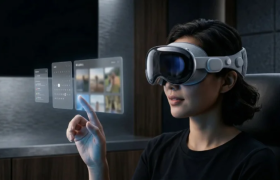 Mar 27, 2026
 Discover the latest Apple Vision Lite rumors. Learn about the expected price, release date, and which premium hardware features Apple might cut to make its spatial headset affordable.
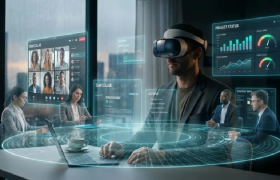 Mar 11, 2026
 Discover the best VR headsets for remote work and virtual meetings. Compare top mixed reality devices, explore spatial collaboration platforms, and optimize your home office for ultimate productivity.
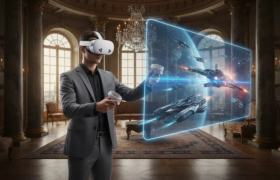 Feb 01, 2026
 Is the Meta Quest 3S the best budget VR headset? We test performance, mixed reality features, and compare it vs. Quest 2 and 3 to help you decide.