Apple Vision Lite Rumors: Price, Specs & Cut Features
Discover the latest Apple Vision Lite rumors. Learn about the expected price, release date, and which premium hardware features Apple might cut to make its spatial headset affordable.




 by Simo Naboussi
 The year 2025 marks a definitive inflection point in the trajectory of Virtual Reality (VR) gaming. We have transitioned from the era of "novelty" and "tech demos" into a period of mature, sustained ecosystems where the definition of a "game" is being fundamentally rewritten by the concept of presence. As an SEO content writer and subject-matter expert observing this landscape, it is evident that the user intent behind the search for "VR experiences" has shifted from curiosity about hardware to a demand for transformative, embodied realities. Users are no longer asking if VR works; they are asking where they can go, who they can become, and how deep the rabbit hole goes.
The market has bifurcated into two distinct but complementary streams: the accessible, standalone dominance of the Meta ecosystem, and the high-fidelity, enthusiast-driven frontier of PCVR and PSVR 2. This dichotomy drives the current software design philosophy, balancing the need for mass-market optimization with the artistic desire for photorealism and complex physics.
The hardware landscape in 2025 is defined by a strategic battle for the "mid-range" consumer. While enthusiast headsets push the boundaries of resolution and field of view (FOV), the mass market is being shaped by a calculated compromise between price and performance.
Meta’s dominance is anchored in a two-tier strategy that mirrors the smartphone market. The Meta Quest 3 stands as the premium standalone device, utilizing pancake lenses that offer edge-to-edge clarity and a slimmer form factor. In contrast, the newly released Meta Quest 3S (starting at ~$299) serves as the entry point, effectively replacing the Quest 2.
The distinction between these two devices is critical for developers and consumers alike, particularly regarding Mixed Reality (MR) experiences.
The Meta Quest 3 and Quest 3S target slightly different VR priorities, with notable differences affecting immersion, clarity, and mixed reality (MR) capabilities.
In optics, the Quest 3 uses pancake lenses, delivering superior clarity and text readability, while the Quest 3S relies on Fresnel lenses, which are more prone to glare and blur. Resolution per eye favors the Quest 3 at 2064 × 2208, providing sharper visuals and a more detailed experience, whereas the Quest 3S’s 1832 × 1920 resolution is less GPU-intensive but less crisp.
Passthrough cameras are similar in color fidelity (4MP), but the Quest 3 offers higher fidelity with less warping, enhancing MR applications. Depth sensing is another differentiator: the Quest 3 features a dedicated LiDAR-like sensor, enabling seamless room scanning and accurate spatial mapping, while the 3S depends on IR floodlights, requiring manual boundary setup.
Field of view also favors the Quest 3 (~110° horizontal) over the 3S (~96°), resulting in stronger peripheral immersion and a more expansive virtual environment.
Overall, the Quest 3 prioritizes visual fidelity, spatial awareness, and immersive MR, making it ideal for high-end VR experiences, while the Quest 3S provides a lighter, more accessible alternative with slightly reduced clarity and peripheral coverage.
Sony’s PlayStation VR 2 occupies a unique niche in 2025. It is technically a tethered headset, yet it competes directly with standalone devices for the "living room gamer" demographic. Its use of OLED panels (providing true blacks essential for horror titles like Alien: Rogue Incursion) and integrated eye-tracking sets it apart from the LCD-based Quest lineup. However, user sentiment indicates a friction point: the cable. In a world increasingly defined by wireless freedom, the "tether" breaks the immersion for users accustomed to 360-degree movement in games like Gorilla Tag or Blade & Sorcery.
The PCVR market, while niche, remains the testbed for the highest fidelity experiences. A significant trend in 2025 is the maturity of cloud VR streaming. Services like Vagon Streams allow users to run high-end VR applications on remote NVIDIA RTX servers and stream them to standalone headsets. This decouples visual fidelity from local hardware, potentially solving the mobile chipset bottleneck, provided the user has a robust 5G or Wi-Fi 6E connection.
The term "VR experience" often conflates passive 360-degree video with interactive gaming. However, in 2025, the most successful titles are those that leverage embodied interaction—mechanics that require physical, manual dexterity that mimics real-world logic.
One of the most contentious and defining aspects of VR shooter design is the reload mechanic. This single interaction encapsulates the broader tension between realism ("fumblecore") and power fantasy.
The Simulation School:
Games like Into the Radius 2, Ghosts of Tabor, and H3VR (Hot Dogs, Horseshoes & Hand Grenades) treat weapons as mechanical devices, not just UI elements.
The Arcade School:
Conversely, fast-paced arena shooters like Hyper Dash or Population: One simplify these interactions to maintain flow.
A persistent challenge in VR is the lack of physical resistance. A virtual sword may look like a 5lb broadsword, but the controller weighs only a few ounces.
Physics-Driven (The Blade & Sorcery Model):
Blade & Sorcery remains the benchmark for physics-based melee. It utilizes a "spring/damper" system where the in-game weapon lags slightly behind the player's real hand movements to simulate mass and inertia. If a player swings too fast, the virtual weapon "drags," forcing the player to swing with deliberate, wide arcs rather than localized wrist waggles. This creates a psychological illusion of weight.
Gesture-Driven (The Batman Model):
Batman: Arkham Shadow adopts a different approach. Rather than simulating ragdoll physics, it uses a "rhythmic gesture" system. Combat is dictated by prompts that require the player to punch in specific directions or perform timed counters. This aligns with the "Freeflow" combat of the flat-screen Arkham games. It sacrifices physics simulation for cinematic consistency, ensuring that every punch connects with the intended "crunch" sound and visual impact, avoiding the "flailing" often seen in physics brawlers.
Motion sickness (visuo-vestibular conflict) remains a barrier for roughly 30-40% of users. In 2025, developers have standardized several mitigation techniques:
The software library of 2025 proves that VR can support AAA narratives and complex mechanics, moving beyond the "tech demo" phase.
Exclusive to the Meta Quest 3/3S, Batman: Arkham Shadow by Camouflaj is arguably the most significant release of the year. It successfully translates the third-person Arkham formula into a first-person VR experience.
Alien: Rogue Incursion is the first VR-native mainline Alien game. It leverages the medium to create a distinct form of horror based on presence and audio spatialization.
From Fireproof Games (creators of The Room), Ghost Town is a masterclass in tactile puzzle design.
Laser Dance represents the vanguard of "spatial gaming." It turns the player's living room into a laser-filled obstacle course.
In 2025, immersion is no longer solely about what you see; it is about what you feel and how the system understands your body.
Standard controller vibration is being superseded by high-definition haptics and wearable tech.
A groundbreaking development in 2025 is the public testing of EMG (Electromyography) Wristbands, exemplified by Meta's Orion project.
Eye-tracking technology, standard in the PSVR 2 and Quest Pro, serves two functions:
VR is unique in its ability to induce the Proteus Effect, a psychological phenomenon where a user’s behavior and attitudes shift to align with the characteristics of their avatar.
Research conducted in 2024 and 2025 confirms that the visual representation of the self in VR has tangible cognitive effects.
VR is the only medium capable of reliably triggering "awe"—the emotional response to vastness.
Scale: Experiences like Red Matter 2 (viewing Saturn) or Space Engine utilize stereoscopic depth to convey true scale. Users report feelings of insignificance and "cosmic connection" similar to the "Overview Effect" reported by astronauts. This emotional resonance is a key driver of retention in non-combat VR experiences.
Long-term VR use can lead to temporary dissociative symptoms upon returning to the real world (derealization). Users report a sensation of "unreality" or "floating" after extended sessions. However, studies suggest these effects are transient and not clinically significant for healthy individuals. The "re-entry" process is becoming a design consideration, with apps now including "cooldown" phases to transition users back to reality gently.
By 2025, platforms like VRChat have matured into complex digital societies. They are no longer just chat rooms; they are economies, creative canvases, and emotional refuges.
A fascinating development in VRChat culture is the prevalence of "phantom sense"—the psychological sensation of feeling touch when one's avatar is touched, despite no haptic feedback. This is a form of synesthesia induced by high immersion and social intimacy. It drives a subculture of "cuddle puddles" and virtual intimacy that fulfills a genuine human need for connection, particularly for those who are socially isolated in the physical world.
VRChat allows for radical identity experimentation. Users can inhabit bodies that defy physics or biology (e.g., a cloud of particles, a gryphon, a stylized anime character). This flexibility provides a therapeutic outlet for gender exploration (trans users testing pronouns/presentation) and allows individuals with physical disabilities to interact without stigma. The community has developed its own sign languages and non-verbal norms adapted to VR controllers.
With growth comes the challenge of moderation. In late 2025, VRChat implemented enhanced Content Gating and Age Verification to segregate adult spaces from general public areas. This move was a response to the "eternal September" of new, younger users flooding the platform. The tension between "free expression" (creative avatars) and "safety" (harassment prevention) remains the central political conflict of the metaverse.
VR fitness has transcended its niche to become a primary use case. It is arguably the most successful application of "gamification" in the health sector.
Narratives of significant weight loss are common. Users like "Sarah M." and "Michael Crider" report losing 30-100 lbs through consistent VR gaming. The key mechanism is distraction: the immersion of the game (e.g., slicing blocks in Beat Saber, boxing in Les Mills Bodycombat) occupies the brain's attentional resources, preventing the conscious processing of fatigue and pain.
Data from 2025 fitness trackers indicates that high-intensity VR games burn calories at rates competitive with traditional gym activities:
As we look beyond 2025, the trajectory of VR is clear: the hardware will disappear.
The ultimate goal, as signaled by Meta’s Orion and the Neural Wristbands, is to remove the controller entirely. The interface will become an extension of the nervous system. We will move from "learning controls" to "intending actions." This shift from explicit input (buttons) to implicit input (neural signals/gaze) will lower the barrier to entry to near zero.
The pending launch of Android XR in 2026 promises to unify the fragmented headset market (Samsung, Google, and others) under a single OS, similar to how Android unified smartphones. This will likely spark a hardware explosion, as manufacturers can focus on form factor while Google handles the software ecosystem.
The distinction between "standalone" and "PCVR" will blur as 6G and edge computing make cloud streaming indistinguishable from local rendering. The "console" will be the cloud; the headset will merely be the display.
In 2025, Virtual Reality has successfully shed its "gimmick" status. It is a medium that offers experiences found nowhere else: the terror of being hunted by a Xenomorph in your own living room, the awe of standing on Saturn’s rings, the intimacy of a phantom touch in a digital social club, and the physical triumph of a workout disguised as a dance battle. The hardware has reached the "good enough" threshold for the masses with the Quest 3S, while the software has reached the "sublime" threshold with titles like Batman: Arkham Shadow. We are no longer watching the screen; we are stepping through it.
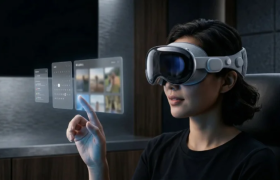 Mar 27, 2026
 Discover the latest Apple Vision Lite rumors. Learn about the expected price, release date, and which premium hardware features Apple might cut to make its spatial headset affordable.
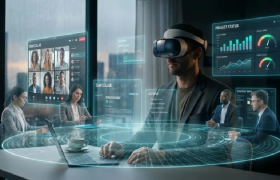 Mar 11, 2026
 Discover the best VR headsets for remote work and virtual meetings. Compare top mixed reality devices, explore spatial collaboration platforms, and optimize your home office for ultimate productivity.
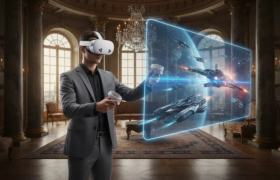 Feb 01, 2026
 Is the Meta Quest 3S the best budget VR headset? We test performance, mixed reality features, and compare it vs. Quest 2 and 3 to help you decide.