


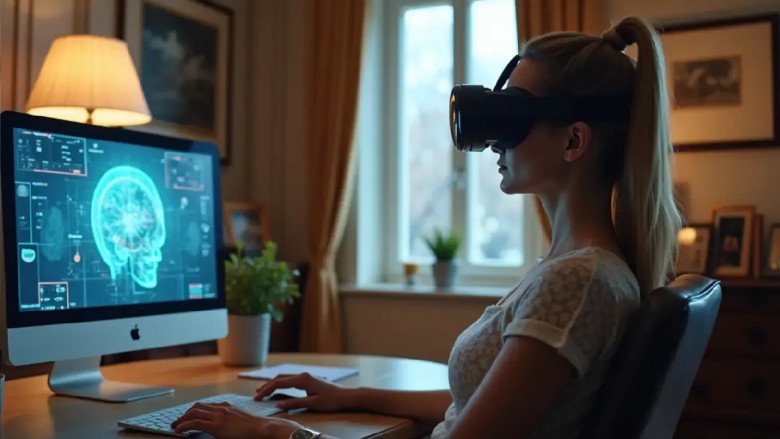
Imagine slipping on a headset and instantly standing on the surface of Mars, or perhaps inside a human heart performing surgery. This isn't just a scene from a futuristic movie anymore; it’s the palpable, exhilarating reality of Virtual Reality (VR). For too long, our digital interactions have been confined to flat screens—a window into another world.
But Virtual Reality shatters that window, compelling us to step directly into the experience. It’s more than just advanced technology; it's a fundamentally new way for human beings to communicate, learn, and explore, transforming abstract data into lived experience. The true genius of Virtual Reality lies in its ability to hijack our senses so completely that our minds genuinely accept the digital environment as our present reality.
This comprehensive article is designed not just to inform, but to genuinely excite you about the world of Virtual Reality. We will take a deep, human-centric dive into the concepts of presence and immersion, meticulously dissect the components that make these worlds believable, and reveal the incredible, life-changing ways Virtual Reality is being deployed far beyond the gaming room. Get ready to have your understanding of reality—and technology—rewritten.
Beyond the Screen: Understanding True Immersion and Presence
When you first try a high-quality Virtual Reality experience, the difference is immediate and profound. It’s not about watching a 3D movie; it's about suddenly feeling like you are there. This sensation is the holy grail of VR development, encapsulated by the twin pillars of Immersion and Presence.
1. The Mechanics of Immersion: Tricking the Brain's Input
Immersion is essentially the technical quality of the system—how completely it can isolate and replace all your sensory inputs. Think of it as sensory deprivation from the real world, replaced by a perfect digital feed. To achieve this, a modern Virtual Reality system must be excellent in several areas:
-
- The Visual Feast: Two independent displays (one for each eye) are required, offering a stereoscopic image that convincingly generates depth. Crucially, the Field of View (FOV) must be wide enough to mimic human peripheral vision, preventing the sensation of looking through binoculars.
- The Sound of Reality: Spatial audio is non-negotiable. If a sound originates from the virtual entity behind you, you must perceive it coming from behind you. This auditory realism is vital because sound contributes significantly to the brain’s perception of space and danger.
- The Feeling of Freedom (Tracking): The system must track your body's movements—specifically your head and hands—in six dimensions (Six Degrees of Freedom, or 6DOF). This means you can walk around, duck, lean over, and manipulate objects. When this tracking is instantaneous, the connection between mind and virtual body is seamless, which is the exact moment immersion takes hold.
2. The Psychological Leap: Why Presence Truly Matters
If immersion is the objective checklist, Presence is the subjective, psychological experience. Presence is the moment your cognitive mind stops thinking, "I am a person wearing a VR headset," and starts believing, "I am standing on the edge of this virtual cliff."
This psychological shift is why Virtual Reality is so powerful. When presence is achieved, training simulations feel real, therapy sessions are more effective, and a virtual meeting feels more like being in the same room. It’s the sensation that gives VR its incredible utility—you don’t just watch; you feel the consequences and the environment.
The Engine of Illusion: How Virtual Reality Hardware Works
To deliver that feeling of presence, VR hardware has evolved into a masterpiece of engineering. The secret is not just raw processing power, but a highly optimized interaction between displays, optics, and tracking systems. It is a technological ballet where milliseconds matter more than megapixels.
1. Inside the Headset: Displays and Optics
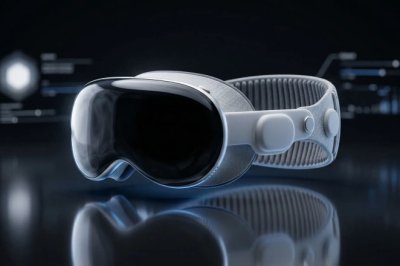
The Head-Mounted Display (HMD) is the heart of the Virtual Reality system. Early HMDs suffered from what was called the 'screen-door effect' due to low-resolution displays.
Today, manufacturers have overcome this with super high-density OLED and LCD panels, coupled with blazing-fast refresh rates (up to 120Hz). This is critical because latency—the delay between movement and image update—must be kept under a tiny 20 milliseconds to prevent motion sickness.
To achieve a wide field of view, the system utilizes complex lenses, often Fresnel or the newer, thinner Pancake lenses, to manipulate the light from the close-up screens, making the virtual world appear vast and distant.
2. The Invisible Infrastructure: 6DOF and Predictive Tracking
Modern, standalone Virtual Reality headsets largely rely on "inside-out" tracking. This means cameras built into the headset look outward, map the physical room, and track the position of the controller with incredible precision. This is a monumental computational task. To maintain comfort, sophisticated algorithms are employed to predict where the user's head will be a few milliseconds in the future.
By rendering the image for that predicted position, the system effectively cancels out much of the processing lag, keeping the experience smooth and eliminating the nauseating disconnect that plagued older VR systems. This seamless tracking is what allows you to truly forget the outside world.
VR's Global Impact: Applications That Define Our Future
To reduce Virtual Reality to a simple gaming accessory is to miss the staggering impact it is having across industries. The ability to safely simulate the expensive, dangerous, or impossible makes VR an indispensable tool for human advancement.
1. Revolutionizing Healthcare and Mental Wellness
In medicine, Virtual Reality is saving lives and transforming care. Surgeons use realistic VR simulators to practice rare or high-risk procedures countless times before touching a patient, dramatically reducing errors. But perhaps the most moving application is in mental health and rehabilitation. VR is successfully being used for:
-
- Exposure Therapy: Patients with severe phobias (like fear of heights or public speaking) can be safely and incrementally exposed to their fears in a controlled virtual setting, allowing them to process anxiety with the therapist present.
- Pain Management: In a compelling display of the mind's power, VR distraction therapy (e.g., placing the patient in a calm, snowy environment) is used to trick the brain into ignoring intense pain signals during wound care or chemotherapy.
- Physical Rehabilitation: Stroke victims and patients with mobility issues engage in gamified VR exercises, making tedious physical therapy engaging and fun, thus encouraging repetition and better recovery outcomes.
2. A New Paradigm for Enterprise and Professional Training
From the factory floor to the corporate boardroom, Virtual Reality is streamlining business processes. For multinational companies, VR offers an opportunity to bring remote teams into a shared, digital workspace for collaboration that feels more natural than a video call. In professional training, the economic benefits are huge. Instead of flying technicians to a massive, expensive oil rig for training, or putting new hires in a dangerous environment, companies can provide realistic, repeatable, and scalable VR simulations for tasks such as:
Fire and safety drills, complex machinery maintenance, architectural walkthroughs for clients, and crisis response training. The ability to make mistakes without real-world consequences is an invaluable teaching tool that traditional methods simply cannot replicate.
The Next Level: What Does the Future of Virtual Reality Look Like?
If you feel impressed by today’s Virtual Reality, the technology on the near horizon is nothing short of science fiction coming to life. The focus is now shifting from simply displaying a world to making that world genuinely feel real.
1. Shattering the Barriers: From Headsets to Glasses
The most crucial trend is the move toward lighter, thinner, and ultimately more aesthetic hardware. We are seeing major leaps in optical technology (Pancake lenses) that drastically shrink the distance between the screen and the eye, allowing headsets to become smaller and lighter.
Furthermore, the integration of eye-tracking is paramount. Not only does it allow for more intuitive social interactions in VR by letting avatars make eye contact, but it also enables a crucial rendering technique called foveated rendering.
This only renders the small area the user is currently looking at in high resolution, leaving the peripheral vision slightly less detailed, which saves massive amounts of processing power and allows for higher overall graphics quality on lighter devices.
2. Navigating the Ethical Depth of a New Reality
As Virtual Reality becomes more realistic and integrated into daily life, we must grapple with profound ethical questions. The deep immersion raises concerns about data privacy—what happens when systems track not just where you look, but your pupil dilation and emotional reactions?
Furthermore, the potential for digital addiction, the psychological impact of prolonged immersion, and the need for standardized safety protocols in the virtual space are real-world challenges that developers, educators, and governments must address immediately to ensure that the Virtual Reality revolution is a net positive for humanity.
A Final Reflection: The Human-Centric Future of VR
We stand at a critical inflection point. Virtual Reality is no longer a futuristic novelty; it is a foundational technology poised to reshape how we interact with information and with each other. From offering transformative therapeutic experiences to revolutionizing how complex, global work is done, Virtual Reality is the ultimate tool for experiential learning and digital presence.
The industry is rapidly moving past the initial challenges of bulky hardware and high cost, making the promise of truly immersive, life-altering digital worlds an imminent reality for everyone.
For any forward-thinking individual or enterprise, understanding and integrating the power of Virtual Reality is no longer optional—it is the key to unlocking the next major chapter in human-digital interaction. The future is here, and it’s asking you to step inside.
Extended Reality Revolution What You Must Know
You may also like
-

How to Optimize Your Website for Google SGE & Win AI Search
-
The Engineering Secrets Behind Ancient Megastructures
-
OpenAI Sora vs Midjourney v6: Best AI Tools for Marketers
-
Midjourney v6: The Complete Guide to Advanced Prompts & Photorealism
-
The Rise and Fall of OpenAI Sora: What Happened to the Video AI Giant?
-
Apple Watch Series 11 Review: Is It Worth the Upgrade?













Comments
0 comment