Multimodal AI Models: The Next Big Leap in Tech
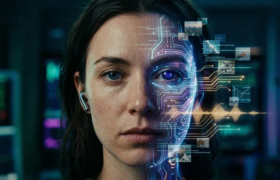
Discover how multimodal AI models are transforming the future of tech. Learn how AI systems that simultaneously process text, images, and audio are revolutionizing global industries.




 by Simo Naboussi
 There has never been a more exhilarating time to discuss the Future of Robots. What was once confined to the pages of speculative fiction or the silver screen is now an unstoppable, accelerating reality. We are witnessing the most significant technological paradigm shift since the internet: the true integration of intelligent machines into the fabric of daily life, transforming everything from how we build a car to how a patient receives medical care.This transformation is not a distant possibility; it is unfolding right now, powered by breakthroughs in Artificial Intelligence (AI), deep learning, and advanced sensor fusion. For businesses, policymakers, and anyone seeking to navigate the coming decades, understanding the trajectory of the Future of Robots is not optional—it is critical.
This comprehensive article will dive deep into the specific technologies fueling this revolution, examine the sectors experiencing the most profound changes, and, crucially, address the complex ethical and societal questions that must be answered as we welcome our new mechanical partners. Prepare to explore the frontier where human ingenuity and machine capability merge, setting the stage for an unprecedented era of productivity and discovery. The Future of Robots is already here, and it is exponentially more powerful than we imagine.
The latest generation of robotics is defined by a fundamental shift away from simple, linear programming towards genuine autonomy. This leap is underpinned by the staggering power of AI. Modern robots are no longer just tools; they are complex systems capable of perceiving highly unstructured environments, learning from experience, and making nuanced, real-time decisions. This adaptive intelligence is the core engine driving the potential of the Future of Robots.
Furthermore, the physical hardware is catching up to the software. Enhanced battery life, lighter composite materials, and micro-actuators are enabling robots to be more mobile, agile, and energy-efficient. A major, often-overlooked advancement is the evolution of haptic and visual sensor arrays.
These systems allow machines to 'feel' and 'see' the world with clarity surpassing human capability in many conditions, enabling tasks that demand extreme delicacy, like handling fragile objects or performing micro-surgery. It is this marriage of powerful computational intelligence with incredibly sensitive hardware that is unlocking the next level of robotic application.
If the old era of robotics was defined by isolation—machines caged off for safety—the new era is defined by collaboration. Collaborative Robots, or 'Cobots,' are the workhorses of the modern factory. Designed with integrated torque-and-force sensors, they stop instantly when they detect human contact, making them safe to share a workspace with.
This innovation has been transformative for Small to Medium-sized Enterprises (SMEs), allowing them to automate tedious tasks like packaging, quality inspection, and machine tending without the need for costly, large-scale industrial overhauls.
Cobots are inherently flexible, often being trained through simple demonstration, which lowers the barrier to entry for automation and drastically reshapes how labor is utilized, focusing human staff on higher-value activities. The true promise of the Future of Robots in manufacturing lies in this synergy between human judgment and robotic endurance.
In parallel, the field of Soft Robotics is opening doors into realms previously inaccessible to rigid machinery. Built from elastic polymers and non-traditional materials, these robots can squeeze into tight spaces, grip irregular and fragile objects without damage, and mimic biological movement.
Imagine a rescue robot that can silently snake through rubble or a medical device that conforms perfectly to the complex, delicate curves of the human digestive tract. Soft robotics, by prioritizing compliance and flexibility, is rapidly expanding the practical, everyday applications for the Future of Robots, particularly in challenging environments like agriculture, deep-sea exploration, and consumer services.
No industry is immune to the transformational power of intelligent machines. The deployment of advanced robotics is fundamentally rewriting the economics and operational procedures of global commerce. These machines are not just performing tasks faster; they are performing them with a level of precision and consistency that redefines "quality." The sheer financial returns from error reduction, speed, and 24/7 operational capability are compelling companies to invest heavily in the Future of Robots.
Healthcare is one of the most exciting and ethically crucial areas for robotic growth. The convergence of AI and robotics offers the promise of hyper-personalized, ultra-precise medical interventions that were once impossible. Surgical robots are now miniature, capable of performing procedures through a few small incisions, minimizing trauma and recovery time. Beyond the operating table, robots are taking on critical support roles, ensuring the highest standards of safety and efficiency. The key areas of impact include:
The manufacturing floor has been irrevocably changed by the Future of Robots. We have moved far beyond simple, repeated movements. Today's industrial robots perform complex, delicate assembly, intricate welding, and high-speed quality assurance. The adoption of the 'Digital Twin' concept, where a virtual robot mirrors the physical one, allows for predictive maintenance and immediate process adjustments, pushing defect rates towards zero. This is the essence of Industry 4.0: a highly networked, flexible, and intelligent manufacturing ecosystem.
In logistics, the challenges posed by global e-commerce volumes are insurmountable without robotics. Vast fulfillment centers are now defined by choreographed fleets of Autonomous Mobile Robots (AMRs) that bring shelving units directly to human 'pickers' or handle the entire sorting process from start to finish. This high-density, high-speed automation cuts down processing time from hours to minutes. Furthermore, the Future of Robots includes autonomous delivery vehicles and advanced drone technology, promising to solve the notorious "last-mile" delivery problem, making the supply chain faster, cheaper, and astonishingly resilient to disruption.
The exhilarating pace of technological development brings with it crucial societal responsibilities. The introduction of highly capable, intelligent machines into human environments forces us to reckon with profound questions about the nature of work, privacy, and accountability. Ignoring these issues would be irresponsible; facing them head-on is the only way to ensure the Future of Robots benefits all of humanity.
The discussion around job displacement is often overly simplistic and alarmist. History shows that major technological shifts automate routine tasks, yes, but they simultaneously create entirely new categories of employment that demand skills unique to humans. The Future of Robots will not eliminate work; it will transform it. New jobs are emerging in robotics maintenance, data science, human-robot interaction (HRI) design, and AI ethics.
The most critical challenge is the "skills gap." Governments and corporations must prioritize accessible, continuous reskilling and upskilling programs to move workers from tasks that are easily automated to roles that require creativity, critical thinking, emotional intelligence, and complex communication. The future value of human labor will be found in areas where empathy, abstract thought, and nuanced judgment remain irreplaceable.
As robots become autonomous and make complex decisions in public and private spaces, the question of accountability becomes paramount. If an AI-driven autonomous vehicle causes an accident, is the fault with the programmer, the manufacturer, or the system itself? Clear, internationally standardized liability laws are desperately needed. Equally important is the issue of privacy.
Robots in our homes and hospitals, equipped with advanced sensors, are constantly gathering data. Without robust, transparent, and legally binding frameworks, the pervasive nature of these intelligent systems could lead to unprecedented levels of surveillance. The successful integration of the Future of Robots hinges on addressing these moral complexities:
Looking further into the Future of Robots, we see concepts that move beyond current, defined applications. Research is accelerating into bio-hybrid robotics—machines seamlessly integrated with organic systems—and microscopic nanobots, which could be deployed inside the human body for targeted drug delivery or cell repair.
Another groundbreaking area is 'swarm robotics,' where large collectives of simple, inexpensive robots work together like an ant colony to achieve complex tasks, such as massive infrastructure inspections or environmental disaster cleanup. This level of coordinated, emergent intelligence promises solutions to global-scale problems that are currently beyond our reach.
Ultimately, the success of the Future of Robots will be measured by its contribution to human flourishing. The goal is not just to replace labor, but to eliminate drudgery and danger, freeing human minds to focus on creativity, exploration, and the uniquely human pursuit of meaning. The trajectory is set; the machines are getting smarter, and the human responsibility to guide their development ethically has never been greater.
We have meticulously dissected the landscape of the Future of Robots, tracing its evolution from foundational AI breakthroughs and the rise of Cobots to its profound impact on global healthcare and logistics. The evidence is undeniable: we are entering an era of intelligent machines that will redefine industry, medicine, and society itself. This journey is characterized by breathtaking technical achievement, yet it is simultaneously grounded by critical ethical responsibilities concerning workforce readiness, data privacy, and moral governance.
The time for passive observation is over. The Future of Robots is a blueprint for a more efficient, safer, and more capable world, but its construction requires proactive human engagement. By fostering a culture of continuous learning, prioritizing ethical AI development, and embracing the collaborative potential of intelligent machines, we can successfully transition into the mechanical tomorrow. The greatest revolution is not the building of better robots, but the building of a better human-robot partnership. This is the enduring legacy we must secure.
 Mar 21, 2026
 Discover how multimodal AI models are transforming the future of tech. Learn how AI systems that simultaneously process text, images, and audio are revolutionizing global industries.
 Feb 27, 2026
 Struggling with creative block? Discover how AI assistants accelerate idea generation, expand your thinking, and transform the way you innovate. Master the art of human-AI collaboration today.
 Jan 28, 2026
 Stop paying for ChatGPT Plus! Discover 5 free AI tools in 2026 that offer better coding, deeper research, and 10M token context windows. Tested by experts.