

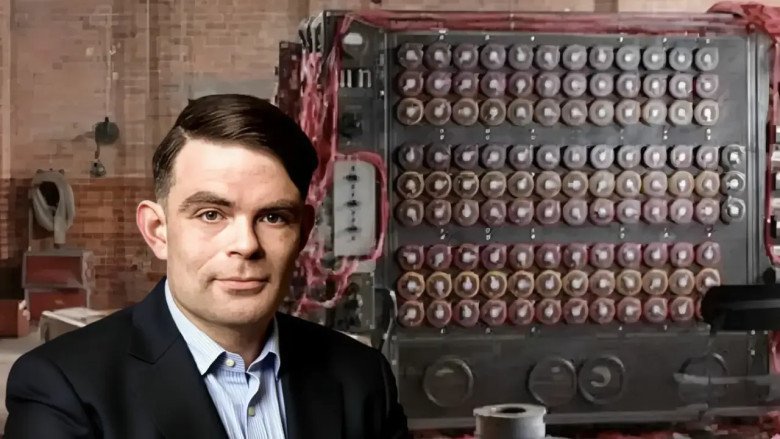
For every developer, engineer, and theoretical physicist, understanding this machine is mandatory. It is the ultimate benchmark against which the power of all algorithms and computing systems is measured. This deep-dive exploration will reveal the elegant structure of the Turing Machine, its profound legacy, and the unsettling truth it exposed about the non-computable world, ensuring you gain a foundational mastery of digital logic.
The Historical Necessity: Answering the Decision Problem
The motivation behind the Turing Machine was rooted not in engineering but in a massive philosophical crisis in mathematics. David Hilbert’s famous Entscheidungsproblem, or "Decision Problem," asked if a general, mechanical procedure could determine the truth or falsity of any given mathematical statement. This was a challenge to the very foundation of mathematical certainty.
Turing addressed this challenge by first having to formalize the concept of a "mechanical procedure." He sought to model the actions of a human "computer" performing calculations—a person following a clear, finite set of rules with a piece of paper and a pencil.
By simplifying this human process to its most fundamental, mechanical steps—reading a symbol, changing a state, writing a symbol, and moving—Turing arrived at his abstract machine.
His resulting paper proved that no such general algorithm could exist, thereby definitively solving the Entscheidungsproblem and simultaneously establishing the formal basis of computation. This single abstract device, the Turing Machine, became the defining model for any and all algorithms.
The Architecture of Abstraction: Components of the Turing Machine
The sheer power of the Turing Machine lies in the elegant simplicity of its design. It operates on five core, interlinked components, which collectively possess the ability to simulate any conceivable algorithm. Understanding these parts is essential to grasping the universal nature of the machine.
1. The Infinite Tape: The Machine's Memory Core
Conceptually, the tape is the memory of the Turing Machine. It is an infinitely long strip, divided into discrete cells, where each cell holds a single symbol from a finite alphabet (which includes a special blank symbol).
The infinity of the tape is a critical theoretical point: it signifies that the machine's memory capacity is unlimited, ensuring that the machine is only constrained by time, not by storage space.
The initial problem data (input) is written on a portion of this tape, and the machine performs its calculations by reading and manipulating the symbols contained within these cells.
2. The Read/Write Head: The Executor of Instructions
The head is the active part of the Turing Machine, positioned over a single cell on the tape at any moment. It is responsible for all interaction with the tape. The head performs two basic operations: it reads the symbol in the cell it occupies, and based on that symbol and the machine's current internal state, it can write a new symbol, replacing the old one.
After this operation, the head is instructed to move exactly one cell, either to the Left (L) or to the Right (R). This sequential, discrete motion is the mechanism by which the machine navigates its memory and performs computation.
3. The Transition Function: The Engine's Finite Logic
The transition function, often called the "program" or "rule set," is the brain of the Turing Machine. It is a finite table of instructions that dictates the machine's behavior at every single step. Critically, the machine's next action is only determined by two factors: its current internal state and the symbol it reads from the tape. This finite set of rules, when combined with the infinite tape, grants the machine its universal power.
Each instruction in the table specifies a precise action and transition:
-
- The symbol to write: What new symbol replaces the one just read.
- The direction to move: Whether the head moves Left, Right, or remains stationary.
- The next state: The machine's new internal state after the operation is complete.
The machine cycles through these instructions relentlessly until it reaches a designated halt state, or, in some cases, never stops at all. The entire complexity of an algorithm is boiled down to this elegant, finite set of rules driving the interaction between the head and the tape.
The Church-Turing Thesis: Universal Power and Equivalence
The cornerstone of the Turing Machine’s legacy is the Church-Turing Thesis. This assertion, independently proposed by Turing and logician Alonzo Church, is not a theorem that can be proven, but a universally accepted hypothesis that underpins all of computer science. It boldly states that any function that can be computed by an algorithm—any mechanical, step-by-step procedure—can be computed by a Turing Machine.
Every computational model developed since 1936—from the lambda calculus to modern Python or Java—has been shown to be equivalent to a Turing Machine in terms of computational power. They can compute the same set of functions. This means the Turing Machine is the gold standard; it represents the maximum theoretical power of any classical digital computer.
✅ The Universal Turing Machine (UTM)
Turing's most breathtaking insight was the demonstration that a single, specially constructed Turing Machine could simulate the behavior of any other Turing Machine. This machine, the Universal Turing Machine (UTM), takes two inputs on its tape: a description of the target machine's rule set (its program) and the input data for that program.
The UTM then mimics the target machine's steps precisely. This is the theoretical ancestor of the modern stored-program computer, where software (the rules) and data are both stored in the same memory—a concept now known as the von Neumann architecture.
The UTM is, essentially, the theoretical model for a compiler and an operating system combined, proving that one machine can be built to run all possible programs.
The Undecidable Barrier: The Halting Problem's Immutable Law
The Turing Machine not only defined the limits of computation but also revealed what lies beyond them. The most famous example of this boundary is the Halting Problem. This question asks: Is there an algorithm that can take any arbitrary program (a Turing Machine) and its input, and unfailingly determine whether that program will eventually halt (finish) or run forever (loop infinitely)?
Turing’s ingenious diagonalization proof showed, definitively, that the Halting Problem is undecidable. No general Turing Machine, no matter how clever or complex, can be constructed to solve this problem for all possible program-input pairs. The implications of this are not just academic; they are profound for practical computer science. For example, it confirms that:
-
- Software Reliability: There is no single, perfect bug-checker that can universally guarantee a program will never crash or enter an infinite loop.
- Computational Limits: It proves that there are mathematically well-defined problems that are fundamentally non-computable by any classical machine.
- Foundation of Complexity: It separates the world of decidable problems (those a Turing Machine can solve) from undecidable ones, forming the basis of computability theory.
From Thought Experiment to the Modern Computational Era
While modern computers are structurally different from the conceptual Turing Machine—relying on Random Access Memory (RAM) instead of a single, slow sequential tape—its conceptual power remains paramount. Its direct legacy is the term Turing Completeness.
A programming language, a set of instructions, or an entire computational environment is called Turing Complete if it has the power to simulate a Universal Turing Machine. This term is the ultimate measure of computational power.
If a system is Turing Complete, it can theoretically run any program that any other computer in the world can run, given sufficient time and memory. This is why languages like Python, C++, and even complex spreadsheet programs are considered Turing Complete, establishing their equivalence to the original, simple model.
The framework established by the Turing Machine has a permanent place in the curriculum of computer science. It teaches us to abstract, to simplify a complex process into its mechanical steps, and to rigorously define the boundary between the possible and the impossible.
The lessons of the Turing Machine continue to guide the design of new programming paradigms and theoretical research into everything from parallel computing to the search for faster, but not necessarily more powerful, algorithms.
Conclusion: The Undeniable Power and Enduring Relevance of the Turing Machine
This single abstract model gave birth to the Universal Turing Machine, the blueprint for our entire modern technological infrastructure.For those building the future—whether designing complex software or theorizing about artificial intelligence—the Turing Machine remains the vital reference point.
It guarantees that any new technology, from quantum computing concepts to advanced AI models, must still be measured against its standard of Turing Completeness. Its enduring power is a testament to Turing's genius, ensuring that the discussion around the ultimate limits and possibilities of computation will forever begin and end with the elegant, simple concept of the Turing Machine.
You may also like
-

How to Optimize Your Website for Google SGE & Win AI Search
-
The Engineering Secrets Behind Ancient Megastructures
-
OpenAI Sora vs Midjourney v6: Best AI Tools for Marketers
-
Midjourney v6: The Complete Guide to Advanced Prompts & Photorealism
-
The Rise and Fall of OpenAI Sora: What Happened to the Video AI Giant?
-
Apple Watch Series 11 Review: Is It Worth the Upgrade?



















Comments
0 comment