Imagine a world without power—no lights, no internet, no global trade. This thought experiment quickly reveals an inescapable truth: human civilization, as we know it, is entirely dependent on a complex, constantly evolving ecosystem of Energy Resources.
These resources are not merely commodities; they are the lifeblood of our economies, the engine of our progress, and the central piece in the puzzle of climate change.
This detailed guide cuts through the noise, offering an in-depth, human-centric look at the full spectrum of global Energy Resources—the ones that built our present and the revolutionary ones that will define our future. Prepare for a deep dive that is both educational and deeply compelling.
The Foundational Divide: Categorizing Global Energy Sources
Before we can truly understand the global energy market, we must first establish the fundamental framework used to classify all sources of power. This division is more than just academic; it dictates national policy, investment strategy, and our planet’s environmental trajectory. The world of Energy Resources is neatly categorized into two main groups, each with its own set of merits, limitations, and profound environmental implications.
1. Non-Renewable: The Legacy Energy Resources
These are the fuels that powered the Industrial Revolution and defined the 20th century. Non-renewable Energy Resources are those that are consumed at a rate far exceeding their geological replenishment, meaning their supply is inherently fixed and finite.
They include the classic fossil fuels—coal, oil, and natural gas—as well as nuclear power (due to the finite nature of uranium). While they offer high energy density and have established, robust supply chains, their reliance is a ticking clock, creating market volatility and, more critically, fueling the climate crisis due to massive carbon emissions.
The economic and geopolitical history of the last 100 years has been largely written by the scarcity and distribution of these crucial, yet limited, Energy Resources.
2. Renewable: The Sustainable Future of Energy Resources
The renewable category represents a paradigm shift—power derived from natural processes that are continuous and essentially inexhaustible. Think of the sun’s daily warmth, the persistent force of the wind, or the endless flow of water. These Energy Resources—solar, wind, hydro, geothermal, and biomass—are the cornerstone of a sustainable future. Their major draw is their near-zero operational carbon emissions, making them the primary tool in the fight against global warming.
Although they present challenges related to intermittency (i.e., the sun doesn't shine at night), the rapid advancements in energy storage and smart grid technology are quickly transforming them from supplementary sources to reliable, mainstream power generation assets. This sector is experiencing an innovation boom, proving that economic growth and environmental stewardship can go hand-in-hand.
The Finite Giants: Non-Renewable Energy Resources
1. Oil and Natural Gas: The Geopolitical Drama of Energy Resources
Oil, the "black gold," remains the single most important commodity in global trade. Its versatility as a fuel for transportation (gasoline, diesel, jet fuel) and as a raw material for plastics and chemicals makes it indispensable.
The global market price of oil is a complex interplay of supply, demand, and geopolitical drama, directly influencing the economies of nearly every nation. Natural gas, often touted as a "bridge fuel," burns cleaner than oil and coal, making it a transitional asset for electricity generation and home heating.
However, the controversial extraction technique of hydraulic fracturing (fracking) and the issue of methane leakage—a potent greenhouse gas—mean that gas is not a definitive long-term solution. The strategic management and eventual phase-out of these fossil fuel Energy Resources are perhaps the greatest economic challenge of the current era.
2. The Nuclear Paradox: Power Density and Public Fear
Nuclear energy stands as a unique, powerful, and deeply controversial element among non-renewable Energy Resources. It operates on the principle of fission, where the splitting of heavy atoms (like uranium) releases massive amounts of energy with virtually no carbon emissions during operation. This makes it a crucial source of stable, reliable "baseload" power that can run 24/7, regardless of weather.
Yet, the shadow of historical disasters (Chernobyl, Fukushima) and the unsolved puzzle of long-term radioactive waste storage mean that public perception often lags behind its technological potential.
The development of advanced reactor designs, such as Small Modular Reactors (SMRs), is an attempt to de-risk and decentralize this technology, potentially allowing nuclear power to play a much larger, and safer, role in filling the inevitable power gaps created by retiring fossil fuel plants.
Harnessing the Infinite: The Renewable Energy Revolution
1. The Sun and Wind: The Decisive Energy Resources
Solar and wind power are no longer niche technologies; they are now the fastest-growing and often the cheapest sources of new electricity generation globally. This rapid scalability is driven by relentless technological improvements and economies of scale.
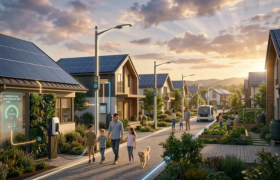
Utility-scale solar farms now rival traditional power plants, while residential rooftop solar democratizes power generation, transforming consumers into prosumers. Wind power, particularly offshore wind, is capitalizing on the stronger, more consistent winds over the ocean, allowing for the deployment of truly massive turbines capable of powering hundreds of thousands of homes each.
The economic argument for these Energy Resources is now compelling: the 'fuel' is free, maintenance costs are falling, and the environmental rewards are immense. The intermittency hurdle is being solved not just by batteries, but also by smart grid management and regional interconnection to balance supply and demand across vast geographic areas.
The strategic benefits of the solar and wind revolution are transformative, offering nations genuine energy independence:
- Decentralization of Power: Moving away from a few large power plants to millions of smaller, distributed generation points (rooftops, community solar), making the grid inherently more resilient against physical or cyber-attacks.
- Price Stability: Shielding consumers and industries from the wild price fluctuations inherent in global oil and gas markets, as the operating cost of solar and wind remains predictable.
- Economic Opportunity: Creating entirely new supply chains, manufacturing jobs, and engineering roles focused on installation, maintenance, and storage technology.
2. Water and Earth: Stable, Reliable Energy Resources
While solar and wind grab the headlines, older, more stable renewable Energy Resources continue to provide critical support:
- Hydropower: Harnessing the kinetic energy of rivers through dams is the original massive-scale renewable. While large-scale dams present environmental and social challenges, their ability to ramp production up and down instantly makes them invaluable for grid stability—they act as giant natural batteries. Smaller, run-of-river projects offer cleaner alternatives with less ecological impact.
- Geothermal Energy: This is a true dark horse—a 24/7 baseload renewable that taps into the heat reserves deep within the Earth. Where feasible (usually near tectonic boundaries), geothermal power is a powerful, reliable, and space-efficient contributor to a clean grid. Furthermore, its direct application for district heating and cooling provides a highly efficient way to displace local fossil fuel consumption for buildings.
The Great Transition: Global Mix and Strategic Challenges
1. The Paradox of Current Global Consumption
Today's energy mix is a story of contradictions. We see record investment in solar and wind, yet global demand for fossil fuel Energy Resources remains stubbornly high, especially in rapidly developing economies.
The central challenge lies in the scale and inertia of the existing system. The infrastructure for oil and gas—pipelines, refineries, tankers, power plants—represents trillions of dollars of sunk cost and decades of operational history. Dismantling or transitioning this system requires political will, significant capital, and technological breakthroughs that are both fast and affordable.
2. Scaling the Hurdles: Storage and Grid Modernization
The single biggest technical hurdle to a 100% renewable grid is energy storage. A reliable grid demands that supply meets demand instantly, and when the sun sets, a massive storage solution must kick in. While lithium-ion batteries dominate the current market, innovation in long-duration storage—such as pumped hydro, compressed air, and even next-generation flow batteries—is critical.
Furthermore, the existing electrical grid was designed for one-way power flow (from a central power plant to the consumer). A grid dominated by distributed renewable Energy Resources requires smart, two-way communication and advanced software to manage millions of individual energy transactions per second, demanding a costly and complex upgrade.
Strategic actions being deployed globally to accelerate the transition:
- Investment in Green Hydrogen: Developing clean hydrogen (produced by splitting water with renewable electricity) as a replacement fuel for heavy industries, like steel and concrete production, and for long-haul shipping where batteries are impractical.
- Mandated Energy Efficiency: Implementing stringent building codes and appliance standards to reduce energy consumption demand before increasing generation capacity, making the available Energy Resources stretch further.
- International Collaboration: Establishing cross-border energy sharing agreements and investment mechanisms to help developing nations leapfrog the fossil fuel stage and move directly to a sustainable energy infrastructure.
The Path Forward: Securing the Future of Energy Resources
The journey through the world of Energy Resources reveals a fundamental truth: energy is power, and our choices today determine the world of tomorrow. We are not just debating kilowatts and barrels; we are defining our climate, our economies, and our quality of life for the next century.
The age of inexpensive, polluting Energy Resources is drawing to a close, replaced by an exciting era of clean, innovative, and abundant power. The current challenges—grid modernization, storage technology, and political consensus—are immense, but the technological momentum is now unstoppable.
To succeed, governments, corporations, and individuals must view sustainable Energy Resources not as a cost, but as the most critical investment in long-term prosperity. By aggressively pursuing efficiency, supporting radical innovation in storage, and committing fully to the transition, humanity can secure an energy future that is reliable, equitable, and entirely sustainable.
The final, most crucial chapter in the story of Energy Resources is being written right now, and it promises to be the cleanest, most powerful chapter yet.




 by Simo Naboussi