


 by Simo Naboussi
 There is something deeply embedded in the human DNA that refuses to stay still. For millennia, we stared at the horizon of the oceans with the same mixture of dread and curiosity that we now direct toward the night sky. Space Travel isn't just a triumph of engineering; it is the ultimate expression of our refusal to accept boundaries.
When the first rockets pierced the thin veil of our atmosphere, they didn't just carry metal and fuel—they carried the collective ego and aspirations of a species that has always been defined by its migrations.In the modern era, the conversation around Space Travel has shifted from the "can we?" to the "how should we?".
We are no longer in the age of grainy black-and-white photos and nationalistic posturing. We are in a gritty, high-stakes era where private capital and global ambition are merging.
The silence of the vacuum is being filled by the hum of ion engines and the ambitious chatter of visionaries who see the moon not as a distant rock, but as a potential Eighth Continent. This shift is profound because it moves exploration from the realm of the occasional miracle to the sphere of routine infrastructure.
For decades, the biggest hurdle to Space Travel was a simple, frustrating economic reality: rockets were single-use tissues. Imagine building a Boeing 747, flying it once from London to New York, and then throwing it into the Atlantic Ocean.
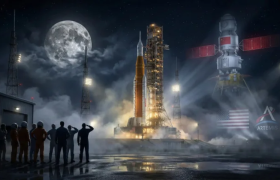
That was the state of orbital mechanics for half a century. The sheer cost of entry kept the cosmos behind a paywall that only the wealthiest nations could afford to scale. But the game has changed, and it has changed with the violent, beautiful vertical landing of a booster on a drone ship in the middle of a choppy sea.
Reusability has fundamentally decoupled Space Travel from the clutches of astronomical government budgets. By perfecting the art of "bringing the rocket back," we have seen the cost per kilogram to orbit drop at a rate that rivals the Moore’s Law of computing.
This isn't just a win for the balance sheets; it's a win for science. Lower costs mean more satellites for climate monitoring, more telescopes peering into the deep past of the Big Bang, and more frequent opportunities to test the technologies that will eventually take us to the outer planets.
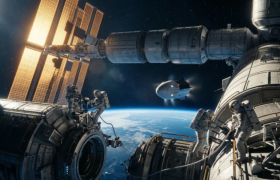
We are witnessing the industrialization of the final frontier, where the orbit of Earth is becoming a vibrant economic zone.
As we see celebrities and tech moguls floating in microgravity for a few minutes of suborbital bliss, a valid question arises: Is Space Travel becoming a playground for the 1%? It’s easy to be cynical when seeing a multi-million dollar ticket for a joyride. However, history teaches us that the luxuries of the few often pave the way for the utilities of the many. The early days of transcontinental rail and international flight were similarly exclusive, yet they laid the groundwork for the globalized world we inhabit today.
The real value of commercial Space Travel isn't the "selfie in space"; it's the maturity of the life-support systems, the safety protocols, and the manufacturing techniques developed to make those flights possible. Every mission, whether it carries a billionaire or a government astronaut, adds a layer of data to our understanding of how to keep humans alive in an environment that is actively trying to kill them. The democratization of space is a slow process, but it is one that relies on the initial surge of private investment to build the "railroads" of the stars.
We are creatures of gravity, born and bred in a 1G environment with a thick atmosphere to shield us from the sun’s lethal radiation. When we discuss Space Travel, we often focus on the power of the engines, but the most delicate component is the human body itself. In the absence of gravity, our bones begin to leach minerals, our muscles wither, and even the shape of our hearts can change. The biological "tax" of living in space is heavy, and we are only just beginning to understand the long-term cognitive and physiological effects of the void.
To survive long-duration Space Travel, we cannot simply rely on our current biology. We are looking at advanced shielding materials, artificial gravity through rotation, and perhaps even pharmaceutical interventions to keep our systems functioning. The journey to Mars is not just a six-month flight; it is a grueling endurance test for the very essence of what makes us biological beings.
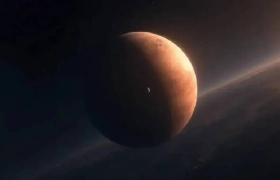
Mars has occupied a unique place in our collective imagination. It is the only planet where we can envision a human standing without being immediately crushed or melted. Yet, the reality of Martian Space Travel is a sobering one. The Red Planet is a place of sub-zero temperatures, toxic dust, and a sky that never turns blue.
Why, then, are we so obsessed with going there? The answer lies in the "Multi-planetary Insurance Policy." If Earth faces a catastrophic event, having a self-sustaining outpost elsewhere ensures that the flame of human consciousness doesn't go out.
Building a colony on Mars is perhaps the most difficult task ever conceived. It requires us to become masters of recycling—where every drop of sweat, every breath of CO2, and every scrap of waste is converted back into something useful.
This "closed-loop" existence is the ultimate challenge for Space Travel. However, the technologies we develop to survive on Mars—efficient hydroponics, advanced water filtration, and compact nuclear power—are exactly the tools we need to solve the sustainability crises we face back here on Earth. Mars is the laboratory where we will learn how to save our own planet.
If we look far enough into the future, Space Travel must eventually leave our solar system. The distances are staggering; even the closest star, Proxima Centauri, is over four light-years away. With current chemical rockets, it would take tens of thousands of years to get there. This is where the boundary between engineering and philosophy blurs. Are we prepared to build "generation ships," where the people who arrive at the destination are the great-grandchildren of those who left?
New theories in Space Travel are exploring ways to cheat these distances. Light sails propelled by massive lasers on Earth could theoretically push tiny probes to 20% of the speed of light. Breakthroughs in antimatter propulsion or the manipulation of spacetime (the legendary warp drive) remain in the realm of high-level mathematics, but they represent the ultimate goal. We are currently in the "walking" phase of cosmic exploration, but the "running" phase will require a fundamental leap in our understanding of physics itself.
"The Earth is a very small stage in a vast cosmic arena. To some, space travel is an escape; to others, it is the only way to truly understand our home."
As we stand on the precipice of this new era, it is important to remember that Space Travel is not a zero-sum game. The money spent on rockets isn't "taken away" from Earth; it is spent on Earth, paying the salaries of thousands of engineers, scientists, and manufacturers who are pushing the envelope of what is possible. The dividends of these investments are found in our pockets (GPS), our hospitals (advanced imaging), and our homes (satellite internet). But more than that, it provides a sense of wonder that is often missing from our modern, fragmented lives.
In the end, Space Travel is a mirror. When we look into the blackness of the cosmos, we see our own fragility and our own incredible potential. We see a species that started by sharpening stones and is now planning to build cities on other worlds. The journey is dangerous, expensive, and filled with setbacks, but it is the most noble thing we have ever attempted. As we continue to reach out into the dark, we aren't just looking for new planets; we are looking for the next version of ourselves—a version that is wiser, more unified, and truly worthy of the stars.