Sustainable Energy: The Ultimate Investment & Future of Power
Unlock the power of Sustainable Energy. Explore the core green technologies, job market growth, and the crucial economic benefits for a stable future.

Stop for a moment and consider the biggest challenge facing our world today. It’s not just one thing; it’s a complex knot of climate change, economic volatility, and the constant, relentless need for power. For decades, we relied on solutions that came with a hidden, massive cost.
But what if there was an answer that was fundamentally better, not just for the planet, but for your wallet and global security? That answer is Sustainable Energy. This is not a technical paper; this is a conversation about the definitive, unstoppable shift to a power system that is cleaner, cheaper, and infinitely more resilient.
We are standing at the edge of an energy revolution, and understanding Sustainable Energy is the key to navigating the next century of growth.
The Unbreakable Case: Why We Can’t Afford to Ignore Sustainable Energy
The transition to Sustainable Energy is driven by an undeniable reality: our current energy system is fundamentally unsustainable—economically, politically, and environmentally. Fossil fuels are finite, their prices are dictated by volatile global geopolitics, and their combustion is the primary engine of global warming. Choosing Sustainable Energy is, therefore, the most pragmatic, risk-averse decision a nation or a business can make today.
Flipping the Script on Climate Risk and Air Quality
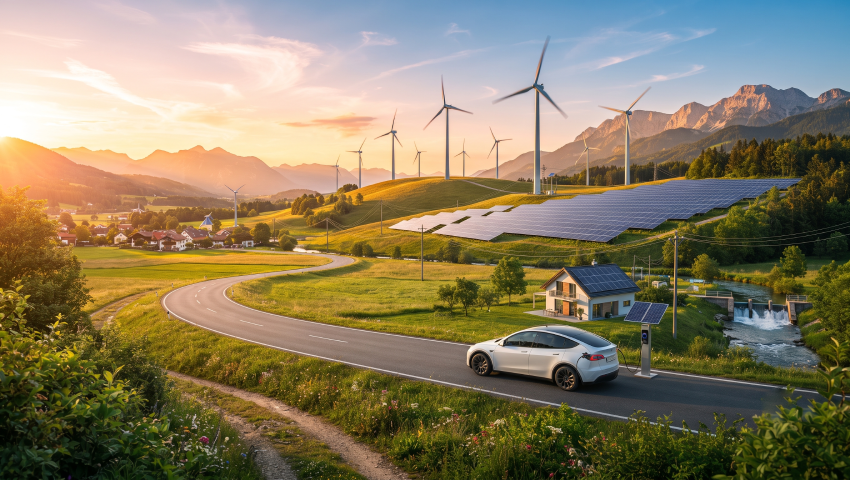
When you power your life with non-renewable sources, you are directly contributing to an unstable climate future. But the beauty of Sustainable Energy—solar, wind, hydro, and geothermal—is that it operates with minimal to zero net carbon emissions. This direct correlation means every solar panel installed and every wind turbine erected is a concrete step towards stabilizing global temperatures.
Beyond the long-term climate benefits, there is an immediate, palpable difference: cleaner air. Cities heavily reliant on coal and oil face severe respiratory health crises. By embracing Sustainable Energy, we reduce smog, particulate matter, and the millions of health-related costs associated with air pollution, making our cities genuinely healthier places to live and breathe. It’s an investment in public health that dwarfs the initial setup costs.
Moreover, the centralized nature of the old energy grid makes it a massive single point of failure—vulnerable to natural disasters, physical attacks, and geopolitical leverage. Sustainable Energy, by contrast, encourages decentralization. Picture millions of homes, businesses, and small community grids generating their own power. This distributed generation model—a core tenet of Sustainable Energy—creates a system that is incredibly resilient, capable of operating even if one part of the network goes down. This robustness is priceless in an increasingly unpredictable world.
The New Arsenal of Power: Core Technologies Defining Sustainable Energy
The term Sustainable Energy is often simplified, but it represents a high-tech, diverse portfolio of generation methods, each optimized for different regions and needs. No single source will power the future; the strength lies in their synergy and integration.
1. Solar Power: The Global Game-Changer on Every Rooftop
Solar Photovoltaic (PV) technology has been perhaps the greatest success story of the 21st century. Its cost has plummeted by over 90% in the last decade, making it the cheapest source of new electricity generation in many parts of the world. This affordability means that Sustainable Energy isn’t just for governments or utility companies anymore; it’s accessible to the homeowner, the small business owner, and the developing community. The adaptability of solar is its superpower:
- Utility-Scale Farms: Vast arrays generating electricity for millions of people.
- Distributed Rooftop Systems: Empowering individuals and businesses to become their own power generators.
- Innovative Applications: Integrating solar cells into windows, roads, and even clothing, pushing the boundaries of what Sustainable Energy can look like.
2. Wind Energy: Taming the Unseen Giants of the Sky
Modern wind turbines are engineering marvels. They are taller, quieter, and more efficient than ever before, turning a free, inexhaustible resource into reliable power. While onshore wind farms are widespread, the real transformative potential of Sustainable Energy lies offshore.
Offshore wind taps into the stronger, steadier winds over the sea, leading to higher “capacity factors”—meaning they produce energy closer to their maximum potential more often. The newest innovation, floating offshore wind, is unlocking deep-water sites previously inaccessible, vastly expanding the global potential for this essential form of Sustainable Energy.
3. Geothermal and Hydro: The Bedrock of Stable Green Power
Not all Sustainable Energy is intermittent. Geothermal energy, which taps into the Earth’s natural heat reserves, and well-managed hydroelectric power offer reliable, 24/7 “base load” power. Geothermal plants are extremely efficient and have a small environmental footprint once built, making them ideal in geologically active regions.
While the era of massive dam construction is largely over, existing hydropower infrastructure remains a critical component, offering not just generation but also immense water storage capabilities—a valuable, dual-purpose asset in a complete Sustainable Energy system.
The Smart Grid: Storage, Efficiency, and the End of Intermittency
The old criticism of renewables—”the sun doesn’t always shine, and the wind doesn’t always blow”—is rapidly becoming irrelevant thanks to two pivotal technologies that define the modern Sustainable Energy system: energy storage and hyper-efficiency.
1. The Battery Revolution: Making Green Power Available 24/7
The dramatic cost reduction in battery technology, spearheaded by the Electric Vehicle (EV) industry, has directly fueled the grid-scale energy storage market. Batteries allow utilities to capture solar power generated at noon and release it at 7 PM when demand peaks. The solutions are diverse and sophisticated:
- Lithium-ion Mega-batteries: Deployed globally to manage short-term grid stability and daily peak shifting.
- Long-Duration Storage (LDS): Emerging technologies like Green Hydrogen and specialized flow batteries designed to store power for days or even seasonal periods, essential for a fully decarbonized Sustainable Energy grid.
- Vehicle-to-Grid (V2G): The concept of using millions of parked EVs as a giant, decentralized battery bank to feed power back into the grid when needed.
2. Energy Efficiency: The Cheapest, Greenest Unit of Power
The most elegant solution to the energy crisis is simply needing less energy in the first place. This concept, known as energy efficiency, is foundational to any successful Sustainable Energy strategy. Every unit of electricity we don’t use is a unit we don’t need to generate, store, or transport.
Investing in smart home technology, better insulation for buildings, highly efficient industrial motors, and intelligent HVAC systems yields immediate, guaranteed returns. It’s the silent partner that makes the renewable transition affordable and achievable at a global scale.
Beyond Green: The Compelling Economics of Sustainable Energy
The narrative has fundamentally shifted. Sustainable Energy is no longer a luxury “green” choice subsidized by taxpayers; it is an economic powerhouse and the dominant investment strategy for the future. The sheer volume of global capital pouring into this sector confirms its financial viability.
1. Job Creation and Local Economic Empowerment
The industry is creating an entirely new workforce. Manufacturing, installing, and maintaining Sustainable Energy infrastructure requires millions of highly skilled “green jobs.”
Unlike fossil fuel extraction, which is often concentrated in specific geographic regions, jobs in solar and wind installation are distributed and localized, empowering regional economies everywhere.
These are jobs focused on building, not digging—jobs that are inherently long-term and resilient to global commodity price swings. Countries that prioritize this transition are essentially securing their competitive edge for the next few decades.
2. Price Stability and the End of Fuel Costs
Think about the cost of generating power from coal or gas: you have to pay the fuel cost every single day for the life of the plant. With Sustainable Energy, the fuel—the sun or the wind—is absolutely free. Once the initial infrastructure is built, the operating costs are dramatically lower and, crucially, predictable.
This price stability acts as a massive hedge against global instability and allows businesses and consumers to plan their energy budgets with confidence. This stability is perhaps the most undervalued economic benefit of a fully realized Sustainable Energy system.
The Road Ahead: Building a World Powered by Sustainable Energy
The transition is messy, challenging, and requires political willpower, but its ultimate success is inevitable. The market forces, the scientific consensus, and the overwhelming public desire for a cleaner planet have created an unstoppable, self-reinforcing momentum towards Sustainable Energy. We are moving past the early adoption phase and into mass deployment, where scale and innovation drive costs down even further.
This is your opportunity to be part of the most important infrastructure shift of our lifetime. By understanding, supporting, and investing in Sustainable Energy solutions—from policy advocacy to installing a panel on your roof—you are actively participating in creating a more secure, economically vibrant, and environmentally sound world. The future is not just green; it’s bright, resilient, and powered entirely by Sustainable Energy.