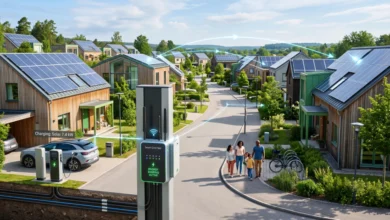
Solar Energy: Your Path to Zero Bills and Energy Freedom
Tired of high bills? Our expert guide to Solar Energy unlocks massive savings, explains PV technology, and shows you how to gain energy independence.

Imagine a future where your energy bill is consistently near zero, where you are immune to utility rate hikes, and where every appliance you run contributes zero carbon emissions. This isn’t a distant fantasy; it is the tangible reality being created right now by the unstoppable force of Solar Energy.
For decades, solar power was seen as a niche, expensive option, but today, it has transitioned into the most economically sensible and environmentally imperative choice for power generation globally. The sun provides more energy to the Earth every hour than humanity uses in an entire year, making the challenge not one of scarcity, but one of efficient capture.
This is not just another overview; this is a definitive, in-depth exploration into the mechanics, the economics, and the seismic shift that Solar Energy is driving across homes, businesses, and entire national power grids. We will demystify the technology and provide the critical details you need to understand why Solar Energy is set to be the primary engine of the next generation.
Demystifying Solar Energy: The Science That Powers Your Home
At its core, Solar Energy is the result of capturing photons—the tiny, fast-moving particles of light—and converting their kinetic energy into usable electrical energy. This conversion process is known as the Photovoltaic (PV) effect, a breakthrough that relies entirely on the precise engineering of semi-conducting materials.
While the sun itself is a continuous source, the technology to harness it has gone through decades of refinement, pushing efficiency rates higher and manufacturing costs dramatically lower. A critical distinction often missed is the difference between solar heating (thermal) and solar electricity (PV). While solar thermal heats water, the Solar Energy revolution we discuss today is overwhelmingly driven by PV technology, which produces the electricity that runs our modern world.
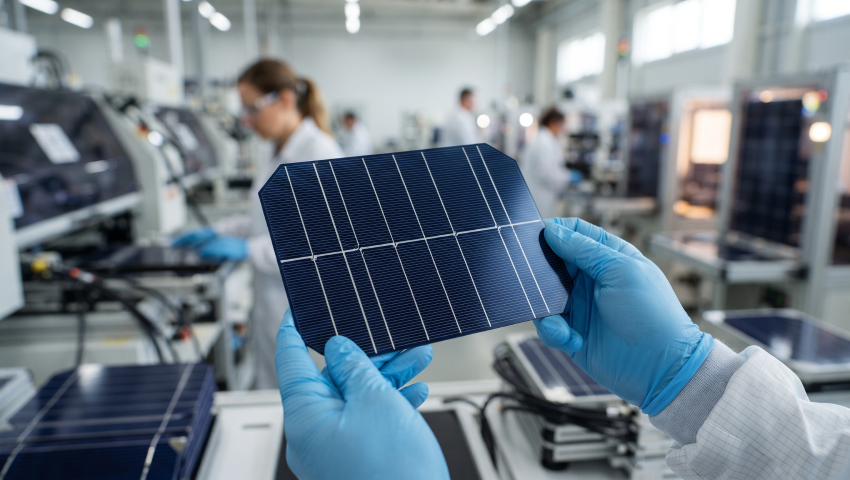
The magic happens within the solar panel’s cells, typically made from crystalline silicon. These cells are structured as a sandwich of two different layers: a positively charged (p-type) layer and a negatively charged (n-type) layer. When sunlight hits the cell, it excites the electrons in the silicon. The electric field created by the p-n junction acts as a one-way street, pushing these freed electrons to flow in a directed path, thus creating an electric current (Direct Current or DC).
A complete, functioning Solar Energy system involves several sophisticated components working in harmony:
The three essential pillars of any effective Solar Energy setup are:
- Modules (The Panels): These capture the photons and generate DC power. Modern panels are incredibly durable, designed to withstand extreme weather conditions and maintain high efficiency for over 25 years.
- The Inverter: This is the ‘brain’ of the system. It takes the variable DC electricity from the panels and converts it into 120V or 240V Alternating Current (AC) electricity, which is the only format usable by your home appliances and the public utility grid.
- Mounting & Racking: Engineered for stability and optimal tilt. The angle and orientation (azimuth) of the panels are crucial—a slight misplacement can cost a homeowner thousands in lost production over the system’s lifetime.
Understanding this integrated system is key. It’s not just a collection of panels; it’s a dedicated, small-scale power plant working directly for you, utilizing the enormous power of Solar Energy.
The Hard Numbers: Unpacking the Financial Realities of Solar Energy
Let’s move past the philosophy and look at the bottom line. For most people, the decision to switch to Solar Energy is fundamentally a long-term financial one. While the upfront investment is significant, the return on investment (ROI) timeframe has shrunk dramatically, often falling between 5 to 8 years in many regions, thanks to government incentives and dropping hardware costs. After this payback period, the electricity generated is essentially free, creating a massive hedge against inflation.
The economic benefits of Solar Energy are layered and robust, offering more than just utility bill reduction:
- Net Metering & Credits: When your solar system produces more electricity than your home consumes (especially mid-day), that excess energy is automatically sent back to the utility grid. In exchange, the utility company credits your account, dramatically reducing the monthly bill and sometimes eliminating it entirely.
- Federal and Local Tax Incentives: Many governments offer substantial tax credits or rebates for installing a system. These incentives are the primary factor in reducing the initial investment, making a typically expensive technology accessible to the middle class.
- Immediate Property Value Boost: Studies consistently show that homes with owned Solar Energy systems sell faster and at a higher premium than comparable homes without solar. This is a capital improvement that immediately adds value, unlike many other home upgrades.
- Decoupling from Fossil Fuel Prices: By generating your own power, you are no longer a hostage to the volatile global markets for natural gas, coal, or oil, securing a predictable energy cost for the next quarter-century.
Environmental Stewardship: Why Solar Energy is the Planet’s Ally
The environmental case for Solar Energy is ironclad. Every kilowatt-hour generated by the sun is one less kilowatt-hour that requires the burning of fossil fuels, resulting in a direct, palpable reduction in greenhouse gas emissions. The massive scale of deployment is now truly moving the needle on a global level, helping nations meet ambitious climate goals. The environmental superiority is clear when one considers the full lifecycle of energy production.
The true cost of conventional energy is not just the price on your bill; it includes significant environmental and health ‘externalities’ that are minimized or eliminated by Solar Energy:
Key environmental advantages:
- Zero Operational Emissions: Once a solar panel is installed, the process of turning light into electricity is entirely clean, producing zero greenhouse gases, particulate matter, or harmful air pollutants that cause smog and respiratory issues.
- Minimal Land Disruption: Rooftop solar utilizes existing, otherwise unused space, making it one of the least disruptive forms of energy generation. Even utility-scale farms can often be sited on marginal lands.
- Reduced Water Usage: Thermal power plants require enormous amounts of water for cooling. Solar Energy systems require almost no water during operation, preserving this precious resource in drought-prone regions.
Applications and Scalability: From Rooftop to Power Plant
The adaptability of Solar Energy is one of its greatest strengths. It is arguably the most scalable form of energy generation, working equally well to power a calculator or an entire city. This scalability allows for a democratic and decentralized power grid, where power is generated closer to where it is consumed, reducing transmission losses and infrastructure costs.
Solar Energy deployment typically falls into two categories:
- Distributed Generation (Residential & Commercial): Power generated on-site, such as on a home or business rooftop. This is crucial for energy resilience and empowering individual consumers, as it creates independence from a single, centralized grid point.
- Centralized Generation (Utility-Scale Solar Farms): Massive ground-mounted installations that can cover thousands of acres. These facilities produce hundreds of megawatts (MW) and feed directly into high-voltage transmission lines, serving large regional populations. Innovations like single-axis trackers allow these panels to follow the sun across the sky, maximizing their energy capture throughout the day, significantly increasing the total amount of Solar Energy generated annually.
Addressing Common Myths: Longevity and Performance Concerns
As with any rapidly evolving technology, misinformation can persist. A common hesitation for consumers is the longevity of the equipment and its real-world performance. It’s important to address these concerns with expert data.
Myth 1: Solar Panels Don’t Last Long. Fact: The lifespan of a modern PV panel is extraordinarily long. Most top-tier manufacturers offer a linear performance warranty guaranteeing the panel will produce at least 80% to 85% of its initial rated power after 25 years. In reality, many panels continue producing usable Solar Energy well past the 30-year mark.
Myth 2: Solar Energy Doesn’t Work in Cloudy Climates. Fact: While peak generation occurs on clear, sunny days, modern solar cells are highly effective at capturing diffused light (the light that filters through clouds). Systems in places like Germany (a country known for its cloudy weather) have demonstrated incredible performance, proving that the technology is robust enough for virtually any climate, provided it is correctly sized.
The Future is Now: Storage, Smart Grids, and Next-Gen Solar
The primary obstacle to Solar Energy achieving 100% grid dominance—intermittency (not producing power at night)—is rapidly being solved by advancements in battery storage and smart grid technology.
- Energy Storage (Batteries): The cost of lithium-ion batteries has plummeted over the last decade, making residential and utility-scale energy storage financially viable. Storage allows the excess Solar Energy generated at noon to be saved and discharged during the evening peak demand hours, effectively turning intermittent solar into a firm, reliable 24/7 power source.
- Smart Grids: These modernized electrical networks use digital communication to manage supply and demand in real-time. A smart grid can seamlessly integrate millions of distributed Solar Energy systems, automatically balancing the load and optimizing power flow, thus making the grid more robust and less susceptible to localized failures.
- Next-Generation PV: Research into Perovskite solar cells and Thin-Film technologies promises to drive efficiency higher while making panels lighter, more flexible, and potentially cheaper to manufacture, further securing the future of Solar Energy as the dominant power source.
Final Verdict: Why Solar Energy is an Irreversible Global Force
The trajectory of the global energy market is clear. The convergence of decreasing technology costs, increasing efficiency, robust government support, and overwhelming public awareness has cemented Solar Energy as the central pillar of modern power generation. It is a powerful confluence of environmental necessity and undeniable economic logic. Every argument against its adoption has been, or is actively being, solved by rapid technological innovation and sheer market forces.
Embracing Solar Energy is more than an environmentally conscious decision; it is a profound strategic move toward long-term financial stability and energy independence. Whether you are a homeowner seeking to zero out your utility bill, or a corporate leader committed to sustainability, the path is illuminated by the sun. The era of cheap, reliable, and clean Solar Energy has arrived, and it is here to stay.