Apple Watch Series 11 Review: Is It Worth the Upgrade?
Discover if the Apple Watch Series 11 is worth buying. Read our expert review covering the new 24-hour battery, native 5G connectivity, and advanced health upgrades.




 by Simo Naboussi
 The Samsung Galaxy S25 Ultra is an excellent flagship phone, boasting a stunning display, powerful performance, versatile cameras, and an enhanced design. It stands out thanks to its advanced AI integration, which adds unique and practical features. It also features rich and customizable software, drawing on Samsung's extensive experience.
However, competition, particularly from China, is rapidly evolving in crucial areas such as battery life and camera performance. The Galaxy S25 Ultra remains one of the best smartphones of 2025, and its owners will be satisfied. While its price is high, in line with its direct competitors, it can be acquired at competitive prices by taking advantage of discounts and promotional offers.
The physical form of a smartphone is the user's first and most enduring interaction point. It dictates comfort, usability, and the intangible sense of value. With the Galaxy S25 Ultra, the design language has shifted from a stance of aggressive angularity to one of considered ergonomics.
The Galaxy S25 Ultra continues the material trend established in the previous generation but refines it with a new grade of titanium integration. The frame is constructed from a titanium alloy, chosen for its exceptional strength-to-weight ratio. In the world of metallurgy, titanium is revered not just for its durability but for its low thermal conductivity and resistance to corrosion. Unlike aluminum, which can feel cold and industrial, or stainless steel, which is heavy and prone to fingerprints, titanium offers a tactile warmth and a matte finish that feels decidedly premium.
The use of titanium is not merely aesthetic. It plays a structural role, providing a rigid exoskeleton that protects the internal components from the torsional stresses of daily life. The finish on the S25 Ultra's rails is brushed, a deliberate choice that hides micro-abrasions and fingerprints better than the high-polish finishes found on some competing devices. This speaks to a utilitarian luxury—a device meant to be used, not just admired. The frame flows seamlessly into the glass panels, with tolerances that are tighter than ever, reducing the gaps where dust and lint traditionally accumulate.
For years, the Ultra line (and the Note line before it) was defined by sharp, 90-degree corners. This "boxy" aesthetic maximized the screen surface area for the S Pen, allowing users to write right into the corners of the digital page. However, it came at a significant ergonomic cost. The sharp corners would dig into the palm of the user's hand, making one-handed use painful over extended sessions.
The Galaxy S25 Ultra marks a pivotal shift in this philosophy. The corners have been subtly rounded. It is a change measured in millimeters, yet its impact on handheld comfort is profound. The radius of the curve is carefully calculated to maintain the rectangular "DNA" of the product line while removing the hostile pressure points. This ergonomic adjustment acknowledges that while the S25 Ultra is a productivity tool, it is also a device held for hours while scrolling social media, watching videos, or gaming.
Furthermore, the device embraces a completely flat design language. Both the front display and the rear back panel are flat, meeting the slightly curved rails of the frame. This departure from the "Edge" screens of the past—which curved the display glass over the sides—is a victory for functionality. Flat screens do not suffer from accidental touch inputs on the edges, they do not distort video content at the periphery, and perhaps most importantly, they allow for the easy application of tempered glass screen protectors without unsightly gaps or lifting edges.
A device that commands a premium price must be built to survive the chaos of the real world. The S25 Ultra is armored with the latest generation of glass technology: Corning Gorilla Armor 2. This material is a composite that pushes the boundaries of glass ceramics. The "Armor" designation implies a specific focus on impact resistance and scratch mitigation.
Independent drop tests reveal the efficacy of this construction. In controlled environments, the S25 Ultra has demonstrated remarkable resilience, surviving drops from head height onto concrete surfaces with the frame absorbing the brunt of the impact. The titanium frame acts as a shock absorber, dissipating the kinetic energy that would typically shatter the glass. However, physics is unforgiving; direct face-down drops onto uneven surfaces can still overcome the tension limit of the glass, leading to catastrophic failure.
The device maintains an IP68 rating, certifying it against dust ingress and water submersion. This involves sophisticated sealing techniques, including Gore-Tex membranes over the microphones and speakers that allow air and sound to pass while blocking water molecules, and precision-molded rubber gaskets sealing the USB-C port and the S Pen silo.
Samsung has expanded the color palette for the S25 Ultra, embracing the "Titanium" branding across the board. The available hues—Titanium Black, Titanium Gray, Titanium Silverblue, and Titanium Whitesilver—are understated and mature. The coloring process likely involves Physical Vapor Deposition (PVD), a method that bonds the color to the metal at a molecular level, ensuring that the finish does not chip or peel over time.
The camera rings on the rear are color-matched to the frame, creating a cohesive "jewelry" effect. This design choice highlights the individual lenses, celebrating the camera capabilities rather than hiding them in a monolithic block. The matte finish of the back glass uses a microscopic etching process to create a texture that scatters light, reducing glare and rendering fingerprints virtually invisible.
The display has always been Samsung's crown jewel. As the primary supplier of OLED panels to the entire industry, Samsung saves its most cutting-edge technology for its own flagship. The S25 Ultra features a 6.9-inch Dynamic AMOLED 2X display that is nothing short of a visual feast.
The most transformative feature of the S25 Ultra's display is not its resolution or its refresh rate, but its coating. The Gorilla Armor 2 glass features a specialized anti-reflective treatment that reduces ambient light reflection by up to 75%. In the world of optics, reflections are the enemy of contrast. When a screen reflects the environment, the blacks appear gray, and the colors lose their vibrancy.
This coating changes the fundamental viewing experience. Dark scenes in movies, which on other phones would turn the screen into a mirror reflecting the user's face, remain inky black on the S25 Ultra. This gives the display a "printed" quality, where the image feels like it is painted on the surface rather than sitting behind glass. This feature also improves battery life indirectly; because the screen is more legible in bright environments without fighting glare, users do not need to crank the brightness to the maximum level as frequently.
When brightness is required, the S25 Ultra delivers in spades. The panel is rated for a peak brightness of 2,600 nits. While this peak is usually reserved for small areas of the screen during HDR playback (specular highlights like the sun or an explosion), the High Brightness Mode (HBM) for the entire screen is equally impressive.
In direct sunlight, the S25 Ultra can sustain luminance levels that make text perfectly readable. Comparative testing has shown that in certain high-ambient-light scenarios, the S25 Ultra perceives brighter than competitors like the iPhone 16 Pro Max, thanks to the synergy between the raw nits output and the anti-reflective coating. The "Extra Brightness" toggle in the settings allows users to manually override the safety limits, pushing the panel to its maximum output for sustained periods, albeit at the cost of battery life and thermal accumulation.
The panel sports a QHD+ resolution of 3120 x 1440 pixels, resulting in a pixel density of approximately 500 ppi. This density ensures that individual pixels are indistinguishable to the naked eye, rendering text with laser-printer sharpness.
The "Dynamic" aspect of the AMOLED 2X panel refers to its LTPO (Low-Temperature Polycrystalline Oxide) backplane technology. This allows the screen to dynamically adjust its refresh rate from a static 1Hz to a fluid 120Hz. The controller monitors the content on the screen; if the user is reading a static eBook page, the refresh rate drops to 1Hz, conserving power by reducing the number of times the pixels are redrawn. As soon as the user touches the screen to scroll, the rate shoots up to 120Hz to ensure smooth motion. This granular control is essential for maintaining battery life on such a large, high-resolution panel.
A notable controversy with the previous generation was the "grainy screen" issue, where users reported a mura-like noise pattern on gray backgrounds at low brightness. This was a manufacturing artifact related to the sub-pixel deposition process.
Analysis of the S25 Ultra's panel under macro lenses confirms that Samsung has addressed this defect. The gray uniformity at low brightness levels is significantly improved, offering a clean, uniform canvas. This fix suggests an update to the OLED material set (likely to the M13+ or a newer M14 set) and tighter quality control standards in the fabrication plants.
Under the hood, the Galaxy S25 Ultra is powered by the "Snapdragon 8 Elite for Galaxy" platform. This partnership with Qualcomm ensures that the S25 Ultra offers uniform performance globally, avoiding the historical fragmentation where some regions received inferior Exynos chips.
The Snapdragon 8 Elite marks a departure from standard ARM Cortex designs. It utilizes Qualcomm's custom "Oryon" CPU cores, an architecture originally designed for laptop-class computing. The configuration is aggressive: it eschews the traditional low-power efficiency cores entirely, utilizing a "2+6" setup.
This consists of two prime cores clocked at a staggering 4.32GHz (or higher in the "For Galaxy" variant) and six performance cores at 3.53GHz. The philosophy here is "race to sleep." By completing tasks incredibly quickly using high-performance cores, the processor can return to an idle state faster than a chip that lingers on a low-power core. This approach challenges the conventional wisdom of mobile architecture and brings the S25 Ultra's CPU performance into the territory of lightweight laptops.
In synthetic benchmarks, the S25 Ultra demonstrates its dominance. In Geekbench 6 multi-core tests, scores approach the 10,000 mark, a figure that obliterates previous Android records and significantly outpaces the iPhone 16 Pro Max. This multi-core prowess is crucial for modern multitasking, allowing the phone to handle background rendering, file compression, and AI processing simultaneously without stutter.
However, single-core performance still trails Apple's A-series chips slightly. In real-world usage, this difference is negligible. App opening times, UI fluidity, and scrolling responsiveness are instantaneous. The "For Galaxy" tuning implies a slight overclock on the GPU as well, providing higher peak frame rates in gaming.
With great power comes great heat. The dense cluster of high-frequency cores in the Snapdragon 8 Elite generates significant thermal energy. To combat this, Samsung has integrated an expanded vapor chamber cooling system. This copper chamber contains a small amount of liquid that evaporates when hot, travels to the cooler parts of the phone, condenses, and returns to the heat source via a wick structure.
This phase-change cooling is essential for sustained performance. In gaming scenarios involving ray tracing—such as War Thunder Mobile or Arena Breakout—the S25 Ultra maintains high frame rates for longer than its predecessors before thermal throttling sets in. However, the titanium frame, being less thermally conductive than aluminum, can create hot spots near the SoC (System on Chip) during intense loads, as the heat is not dissipated as quickly across the chassis surface.
A point of contention for enthusiasts is the memory configuration. In North American and European markets, the S25 Ultra ships with 12GB of LPDDR5X RAM as the standard, even on higher storage tiers. Meanwhile, select Asian markets receive a 16GB variant.
While 12GB is sufficient for current Android operations and keeping a dozen apps in memory, the omission of 16GB in Western markets is viewed as a calculated limitation. With the rise of on-device AI models that reside in RAM for fast execution, extra memory is a future-proofing asset. The decision to limit RAM likely stems from cost-saving measures on the Bill of Materials (BOM), considering the high price of the new Snapdragon silicon and memory modules.
The camera system is the defining feature of the Ultra series. The S25 Ultra retains the quad-camera layout but introduces significant upgrades to the supporting cast of sensors.
The main camera utilizes a 200MP sensor, an iteration of the ISOCELL HP2. This sensor measures 1/1.3 inches, which is large for a smartphone but not the largest in the industry (some Chinese competitors use 1-inch sensors). Samsung compensates for this with pixel density and computational photography.
The sensor uses "Tetra2pixel" technology to bin pixels. In low light, it combines 16 pixels into one large 2.4μm pixel, outputting a 12.5MP image that gathers light exceptionally well. In bright light, it can shoot at 50MP or the full 200MP. The 200MP mode resolves an immense amount of detail, allowing photographers to crop heavily into an image post-capture to frame a new shot without losing fidelity.
The most significant hardware upgrade is found in the ultra-wide camera. The aging 12MP sensor has been replaced by a new 50MP sensor with an f/1.9 aperture. This is a transformative change. The previous 12MP sensor often produced soft images with noisy shadows, especially indoors.
The new 50MP sensor allows for pixel binning, improving dynamic range and low-light sensitivity. It also serves as the macro camera. When focusing on subjects just centimeters away, the high resolution resolves intricate textures—the veins of a leaf, the weave of fabric—with startling clarity. Furthermore, the resolution bump enables 8K video recording on the ultra-wide lens, ensuring consistency across the focal range.
Samsung's zoom capabilities remain a key differentiator. The telephoto setup consists of two dedicated lenses:
The "Space Zoom" reaches up to 100x. While 100x images are more akin to watercolor paintings due to AI reconstruction, the range between 10x and 30x is highly usable. The 50MP sensor on the 5x lens allows for a sensor-crop zoom at 10x, providing near-optical quality without a dedicated 10x lens. The AI stabilization at these high zoom levels is sticky, locking onto the subject to minimize hand tremors.
The raw data from these sensors is processed by the "Next Gen ProVisual Engine". This ISP (Image Signal Processor) pipeline uses AI to recognize scenes and objects. It separates the sky, the trees, and the faces in a photo, processing them individually with different parameters.
However, Samsung's processing style remains distinct. Images tend to have boosted saturation and sharpening compared to the more neutral iPhone or the contrast-heavy Pixel. While pleasing to the eye for social media, purists may prefer the "Pro" mode or "Expert RAW" app to take control of the processing parameters.
The S25 Ultra is a video powerhouse. It supports 8K recording at 30fps, a resolution that offers four times the detail of 4K. While 8K displays are rare, this resolution allows creators to crop into footage in post-production while maintaining 4K quality.
The standard 4K 60fps recording is stabilized by "Super Steady" mode, which uses a combination of OIS (Optical Image Stabilization) and EIS (Electronic Image Stabilization). The transition between lenses while recording is smoother than in previous generations, though a slight jump in exposure and color temperature can still occur when switching from the main lens to the ultra-wide.
A standout feature is Instant Slow-Mo. Using generative AI, the phone can take any standard video clip and generate intermediate frames to create a slow-motion effect. This is processed on-device, allowing users to slow down moments they didn't think to record in high frame rates initially.
For years, Samsung users have plagued forums with complaints about shutter lag—the delay between pressing the button and the image capture. This often led to blurry photos of moving subjects like pets or children.
Testing of the S25 Ultra indicates a substantial improvement. The sheer processing power of the Snapdragon 8 Elite combined with optimized software algorithms has reduced shutter lag by approximately 50% compared to the S24 Ultra. While it is not yet "zero shutter lag" in the strictest sense, the "capture moment" is now much closer to the user's intent. For critical action shots, the "Camera Assistant" module allows users to prioritize shutter speed over image processing quality, offering a customizable balance.
The Galaxy S25 Ultra launches with Android 15 layered with Samsung's One UI skin. One UI has evolved from a heavy, bloated interface into a refined, feature-rich operating system that defines the large-screen experience.
One UI 8 introduces subtle but impactful visual changes. The animations have been retooled to be non-linear and interruptible, meaning the phone feels responsive even if an animation hasn't finished playing. The Quick Panel has been redesigned with split notifications and media controls, improving information density.
A new 90:10 split-screen mode allows for more versatile multitasking. A user can keep a small video window or a calculator open at the top (10%) while using the bottom (90%) for browsing or document editing. This takes advantage of the 6.9-inch canvas, treating it like a miniature desktop monitor.
"Galaxy AI" is the marketing term for a suite of on-device and cloud-based AI features integrated into the OS.
The S Pen remains the S25 Ultra's unique selling proposition. No other mainstream flagship includes an integrated stylus. It features a latency of just 2.8ms, creating a "pen on paper" feel. Beyond writing, the S Pen acts as a remote control for the camera, a precision tool for video timeline scrubbing, and a mouse cursor for hovering over web elements. The "Air Actions" allow users to perform gestures in the air to control media playback or presentation slides.
Samsung Knox provides hardware-backed security. Sensitive data like biometric templates and Samsung Pay tokens are stored in a separate secure processor, isolated from the main Android OS. This protects data even if the main kernel is compromised.
Samsung has committed to seven years of OS upgrades and security updates for the S25 Ultra. This promise ensures that the device will receive Android 22 (or whatever it is named) in the early 2030s. This extended lifecycle fundamentally changes the value equation, allowing the phone to be passed down or resold with current software for much longer.
The S25 Ultra retains a 5,000mAh battery. While competitors have started pushing to 5,400mAh or higher using silicon-carbon anode technology, Samsung has stuck with a traditional graphite-based Li-Ion cell. Despite the stagnant capacity, battery life has improved due to the efficiency of the 3nm Snapdragon 8 Elite and the LTPO display.
Real-world usage suggests the S25 Ultra is a "two-day" phone for light users and a solid "all-day" phone for power users. In standardized rundown tests, it achieves over 17 hours of continuous web browsing, trading blows with the iPhone 16 Pro Max. The efficiency gains in standby mode are particularly notable, with the phone losing very little charge overnight.
Charging is supported at 45W via USB-PD 3.0 (PPS). This charges the phone from 0 to 65% in roughly 30 minutes, with a full charge taking just over an hour. While safe and reliable, this speed lags behind Chinese competitors who offer 80W or 120W charging that can fill a battery in 20 minutes. Samsung's conservative approach is likely dictated by a desire to preserve battery health over the 7-year support lifespan, as ultra-fast charging generates heat that degrades battery chemistry.
Wireless charging tops out at 15W, and Wireless PowerShare allows the phone to reverse-charge accessories like earbuds on its back.
The S25 Ultra is future-proofed with Wi-Fi 7 support. This standard allows for multi-link operation (MLO), where the phone can connect to the 2.4GHz, 5GHz, and 6GHz bands simultaneously to aggregate throughput and reduce latency. This is crucial for cloud gaming and high-bandwidth VR/AR applications.
Audio performance has been refined with a new speaker chamber design. The stereo separation is distinct, and the bass response is surprisingly punchy for a smartphone. A "Boost Dialogue" feature uses AI to isolate speech frequencies in movies, making dialogue intelligible without raising the overall volume—a boon for late-night watching.
To understand the S25 Ultra's place, it must be contextualized against its peers.
Ultimately, the Samsung Galaxy S25 Ultra cements its position as the best all-around smartphone on the market, capable of meeting the needs of a wide range of users thanks to its ideal blend of features, performance, and quality.
While it may not be the absolute benchmark in terms of battery life or photography, it excels in software, advanced features, and long-term support, as well as its overall balance, making it the perfect and most suitable device for everyday use.
 Mar 29, 2026
 Discover if the Apple Watch Series 11 is worth buying. Read our expert review covering the new 24-hour battery, native 5G connectivity, and advanced health upgrades.
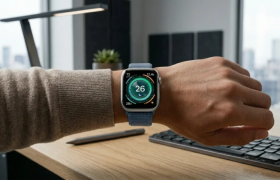 Mar 29, 2026
 Discover everything you need to know about the watchOS 26 update. Explore the new Liquid Glass interface , tethered Apple Intelligence features , crucial battery life fixes , and check if your Apple Watch model is supported.
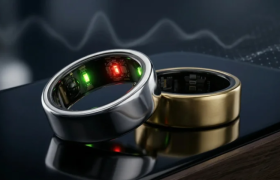 Mar 25, 2026
 Compare the Samsung Galaxy Ring vs Oura Ring 4. Discover which smart ring offers the best sleep tracking, comfort, accuracy, and value for your money.