Top AI Robot Vacuums 2026: Roborock vs Roomba Combo Review
Discover the top AI-powered robot vacuums of 2026. Read our expert comparison of the Roborock Saros and Roomba Max 705 Combo to find the best smart cleaner for your home.




 by Simo Naboussi
 When we hear the word Robotics, our minds often jump to a blend of two things: the highly efficient, tireless machines of industrial factories, and the sophisticated, almost-humanoid creations of futuristic films. The reality, however, is far more exciting and complex than either extreme. Robotics is not just a branch of engineering; it is a profound philosophical statement about our desire to transcend human physical limitations.It represents a multidisciplinary revolution that merges the delicate precision of mechanical design, the computational power of computer science, and the adaptive intelligence of Artificial Intelligence (AI). This field is no longer a footnote in the history of technology; it is the dominant narrative shaping everything from how a package is sorted to how complex surgery is performed.
To truly understand the impact of modern Robotics, we must look past the metallic shell and focus on the intelligence within. This evolution—from simple programmed automation to autonomous, decision-making agents—is fundamentally redefining our relationship with work, safety, and capability. The goal of this deep dive is to unpack the entire ecosystem of Robotics, illuminating not just what robots do, but how they are built, where they thrive, and why they matter to the future we are collectively building.
In the context of modern engineering, a robot is an automatic machine that is capable of carrying out a complex series of actions automatically, especially one programmable by a computer. This definition requires three essential pillars of function to separate a sophisticated robot from a simple automated device:
Firstly, Sensing: A robot must possess the ability to perceive its surroundings and its own state, typically through a complex array of sensors like cameras, LiDAR, proximity detectors, and force sensors. This sensory input is the raw data it uses to interact with the real world. Secondly, Processing: The robot's control system, its 'brain,' must process this data in real-time to make complex decisions.
This is where AI and machine learning enter the equation, enabling true autonomy. Finally, Action: The robot must execute a physical movement using its actuators (motors) and manipulators, be it welding a chassis, picking a fragile object, or navigating a crowded room. Without this comprehensive feedback loop—SENSE-PROCESS-ACT—it is simply automation, not true Robotics.
The history of Robotics is not just a history of machines; it’s a history of industries attempting to solve the triple challenge of dull, dirty, and dangerous work. The true turning point came in the 1960s with the introduction of the first industrial robot, the Unimate, into General Motors’ assembly lines. This machine’s job was simple: moving hot pieces of metal, a task hazardous to humans.
This moment cemented the value proposition of industrial Robotics: consistency and safety. Every major leap since then, from vision systems in the 1980s to the development of affordable, flexible six-axis arms today, has been driven by the need for ever-increasing precision and adaptability on the factory floor, fundamentally changing the economics of manufacturing globally.
Building a successful autonomous system requires mastery over three distinct engineering disciplines, each forming a critical part of the robotic anatomy. It’s an intricate interplay of hardware and software, where every component must communicate instantly and flawlessly.
The control system is the undisputed heart of any robot. It's where sophisticated algorithms dictate path planning, collision avoidance, and task sequencing. In cutting-edge Robotics, simple code is being superseded by complex Artificial Intelligence models.
Machine Learning (ML), particularly deep learning, allows robots to learn skills from vast datasets or through trial-and-error (reinforcement learning).
For instance, a robot tasked with picking randomly oriented objects will use an ML vision model to identify, classify, and determine the optimal grasping point on the fly—a task that would be impossible with traditional programming. This continuous learning capability is what makes contemporary Robotics dynamic and adaptable.
A robot’s ability to perform physical work depends entirely on its actuators—the 'muscles' that translate electrical signals into kinetic energy. They dictate the robot's strength, speed, and precision. We typically categorize them based on the energy source they use:
The arrangement of these muscles defines the robot's Degrees of Freedom (DoF), which is simply the number of independent parameters that define its configuration. A typical industrial arm has six DoF, allowing it to reach any point and orient its wrist at virtually any angle, mirroring a human arm’s versatility.
Just as crucial as the brain and muscles are the sensors that provide the robot with awareness. High-definition 3D vision systems, which combine multiple cameras or structured light, allow robots to see and measure their environment in three dimensions.
LiDAR (Light Detection and Ranging) creates accurate maps for autonomous navigation, crucial for any mobile Robotics application. Perhaps the most exciting development is in force-torque and tactile sensors.
These delicate sensors allow the robot to 'feel' the object it is interacting with, enabling it to pick up an egg without crushing it or determine if a component has been properly seated, moving beyond brute force to true dexterity.
The reach of Robotics is now nearly universal. No longer confined to the automotive factory, robotic systems are solving critical challenges in fields where human safety, precision, and endurance are paramount.
In medicine, Robotics has elevated the standard of care. Surgical systems, most famously the Da Vinci platform, do not operate autonomously but serve as extensions of the surgeon’s hands, filtering out natural human tremor and allowing for minimally invasive procedures through tiny incisions.
This translates directly to reduced patient trauma, quicker recovery times, and decreased hospital stays. Beyond the operating room, robotic devices are indispensable in pharmacy automation, consistently dispensing and preparing medications, and in sophisticated rehabilitation Robotics that help patients regain mobility through intensive, consistent physical therapy regimens.
The explosion of e-commerce has made logistics a hotbed for Robotics. Autonomous Mobile Robots (AMRs) are the workhorses of the modern warehouse.
Unlike older Automated Guided Vehicles (AGVs) that followed fixed magnetic tracks, AMRs use SLAM (Simultaneous Localization and Mapping) technology to navigate dynamic environments, avoiding obstacles and calculating the most efficient path in real-time.
These systems manage the entire lifecycle of a product, from fetching shelves (the 'goods-to-person' model) to sorting packages at rates unachievable by human teams, making global supply chains remarkably faster and more resilient.
When an environment is too dangerous, remote, or hostile for human presence, Robotics steps in. In space, rovers and landers are essentially autonomous laboratories, conducting complex science on Mars or the Moon.
Similarly, in deep-sea exploration, remotely operated vehicles (ROVs) and autonomous underwater vehicles (AUVs) map the ocean floor, inspect subsea oil and gas infrastructure, and discover new life forms under pressures that would instantly crush a human.
These robots are a testament to the field's ability to create robust, self-reliant systems designed for extreme operating conditions.
The most significant paradigm shift in recent years has been the introduction of Collaborative Robotics, or Cobots. Unlike their caged, powerful industrial predecessors, cobots are designed to work alongside humans in shared workspaces. They are inherently safe, often featuring force-limiting sensors that cause them to stop or reverse motion the moment they encounter resistance.
This technology is democratization automation, making it accessible to small and medium-sized enterprises (SMEs). Instead of replacing a worker, a cobot augments them, taking over the repetitive or ergonomically stressful parts of a task (e.g., lifting heavy parts) while the human focuses on quality control or complex decision-making.
This new era of human-robot teaming is redefining productivity and job roles.
The true potential of Robotics is locked within the algorithms of Artificial Intelligence. Future robots won't just follow instructions; they will anticipate needs. Advances in Generative AI and reinforcement learning are training robots to generalize skills.
Instead of reprogramming a robot for every new product variant, a future system could learn the concept of "assembly" and apply it to a new, never-before-seen object with only minor adjustments.
The maturation of perception systems—enabling machines to understand context, human gesture, and intent—is the final piece of the puzzle that will lead to truly integrated, highly autonomous Robotics systems in our daily lives.
As sophisticated Robotics systems move from the factory floor to our streets (autonomous vehicles) and homes (service robots), the ethical discussions transition from theoretical to immediate. The greatest challenge is preparing society for the transformative power of automation.
Ultimately, the development of ethical guidelines for Robotics must be a collaborative process involving engineers, philosophers, policymakers, and the public to ensure that these technologies are deployed to maximize societal benefit while mitigating unintended negative consequences.
The story of Robotics is still being written, and it is a saga defined by innovation and boundless potential. We stand at the precipice of a new wave of Automation, one where the lines between human and machine labor are blurring in collaborative, productive ways.
From enhancing the dexterity of a surgeon to navigating the chaotic environment of a warehouse, the intelligence and mechanical capability of modern Robotics are solving problems once deemed insurmountable.
The ongoing integration of advanced AI and sensor technology ensures that these systems will only become more intuitive, reliable, and deeply integrated into our daily routines.
For those looking toward the future, the message is clear: Robotics is the central engine of technological progress.
Mastering the principles behind these autonomous systems—understanding their mechanics, their programming, and their ethical footprint—is key to thriving in the automated world that is rapidly becoming our present reality.
The next generation of Robotics will be about more than just efficiency; it will be about forging a safer, smarter, and ultimately, more human world.
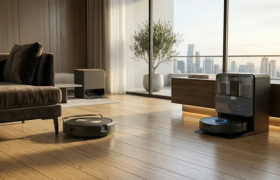 Mar 29, 2026
 Discover the top AI-powered robot vacuums of 2026. Read our expert comparison of the Roborock Saros and Roomba Max 705 Combo to find the best smart cleaner for your home.
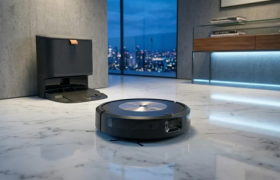 Mar 28, 2026
 Explore the complete Roomba Combo ecosystem, from the budget-friendly options to the premium Plus 505 Combo with advanced ClearView Pro LiDAR navigation. Discover real-world performance, pros, cons, and which hybrid robot vacuum is truly worth your investment.
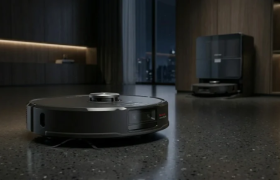 Mar 28, 2026
 Read our comprehensive Roborock S9 review. We analyze its massive 22,000 Pa suction power , dome-less 3D LiDAR navigation, and fully automated dock to see if it is the ultimate smart home cleaner.