The Engineering Secrets Behind Ancient Megastructures
Discover how ancient civilizations engineered megastructures without modern technology. Explore lost construction methods, from Roman self-healing concrete to Incan seismic masonry.




 by Simo Naboussi
 History is rarely a straight line. It is a chaotic, beautiful, and often violent series of collisions. When we speak of historical events, we aren't just discussing dates in a textbook; we are discussing the raw emotions, the desperate gambles, and the accidental discoveries that stand between us and a life in a cave. Every right we claim, every technology we touch, and every cultural nuance we share is a ripple from a stone thrown centuries ago.
Imagine a world without a settled home. For millennia, humanity was a restless species, chasing the seasons and the herds. However, one of the most transformative historical events wasn't a battle, but a silent realization: the earth could be tamed. The Neolithic Revolution was the moment we stopped running and started planting. This wasn't just about wheat and barley; it was about the birth of "ownership" and "community." Once we stayed in one place, we needed laws to settle disputes, walls to protect our grain, and gods to bless our harvests.
This shift led directly to the rise of the Great River Civilizations. In the plains of Mesopotamia and the banks of the Nile, we see the first blueprints of the modern state. These historical events established the concept of a bureaucracy. We invented writing—not to write poetry at first, but to count sacks of grain and track taxes. This cold, administrative necessity accidentally gave us the tool to record our souls. From the Epic of Gilgamesh to the Code of Hammurabi, the ancient world wasn't just building pyramids; it was building the psychological framework of human society.
The magnitude of these early eras cannot be overstated. When we look at the ruins of Rome or the Great Wall of China, we are looking at the physical manifestation of human willpower. These empires didn't just conquer land; they conquered the human imagination, proving that millions of strangers could be united under a single identity, a single language, or a single legal system.
There is a common misconception that history stopped during the so-called "Dark Ages." In reality, this was a period of intense fermentation. The fall of great empires led to a fragmentation of power, which in turn allowed for local cultures to crystallize. Yet, the truly seismic historical events of this era were intellectual. The Renaissance wasn't just an art movement; it was a defiant shout against the suffocating grip of medieval dogma. It was the moment humanity looked back at the Greeks and Romans and said, "We can do better."
This period of "Rebirth" triggered a chain reaction. When Martin Luther nailed his theses to the door in Wittenberg, he wasn't just challenging the Church; he was decentralizing the truth. This led to a century of blood, but also to the rise of individualism. If a man could read the Bible for himself, he could think for himself. This newfound autonomy fed directly into the Enlightenment. Philosophers like Locke and Rousseau started asking dangerous questions: Does a King really have a divine right to rule? Or does power belong to the people?
Before the mid-15th century, an idea could only travel as fast as a man on horseback. Gutenberg’s printing press changed that forever. This is arguably the most influential of all historical events because it broke the monopoly on knowledge. It was the original "social media" revolution. Bibles, scientific pamphlets, and political manifestos flooded Europe. It became impossible to burn every copy of a "dangerous" idea. This accessibility of information created a literate middle class, which would eventually become the engine of every major revolution in the centuries to follow.
The transition from the field to the factory was perhaps the most jarring shock to the human system in history. The Industrial Revolution was a series of historical events that replaced the rhythmic, seasonal life of the peasant with the relentless, ticking clock of the factory worker. It began with steam and coal, but it ended by shrinking the world. For the first time, humanity was no longer limited by the strength of an animal or the speed of the wind.
This era was a double-edged sword of staggering proportions. On one side, we saw a explosion in medical science, a rise in life expectancy, and the birth of modern convenience. On the other, we saw the Dickensian nightmare of child labor and the choking smog of industrial cities. These historical events forced a total rewrite of the social contract. It gave birth to the labor movement, the fight for the eight-hour workday, and the realization that economic growth must be balanced with human dignity.
The industrial era can be defined by several transformative shifts in the human condition:
The 20th century was a fever dream of progress and horror. We cannot discuss historical events without acknowledging the total wars that threatened to extinguish civilization. World War I shattered the romantic notions of glory and replaced them with the grim reality of trench warfare and chemical weapons. It ended empires but left a vacuum of resentment that led directly to the even greater cataclysm of World War II.
Out of the ashes of Hiroshima and the tragedy of the Holocaust, a new world order was forced into existence. The creation of the United Nations and the declaration of Universal Human Rights were not just bureaucratic gestures; they were survival mechanisms. Humanity had finally developed the power to destroy itself, and for the first time, historical events were driven by the sheer necessity of preventing a final, nuclear conclusion. The Cold War that followed was a tense, global chess match that pushed us to the moon and gave us the first glimpses of a truly interconnected planet.
While the superpowers clashed, another quiet but powerful series of historical events was taking place: the collapse of European colonialism. From the salt marches in India to the independence movements across the African continent, the "global south" reclaimed its voice. This wasn't just a political change; it was a cultural explosion that forced the West to confront its own prejudices and recognize the diverse tapestry of the human story.
We are currently living through historical events that our ancestors would have considered magic. The Digital Revolution has moved the theater of human history from the physical world to the digital realm. The invention of the microprocessor didn't just change how we work; it changed how we think, how we love, and how we perceive reality. We are no longer just biological creatures; we are data points in a global network.
The rise of the Internet is perhaps the only event that rivals the Neolithic Revolution in its scale of impact. It has democratized a trillion gigabytes of knowledge but has also created echo chambers of unprecedented power. As we stand on the precipice of the Artificial Intelligence era, we are witnessing historical events that challenge the very definition of "intelligence" and "creativity." We are effectively teaching machines to think, a move that will either be our greatest achievement or our final mistake.
When we look back at the vast expanse of historical events, it is easy to feel small. We see the rise and fall of kings, the crashing of economies, and the relentless march of technology. But there is a vital lesson in all of this: history is made by people who didn't know they were making history. They were simply people trying to solve a problem, survive a winter, or express an idea that felt too big for their own heads.
Understanding historical events is our only defense against repeating the tragedies of the past. It gives us the context to understand why our world is broken in some places and beautiful in others. As we navigate the complexities of the modern era, let us carry the wisdom of the ages with us. We are the inheritors of a billion struggles and a trillion dreams. The next great historical event isn't just something that happens to us—it is something we create.
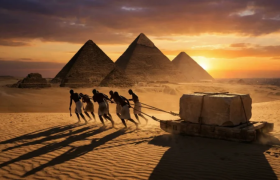 Apr 05, 2026
 Discover how ancient civilizations engineered megastructures without modern technology. Explore lost construction methods, from Roman self-healing concrete to Incan seismic masonry.
 Mar 16, 2026
 Discover how augmented reality is bringing museum artifacts to life. Explore the latest AR technology, global examples, and how digital exhibits transform the visitor experience.
 Dec 26, 2025
 Explore the fascinating legacy of Ancient Mathematics. From Babylonian logic to India's zero, discover how early civilizations decoded the universe and shaped our world.