


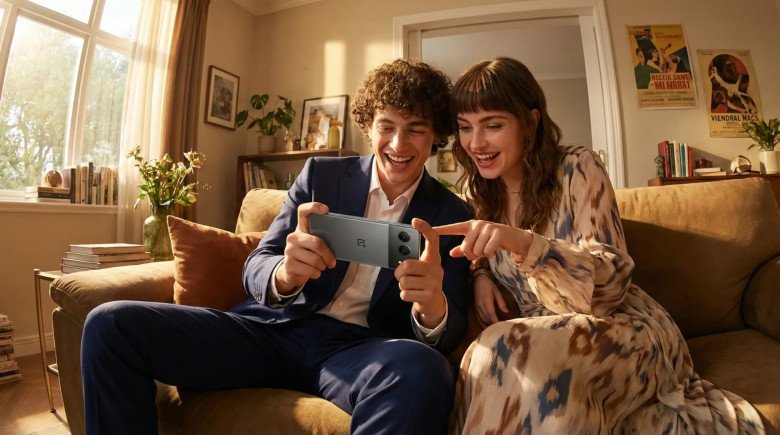
In the grand, often repetitive theater of modern smartphone evolution, we have witnessed a homogeneous drift toward what industry insiders call the "glass sandwich." For nearly a decade, the gold standard for premium design has been a sheet of glass on the front, a sheet of glass on the back, and a metal frame holding it all together. It is a design philosophy that, while elegant, screams fragility. It demands cases that hide the phone’s beauty the moment it leaves the box, turning sleek engineering into rubberized bricks. But history, as they say, is cyclical. There was a time when phones felt like industrial tools—cold to the touch, rigid, and unapologetically metallic. The OnePlus Nord 4 is not just another mid-range smartphone; it is a love letter to that bygone era, a defiant statement that premium materials should not be the exclusive reserve of the ultra-expensive flagship tier.
We are looking at the only metal unibody 5G smartphone on the market today. This is a device that aims to disrupt the status quo, offering a tactile experience that has been missing since the days of the OnePlus 3T or the HTC One M8. But nostalgia is a dangerous drug. It can blind us to modern necessities. The industry moved away from metal for a reason: the complexity of modern radio signals. Does a metal back interfere with 5G signals? Does the phone become a scorching hot plate during gaming? And, most critically for our readers in the United States, does this global sensation actually function on North American carrier networks?
This report delves exhaustively into every micron of the OnePlus Nord 4. We are stripping away the marketing gloss to examine the raw performance of the Snapdragon 7+ Gen 3, the real-world efficacy of the Sony LYT-600 camera sensor, and the uncomfortable truth about importing this device into the US. Whether you are a tech enthusiast yearning for the return of aluminum or a pragmatic buyer looking for the best value proposition, this analysis leaves no stone unturned.
Design and Build Quality: The Aluminium Unibody Revolution
1. The Engineering Marvel of 5G in Metal
To understand why the OnePlus Nord 4 is special, one must first understand why metal phones disappeared. As the telecom industry transitioned from 4G to 5G, the complexity of antenna arrays increased exponentially. Metal is, by nature, a Faraday cage—it blocks radio waves. If you encase a phone entirely in aluminum, it becomes a beautiful brick that cannot make a call. The industry’s solution was to switch to glass, ceramic, or plastic backs, allowing signals to pass through easily. This made phones more fragile and prone to shattering, but it solved the connectivity puzzle.
OnePlus has achieved something of an engineering miracle here. They have miniaturized the 5G antennas by over 50% and repositioned them strategically within the chassis. This is not merely a cosmetic choice; it is a structural one. They utilize a U-shaped antenna design and small glass inserts near the camera module to allow signal pass-through while maintaining a 90% metal chassis. The result is a device that feels dense, rigid, and incredibly substantial in the hand. There is zero flex. When you tap the back, it doesn't sound hollow like the plastic-backed competitors in this price bracket; it sounds solid, like a piece of aerospace equipment.
The device measures a mere 7.99mm in thickness, making it the slimmest Nord device ever produced. Despite this slim profile, it accommodates a massive battery. The weight sits at 199.5g, which provides a reassuring heft without dragging down your pocket. It balances perfectly, avoiding the "top-heavy" feel that plagues many modern flagships with giant camera bumps.
2. Aesthetics and Nordtones: Mercurial Silver, Obsidian Midnight, and Oasis Green
The visual language of the Nord 4 is defined by what the brand calls "Nordtones." These are not just different pigments applied to the same surface; they involve distinct manufacturing processes that alter the interaction of light and texture.
Mercurial Silver is arguably the showstopper of the lineup. It features a 2D laser-etched design created using more than 28,000 precise laser strokes. The result is a texture that looks like flowing ridges or a topographic map. It interacts with light dynamically—twist the phone, and the shadows move across the back panel. This texturing also serves a functional purpose: it resists fingerprints remarkably well and offers a grip texture that is unique in the current market.
Obsidian Midnight caters to the purists. It features a classic brushed gunmetal finish. It is understated, stealthy, and professional. It evokes the spirit of the legacy Gunmetal editions of past OnePlus flagships, appealing to long-time fans of the brand who miss that industrial aesthetic. It is sleek, subtle, and projects a sense of permanence that glass simply cannot replicate.
Oasis Green offers a different vibe entirely. This is a two-tone anodized finish that is vibrant and youthful. The anodization process dyes the metal surface itself, ensuring the color won't chip off like paint. It stands out in a sea of monochrome devices, offering a colorful option that doesn't look like a toy due to the metallic sheen.
3. Durability, Ergonomics, and the Tactile Experience
The tactile experience of the OnePlus Nord 4 is distinct and immediate. It is cold to the touch when you first pick it up—a sensation that instantly communicates "premium." It conducts heat away from your hand, feeling refreshing in a way that plastic never does. However, physics dictates that smooth metal is slippery. While the flat edges help with grip, the smooth anodized finish means this phone loves to slide off fabric surfaces like sofas or car seats. Users might find themselves torn between showing off the metal body and using a case for grip.
One of the most significant advantages of this design is durability. Glass backs shatter; aluminum dents. In a drop scenario, the Nord 4 is far more likely to survive with cosmetic damage rather than catastrophic structural failure. However, the front display protection is not specified as the top-tier Gorilla Glass Victus found on flagships, but rather "Panda Glass" or a similar alternative depending on the region. Therefore, a tempered glass screen protector is highly advisable.
The phone carries an IP65 rating. This means it is dust-tight and can withstand low-pressure water jets from any direction. While it lacks the full submersion protection of an IP68 rating, it is more than capable of surviving a rainstorm or a spilled drink. This is a sensible compromise for a mid-range device, prioritizing splash resistance which covers 90% of real-world water accidents.
Display Technology: Beyond the Pixels
1. 1.5K AMOLED and ProXDR Analysis
The OnePlus Nord 4 sports a 6.74-inch Super Fluid AMOLED display with a resolution of 2772 x 1240 pixels. This resolution, often referred to as "1.5K," represents a strategic sweet spot in modern display technology. It offers significantly more sharpness (450 ppi) than a standard 1080p panel, rendering text with razor-sharp clarity, yet it avoids the heavy battery drain associated with full 4K screens.
The panel supports a refresh rate of up to 120Hz, ensuring that scrolling through social media feeds or navigating the user interface feels buttery smooth. But the standout feature here is the support for Ultra HDR and ProXDR technology. ProXDR is a feature borrowed from the flagship tier; it analyzes the metadata of images to identify bright highlights—like the sun reflecting off a car or a streetlamp at night—and boosts the brightness of those specific pixels up to a peak of 2150 nits. This creates a dynamic range that looks incredibly lifelike, giving photos a three-dimensional "pop" in the gallery app that standard displays cannot match.
2. Aqua Touch: Practical Innovation for Real Life
One of the most practical innovations on the Nord 4 is "Aqua Touch." We have all experienced the frustration of trying to use a smartphone in the rain or with wet hands after washing dishes—the screen spasms, registering ghost touches, or refusing to swipe entirely. This happens because capacitive touchscreens confuse the conductivity of water with the conductivity of a finger.
OnePlus has implemented a dedicated touch algorithm, powered by a specialized touch IC and the main processor, that detects the presence of water droplets on the screen. It adjusts the capacitive sensitivity in real-time to distinguish between a water drop and a finger press. In testing, this feature works surprisingly well. You can navigate Google Maps in a drizzle or change a music track with wet fingers without the phone having a nervous breakdown. It solves a specific, common pain point, adding to the device's utility as a reliable daily driver.
3. PWM Dimming and Eye Comfort Technology
For users sensitive to screen flicker, the Nord 4 utilizes high-frequency Pulse-Width Modulation (PWM) dimming at 2160Hz. OLED screens typically flicker to simulate lower brightness levels, and low-frequency flicker can cause headaches and eye strain for sensitive users, even if it is not visible to the naked eye.
A frequency of 2160Hz is well above the threshold where most humans can perceive the flicker, effectively mimicking a DC dimming experience. This makes the display much more comfortable to use in pitch-black rooms before bed. Combined with the "Bedtime Mode" and hardware-level low blue light filters, the Nord 4 is engineered to be gentle on the eyes during late-night content consumption.
Performance Architecture: The Snapdragon 7+ Gen 3 Era
1. CPU and GPU Deep Dive: Architecting Speed
The heart of the OnePlus Nord 4 is the Qualcomm Snapdragon 7+ Gen 3 Mobile Platform. It is crucial not to let the "7 series" branding mislead you. This chip is architecturally closer to the flagship 8 Gen 3 than it is to the standard 7 Gen 3. It utilizes the same Cortex-X4 prime core found in top-tier flagships, albeit clocked slightly lower at 2.8GHz, alongside four Cortex-A720 performance cores and three Cortex-A520 efficiency cores.
In raw benchmarks, this setup destroys traditional mid-range chips. In AnTuTu v10, the device scores over 1.1 million to 1.3 million points, placing it comfortably in the territory of last year's top-tier flagships. The GPU is the Adreno 732, which offers a massive graphical leap over previous Nord generations. What this means for the user is near-instant app opening times, seamless multitasking with up to 16GB of LPDDR5X RAM, and the ability to handle heavy workloads like video editing or large spreadsheet manipulation without a stutter. The storage is UFS 4.0 (on the 256GB/512GB models), which allows for lightning-fast file transfers and read speeds—crucial for loading large games quickly.
2. Thermal Management: The Heatsink Effect of the Metal Chassis
Here lies the double-edged sword of the metal unibody. Aluminum is an excellent conductor of heat. In a glass or plastic phone, heat is often trapped inside the chassis, which can degrade the battery and throttle the CPU, even if the phone feels cool to the touch because the plastic acts as an insulator. The Nord 4 effectively uses its entire back panel as a giant heatsink.
During intensive tasks, the phone will feel warm—sometimes hot—to the touch. This is actually a sign that the cooling system is working efficiently; it is moving heat away from the processor and dumping it into the environment through the metal back. While some users might find a 42°C to 45°C back panel alarming during stress tests, it ensures that the internal components remain safe. However, prolonged gaming sessions in hot climates might become uncomfortable to hold without a case. The phone's advanced cooling system, comprising crystalline graphene and a large vapor chamber, works in tandem with the metal body to keep the "dragon" (Snapdragon) flying fast without dangerous overheating.
3. Gaming Real-World Tests: Genshin Impact and Competitive Play
In practical gaming scenarios, the Nord 4 performs admirably. In Genshin Impact, running at High settings and 60fps, the device manages to maintain a stable frame rate averaging around 48-52 fps during extended sessions. While it does not lock to 60fps like a dedicated gaming phone might, it provides a playable and smooth experience that outperforms competitors like the Pixel 8a and Samsung Galaxy A55 significantly in raw graphical throughput.
The "Trinity Engine" software optimization attempts to balance performance and thermals, sometimes throttling the CPU slightly to keep temperatures in check during marathon sessions. For competitive gamers playing Call of Duty Mobile or PUBG, the 120Hz touch sampling rate and steady performance make it a lethal tool.17 The X-axis linear vibration motor adds to the immersion, providing crisp haptic feedback for every shot and explosion.
Battery and Charging: The End of Range Anxiety
1. 5,500 mAh Mastery and Chemical Longevity
OnePlus has fitted the Nord 4 with a high-density 5,500 mAh battery, which is the largest ever put into a Nord phone. This massive capacity is a significant engineering achievement considering the phone's slim 7.99mm profile. Combined with the power efficiency of the 4nm Snapdragon 7+ Gen 3 and the LTPO display technology (which drops refresh rates when the screen is static), the battery life is nothing short of phenomenal.
In real-world usage, this phone easily clears a day and a half for heavy users. With 6-7 hours of Screen-On Time (SOT), users report finishing the day with 20-30% battery remaining. For moderate users, two days on a single charge is a realistic expectation. This stamina surpasses many of its peers, placing it among the endurance champions of the current market.
2. 100W SuperVOOC: The Physics of Speed
When the battery does run dry, the 100W SuperVOOC charging is transformative. The device can charge from 1% to 100% in approximately 28 minutes. A mere 5-minute charge provides enough power for 5 hours of Netflix streaming.
This speed changes user behavior fundamentally. You no longer need to charge your phone overnight, a habit that degrades battery health over time. You can simply plug it in while you take a shower or make coffee in the morning, and it will be topped up for the entire day. It is worth noting that for US users who might import this, the 100W speeds require 220V in some contexts, but even on 110V US grids, the speed is significantly faster than anything from Apple, Google, or Samsung. The charger is often included in the box for international markets, a rarity in modern smartphone retail.
3. Battery Health Engine: The Four-Year Promise
Fast charging often raises concerns about battery degradation. To combat this, OnePlus guarantees that the battery will maintain at least 80% of its capacity after 1,600 charging cycles, which equates to roughly four years of daily charging. This is achieved through the "Battery Health Engine," a smart chip that monitors the charging current and voltage in real-time. It adjusts the charging curve based on your habits and the battery's temperature, healing the electrolyte chemistry to prevent damage to the electrodes. This longevity promise aligns with the phone's extended software support, making it a viable long-term investment.
Camera System: The Honest Truth
1. Main Sensor Analysis: Sony LYT-600 vs. The World
The camera system on the Nord 4 is a topic of intense debate among enthusiasts. The main sensor is the 50MP Sony LYT-600 (1/1.95" size) with Optical Image Stabilization (OIS). Technically, this sensor is physically smaller than the IMX890 found in the previous Nord 3. In the physics of photography, a smaller sensor generally captures less light, which initially caused concern among reviewers.
However, sensor size is only half the story. The improved Image Signal Processor (ISP) on the Snapdragon 7+ Gen 3 and new algorithms allow the Nord 4 to punch above its weight. In daylight, photos are excellent. They are sharp, with a wide dynamic range and pleasing—if slightly conservative—colors. OnePlus has moved away from the oversaturated, "oil painting" look of the past. The "Real Tone" processing ensures skin tones look natural, avoiding the whitening or reddening that plagues many phones in this segment. The shutter speed is fast, allowing for the capture of moving subjects without blur, a critical factor for parents and pet owners.
2. Ultrawide and Selfie Performance: The Mid-Range Compromise
The secondary camera is an 8MP Ultrawide sensor (Sony IMX355). This is where the "mid-range" reality sets in. While it offers a useful 112-degree field of view for landscapes or group shots, the detail drops off significantly compared to the main lens. Edges can be soft, and color consistency often shifts slightly from the main shooter. It serves its purpose for social media posts, but it does not hold up to scrutiny on a large monitor. The dedicated macro lens found on previous models is gone, and frankly, it is not missed; the main camera's crop zoom does a better job at close-ups.
The 16MP front camera is adequate for video calls and selfies in good light. However, it lacks autofocus and supports only 1080p video recording. This is a letdown for content creators who need 4K selfie video for vlogging or TikTok. The images from the front camera can be soft and struggle with dynamic range in backlit scenarios.
3. Low Light Capabilities and Computational Photography
In low light, the OIS on the main camera helps stabilize shots for longer exposures. The "Nightscape" algorithm does a commendable job of retaining detail in shadows without introducing excessive noise. However, compared to the Google Pixel 8a, the Nord 4 falls short in challenging lighting. The Pixel's computational photography remains the gold standard in this price range, managing better exposure balance and detail retrieval in near-pitch-black scenarios.
The 2x in-sensor zoom on the Nord 4 is surprisingly competent in daylight, acting as a pseudo-telephoto lens by cropping into the high-resolution sensor. It provides lossless-like quality for portraits, but it struggles with noise and artifacts once the sun goes down.
4. Video Stabilization and Quality
The Nord 4 shoots up to 4K at 60fps on the main camera. The footage is crisp, with excellent bitrate and color accuracy. However, stabilization in 4K can be jittery if you are walking briskly, as the EIS (Electronic Image Stabilization) is less aggressive at this resolution than at 1080p. For stationary pans or slow movement, the video quality is fantastic, but for action shots, users may need to drop down to the "Ultra Steady" mode, which locks resolution to 1080p but provides gimbal-like smoothness.
Software Experience: OxygenOS and the AI Frontier
1. The Trinity Engine and Smoothness Certification
OxygenOS 14.1, based on Android 14, powers the Nord 4. It is a fluid, responsive interface known for its "Fast and Smooth" philosophy. The "Trinity Engine" is the marketing term for the deep-level software layer that manages CPU scheduling, RAM allocation, and storage vitality. In practice, this means the phone stays fast over months of use. Apps stay in memory longer, and the UI rarely drops a frame. The phone has achieved a TÜV SÜD "A" rating for fluency, certified to remain smooth for 72 months (6 years).
2. AI Eraser, Summary, and Speak Features: Gimmick or Game Changer?
OnePlus has aggressively integrated AI features into the Nord 4, aiming to compete with the AI-heavy marketing of Google and Samsung.
-
- AI Eraser 2.0: This tool allows users to circle unwanted objects or people in a photo, and the AI fills in the background. In testing, it works impressively well for removing simple distractions like a trash can or a stranger in the background. It rivals Google's Magic Eraser in speed, though complex backgrounds can sometimes result in smudged textures.
- AI Summary: This feature is a massive productivity booster. It can scan a long article, email, or transcript and generate a concise bullet-point summary. For professionals or students who need to digest information quickly, this is a legitimate value-add.
- AI Speak: This text-to-speech engine is surprisingly natural, allowing the phone to read articles aloud during your commute.
- BeaconLink: An interesting innovation that allows for voice calls via Bluetooth over short distances (creating a mesh network) even when there is no cellular signal—useful for concerts, festivals, or hiking where networks are congested or unavailable.
3. Software Support Lifecycle and Bloatware Analysis
OnePlus has committed to 4 years of major Android OS updates and 6 years of security updates for the Nord 4. This is a significant improvement over previous generations and ensures the phone will remain relevant and secure well into the future. It matches Samsung's mid-range support policy and beats many competitors, though it falls slightly short of Google's 7-year promise for the Pixel 8a.
However, the software experience is not entirely pure. The device comes with some pre-installed bloatware (games, Netflix, etc.) depending on the region. While these can be uninstalled, their presence slightly diminishes the premium feel of the unboxing experience.
US Market Analysis: The Import Conundrum
1. The Elephant in the Room
This section is the most critical for our readers based in the United States. The OnePlus Nord 4 is not officially sold in the United States. While it is available in Europe and India, US consumers must import it via third-party sellers (gray market). This presents significant challenges that go beyond just shipping costs.
2. Connectivity and Band Support: The T-Mobile, AT&T, and Verizon Reality
Cellular networks rely on specific radio frequency bands to provide coverage. The Nord 4 (Global/India versions) lacks support for key US bands used for long-range and indoor coverage:
-
- Band 71 (600MHz): This is the backbone of T-Mobile's rural and extended-range coverage. Without Band 71, an imported Nord 4 will have significant dead zones in rural America and poor penetration inside buildings.
- Band 13 & 14: These are critical low-frequency bands for Verizon and AT&T.
- mmWave 5G: The Nord 4 does not support the high-frequency millimeter-wave 5G bands used in dense US urban centers.
While the phone might connect to 4G LTE on T-Mobile in major cities using bands 2 and 4, the experience will be suboptimal. You will face frequent signal drops and slow data speeds indoors. Furthermore, Verizon is highly restrictive and often blocks non-certified devices from accessing their network entirely. AT&T utilizes a whitelist for devices; if the device IMEI is not on their list, you may be unable to make calls even if you have a signal.
3. The VoLTE and 5G Gap: A Technical Warning
Even if you get a signal, Voice over LTE (VoLTE) is not guaranteed on an imported device. VoLTE is the standard for making calls over the data network. Without it, the phone tries to drop to 2G or 3G to make a voice call. Since major US carriers have shut down or are in the process of shutting down their 3G networks, an imported Nord 4 might end up being a "data-only" device that cannot make or receive phone calls. While there are complex software hacks (using Shizuku and Pixel IMS tools) to force VoLTE on some carriers, this is not a solution for the average user.
4. Domestic Alternatives: OnePlus 12R vs. Pixel 8a
For US buyers enamored with the Nord 4's specs, there are domestic alternatives that offer a similar or better experience without the import headaches.
The Comparison:
When comparing the OnePlus Nord 4 (Import), OnePlus 12R (US Model), and Google Pixel 8a (US Model), the decision largely depends on priorities such as performance, network compatibility, camera quality, and charging speed.
The OnePlus Nord 4 appears attractive on paper at around $450–$500, offering a premium metal unibody design, a large 5,500 mAh battery with ultra-fast 100W charging, and a flat 1.5K AMOLED display. However, its major drawback for US buyers is poor network band support, which can significantly impact coverage and reliability. While its main camera is solid, the ultrawide performance is comparatively weak.
The OnePlus 12R, typically priced around $499 (often discounted), provides flagship-level performance with the Snapdragon 8 Gen 2 and full US carrier compatibility. It matches the Nord 4 with a 5,500 mAh battery (80W charging) and features a curved 1.5K AMOLED display. Its main camera sensor is stronger than the Nord’s, making it a more balanced and practical choice for US users.
The Google Pixel 8a, also around $499, takes a different approach. Powered by the Tensor G3, it prioritizes AI-driven features and computational photography, delivering the best overall camera processing in this comparison. While its 4,492 mAh battery and 18W charging are more conservative, it offers full US network support and a clean Android experience with long software updates. The build uses plastic and aluminum, making it less premium in hand but lighter and durable.
Overall, the OnePlus 12R offers the best performance-to-price ratio for US buyers, the Pixel 8a leads in photography and software experience, and the Nord 4 is appealing only if network limitations are not a concern.
Analysis: The OnePlus 12R is the logical alternative for the US market. It is officially sold in the US, supports all local carrier bands, and features the even more powerful Snapdragon 8 Gen 2 processor. While it lacks the flat metal aesthetic (opting for a curved glass design), it offers a better screen, better main camera, and full warranty support for a similar price point ($499 range). Alternatively, the Google Pixel 8a ($499) offers superior cameras and software support, though it lags behind the Nord 4 in charging speed and build materials.
Recommendation for US Buyers: Do not import the Nord 4 unless you are a technical enthusiast willing to deal with connectivity headaches. Buy the OnePlus 12R instead.
Audio, Haptics, and Biometrics
The multimedia experience on the Nord 4 is rounded out by a competent audio and haptic setup.
-
- Audio: The device features stereo speakers (one bottom-firing, one amplified earpiece). They get loud and remain clear until about 80% volume. They support "O-Reality Audio" for spatial simulation, creating a wider soundstage for movies and games. However, they lack the deep bass resonance of true flagship devices, sounding slightly thin at maximum volume.
- Haptics: The X-axis linear vibration motor is fantastic. It provides tight, crisp clicks for typing and system interactions, known as "O-Haptics." It feels precise and expensive, far better than the mushy buzzers found on typical budget phones. The integration with the UI means you feel subtle ticks when scrolling through menus or changing camera modes.
- Biometrics: The optical in-display fingerprint sensor is fast and reliable. While it is positioned slightly lower on the screen than is ideal for one-handed use, muscle memory adapts quickly. Face unlock is also available and lightning-fast, utilizing the front camera for a convenient, albeit less secure, unlock method.
Conclusion: A Flawed Masterpiece?
The OnePlus Nord 4 is a triumph of industrial design and performance engineering. By bringing back the metal unibody, OnePlus has created a device that feels distinct, durable, and luxurious in a market saturated with fragile glass. The Snapdragon 7+ Gen 3 provides flagship-grade power, the 5,500 mAh battery offers marathon endurance, and the 100W charging is a lifestyle-changing convenience. It successfully captures the spirit of the "flagship killer" ethos that put the brand on the map.
However, it is not without compromises. The camera system, while good, is not class-leading, falling behind the Pixel 8a in versatility and low-light performance. The ultra-wide sensor feels like an afterthought. And for our US audience, the lack of official availability makes it a forbidden fruit that is best admired from afar rather than imported.
Pros:
-
- Stunning, durable metal unibody design that stands out.
- Incredible performance for the price with the Snapdragon 7+ Gen 3.
- Class-leading battery life (5,500 mAh) and 100W charging speed.
- Bright, sharp 1.5K AMOLED display with Aqua Touch.
- Long software support (4 years OS / 6 years security).
Cons:
-
- Camera system is good, not great (weak ultrawide sensor).
- Gets warm under heavy load due to the metal body acting as a heatsink.
- Not officially available in the US (Importing causes severe connectivity issues).
- GPU throttles slightly in extreme gaming to manage heat.
Final Verdict: The OnePlus Nord 4 is the best "Nord" device ever made. It is a phone that remembers what made OnePlus great: speed, premium feel, and value. If you live in a region where it is sold, and you value performance and build quality over having the absolute best camera, this is the phone to buy. For US buyers, the OnePlus 12R remains the smarter, fully compatible choice. The Nord 4 serves as a beautiful reminder that metal phones are still possible—and hopefully, a sign of a metallic renaissance in smartphone design.
You may also like
-

How to Optimize Your Website for Google SGE & Win AI Search
-
The Engineering Secrets Behind Ancient Megastructures
-
OpenAI Sora vs Midjourney v6: Best AI Tools for Marketers
-
Midjourney v6: The Complete Guide to Advanced Prompts & Photorealism
-
The Rise and Fall of OpenAI Sora: What Happened to the Video AI Giant?
-
Apple Watch Series 11 Review: Is It Worth the Upgrade?

















Comments
0 comment