


 by Simo Naboussi
 Let's be honest: your home is more than just four walls. It’s the backdrop to your life, your personal retreat, and the place where memories are made. If you’ve ever walked into a stunning room and felt an immediate sense of peace or energy, you’ve experienced the true power of professional Home Interior Design.
This isn't about expensive furniture or slavishly following trends; it's about making deliberate, informed choices that elevate your daily living. Forget the dull, textbook approach.
This comprehensive, deep-dive article is your trusted friend and expert guide, revealing the secrets of seasoned designers. We're talking real, actionable strategies to transform your space into a personalized haven, guaranteeing you'll spend longer here because you simply love it.
Before you even think about shopping for accessories, a truly brilliant Home Interior Design project begins with a deep, honest assessment of the space itself. We call this 'spatial planning,' and it is the blueprint that dictates comfort, traffic flow, and overall sanity.
Have you ever had to squeeze past a coffee table or felt like a room was too "full"? That’s poor flow. Strategic space planning is the art of organizing furniture and defining zones to ensure movement feels natural and effortless.
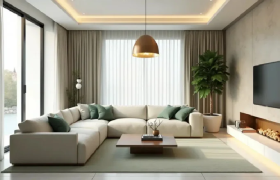
In every great design, there’s a clear pathway—often called the "circulation path"—that doesn't involve bumping into things. For a living area, this means establishing conversation groupings that are neither too far apart nor too cramped.
Don't fall into the trap of pushing all furniture against the walls; bringing pieces slightly into the room is the simplest trick to create intimacy and improve flow. You need to respect the concept of negative space; the empty areas are just as vital as the filled ones for giving the eye a place to rest and the room a feeling of openness.
Nothing screams amateur faster than furniture that is either too big or too small for its environment. The golden rule of Home Interior Design is that scale (the size of an object in relation to the room) and proportion (the size of objects in relation to each other) must harmonize.
This is particularly crucial when dealing with anchor pieces like sofas, dining tables, or large area rugs. A large room can handle a grand, oversized piece, creating a stunning focal point, but a smaller room demands multi-functional, slimline furniture that doesn't visually dominate.
Always measure twice, including the height of ceilings and the depth of pieces, to ensure a comfortable and proportionate fit. Remember, one carefully scaled, high-quality piece is always better than three poorly proportioned, rushed purchases.
Here’s where your personal style truly shines. Color and texture are the emotional language of Home Interior Design; they are what gives your rooms a distinct personality and directly influences your mood the moment you walk in. Get these right, and the atmosphere in your home will be truly transformative.
Forget the old rules about which colors go together. Instead, focus on color psychology. Do you want your bedroom to be a serene sanctuary? Then cool tones like soft blues, sage greens, and calming violets are your best friends—they visually recede and promote relaxation.
Need a vibrant, social kitchen or dining room? That's where warm, stimulating hues like rich oranges, terra cotta, or mustard yellows shine; they draw people in and encourage conversation. Professional designers use color to manipulate perceived space:
Texture is often overlooked, yet it’s the element that adds richness and a 'designer touch' to any space, even a monochromatic one. A room that lacks texture feels flat and two-dimensional. The key is layering. Think of pairing the smooth glass of a coffee table with the chunky knit of a throw blanket, the roughness of a linen curtain, and the softness of a velvet pillow.
Different textures interact with light in unique ways, adding visual interest and making the space feel more curated, human, and comfortable. A beautiful example of smart texture use in Home Interior Design:
If color is the soul of the room, lighting is the breath that brings it to life. Without a thoughtful lighting plan, even the most beautiful materials and perfectly scaled furniture will fall flat. You need to think about more than just a single central fixture.
A professional designer never relies on just one light source. They use a three-tiered system to provide versatility and mood control. This is arguably the most crucial technical detail in high-level Home Interior Design:
The secret is using dimmers on all three layers; this gives you the power to instantly change the atmosphere from bright and energetic to intimate and relaxing.
Stop buying pieces just because they're on sale. Every piece of furniture should earn its place. In expert Home Interior Design, the focus is on quality over quantity and prioritizing pieces that can handle the wear and tear of real life. When selecting, consider:
Modern living presents unique challenges. How do you create spaciousness when you're limited on square footage? And how do you ensure your beautiful Home Interior Design choices are also responsible ones? These aren't just ethical considerations anymore; they are integral parts of a sophisticated design strategy.
Designing a small apartment requires ingenuity, not compromise. The goal is to deceive the eye into perceiving greater depth and space. Here’s how the professionals do it:
Sustainable Home Interior Design is no longer a niche concept; it’s a necessary consideration for anyone building or renovating. This involves making choices that are better for the planet and healthier for your family:
You’ve reached the end of this journey, and hopefully, you now realize that exceptional Home Interior Design is not an inaccessible luxury—it’s a disciplined art form driven by foundational principles and personal vision. From mastering the essential flow of your space to deliberately using light and color to shape your mood, every decision is a chance to enhance your life.
The goal is to move past simply decorating and start designing. Use this guide as your manifesto to create a space that is not just aesthetically pleasing, but deeply supportive of your well-being. Invest your time and thought into these concepts, and your home will repay you tenfold, becoming the stunning, functional, and intensely personal sanctuary you truly deserve. Start your next project today, armed with the knowledge to make every choice count.