


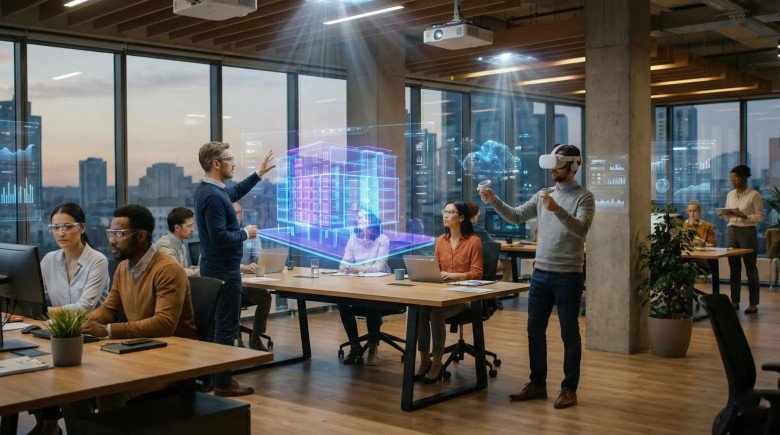
Extended Reality (XR) is part of the digital age and refers to "unreal reality" in new models of human-computer interaction.
It is an umbrella term encompassing augmented reality, virtual reality, and mixed reality experiences.
This type of immersive technology enables a significant shift in how humans perceive reality, elevating the user experience to a completely new and more satisfying level. The degree of immersion is closely related to the ability to interact with the digital environment.
Through this technology, users find themselves in a virtual world or interact with an augmented virtual world. Therefore, virtual content is perceived as highly realistic.
Ontology and Conceptual Framework of Extended Reality
Extended Reality is an umbrella term that captures the full gamut of technologies capable of altering the human perception of reality by introducing digital elements into the physical or real-world environment. The nomenclature uses the letter "X" as a mathematical variable—a placeholder that can be substituted by "V" for Virtual, "A" for Augmented, or "M" for Mixed Reality, while remaining open to future designations as the technology continues to expand. This linguistic design reflects the rapid and unpredictable nature of innovation in spatial computing, ensuring that the term remains relevant even as new, currently unimagined forms of immersion are developed.
The concept of Extended Reality is rooted in the ability to extrapolate beyond typical human perception, allowing for the visualization of phenomena that are otherwise invisible, such as radio waves, sound frequencies, or complex data structures. This capability transforms the subject—whether human or technological—by placing it in a closed feedback loop of information and sensory stimulus. This process, often referred to as computer-mediated reality, allows for the manipulation of one's environment to improve efficiency, facilitate learning, and enhance creative expression.
The move toward Extended Reality is driven by a desire for more natural and intuitive human-computer interfaces. Traditional computing relies on the abstraction of information onto flat screens, requiring the user to translate two-dimensional data into three-dimensional mental models. Extended Reality eliminates this translation layer by presenting information in a format that aligns with the brain's innate spatial processing capabilities. This shift is expected to have deep socio-cultural and economic impacts, influencing sectors ranging from family entertainment to telemedicine and heavy manufacturing.
The Reality-Virtuality Continuum: A Spectrum of Perception
To categorize the various forms of immersive experiences, researchers rely on the Reality-Virtuality Continuum, a theoretical framework established by Paul Milgram and Fumio Kishino in the late twentieth century. This continuum defines the full spectrum of possibilities between a completely physical environment and an entirely digital one. It is essential to view this as a gradient rather than a set of discrete categories; the boundaries between different points on the continuum are often fluid, and as technology advances, they are becoming increasingly indistinguishable.
At the left extreme of the continuum lies the Real Environment, which consists purely of physical matter. As digital content is introduced to enhance this reality, the experience moves into Augmented Reality (AR). Moving toward the center, the experience transitions into Mixed Reality (MR), where the degree of integration between digital and physical elements becomes more complex and interactive. The right extreme is occupied by Virtual Reality (VR), where the physical world is entirely obscured by a computer-generated environment.
Understanding this continuum is vital for the development of effective user experiences (UX). Designers must account for the user's level of awareness of their physical surroundings, as this influences both comfort and safety. For example, a VR experience that requires significant physical movement must be carefully managed to prevent the user from colliding with real-world obstacles, whereas an AR application must ensure that digital overlays do not distract from critical real-world tasks.
Technological Pillars: From Sensors to Spatial Computing
The infrastructure of Extended Reality is a sophisticated convergence of hardware components and software algorithms designed to synchronize digital content with the physical world. Spatial computing serves as the engine of this synchronization, utilizing a suite of sensors and computer vision techniques to map the environment and track the user's position within it. This process requires the simultaneous processing of vast amounts of data—from user preferences to real-time sensor inputs—to ensure that the digital experience remains coherent and responsive.
Hardware evolution has seen the transition from tethered, bulky headsets to untethered, high-performance wearables. Central to these devices are Inertial Measurement Units (IMUs), which utilize accelerometers and gyroscopes to track the orientation and motion of the user's head and hands. These are often combined with outside-in tracking (external sensors) or inside-out tracking (on-board cameras) to achieve six-degrees-of-freedom (6DoF), allowing the user to move freely through space.
The software layer is increasingly influenced by Artificial Intelligence, which assists in natural user interfaces (NUI) such as gesture recognition, gaze tracking, and voice commands. These technologies remove traditional barriers to engagement, allowing users to interact with the digital world as they would with the physical one—by reaching out to grab objects or looking at specific elements to activate them. This level of intuitive interaction is critical for mass adoption and for the effectiveness of complex industrial and medical applications.
Immersive Modalities: Deconstructing VR, AR, and MR
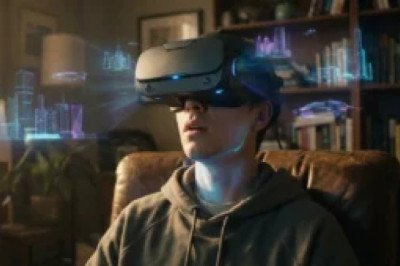
Virtual Reality (VR) represents the most immersive extreme of the Extended Reality spectrum. By completely occluding the physical world, VR places the user in a fully synthetic environment where every sensory input is computer-controlled. This makes it an unparalleled tool for scenarios that require total focus or for those that would be too dangerous, expensive, or physically impossible to experience in reality. VR systems typically require high-resolution displays and high refresh rates—often 90 Hz or higher—to ensure that the synthetic world remains stable and convincing.
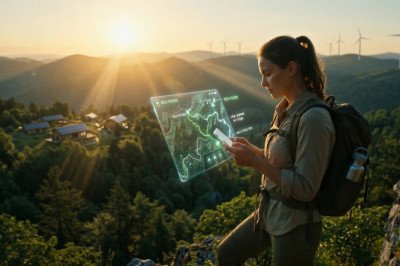
Augmented Reality (AR) takes a different approach by enhancing rather than replacing the physical environment. Through devices like smartphones or optical see-through glasses, AR overlays digital text, images, or 3D models onto the user's view of the real world. AR is highly accessible because it does not necessarily require specialized hardware; millions of people already interact with AR through social media filters and mobile games. Its primary utility lies in providing context-sensitive information exactly where and when it is needed, such as navigation cues on a car's windshield or assembly instructions for a complex piece of machinery.
Mixed Reality (MR) is the hybrid space where digital and physical objects co-exist and interact in real-time. The distinguishing factor of MR is the concept of spatial anchoring and object occlusion, where a virtual object understands the depth and geometry of the physical room. This allows for highly sophisticated interactions, such as a virtual architect's model being placed on a real-world table, where it can be inspected and manipulated by multiple users simultaneously.
The lines between these modalities are blurring as hardware matures. Modern headsets are increasingly adopting "video passthrough" technology, using high-resolution external cameras to display the real world on the internal screens of a VR device. This allows the device to toggle seamlessly between VR and MR, providing the user with the appropriate level of immersion for any given task.
Industry 4.0 and the Industrial Metaverse
Extended Reality is a cornerstone of the fourth industrial revolution, often referred to as Industry 4.0, where it is used to bridge the gap between cyber-physical systems. In manufacturing and heavy industry, the technology is used to create "Industrial Metaverses" that allow for the visualization and optimization of complex workflows before a single physical asset is moved. This approach relies heavily on Digital Twins—highly accurate digital replicas of physical components or entire factories—that are updated in real-time through IoT sensor data.
One of the most immediate benefits of XR in the industrial sector is the transformation of workforce training. Traditional training often involves a period of high risk when a new employee first handles physical machinery. XR provides a risk-free alternative, allowing trainees to practice complex or dangerous tasks in a simulated environment until they achieve mastery. This has been shown to improve retention and reduce errors, leading to a significant return on investment (ROI) for companies.
Remote assistance is another high-impact application. Through MR headsets, frontline workers can connect with specialized experts who may be thousands of miles away. The expert can see exactly what the technician sees and provide real-time annotations, visual cues, and step-by-step guidance. This "remote eyes" capability is particularly valuable for repairing complex equipment in remote locations, such as offshore wind farms or deep-sea mining operations.
The Healthcare Revolution: Precision, Therapy, and Access
In the medical field, Extended Reality is no longer a peripheral innovation but an emerging cornerstone of clinical practice and research. The ability to visualize the human body in three dimensions with exceptional accuracy is transforming how doctors plan and execute surgeries. AR-guided navigation systems allow surgeons to see a patient’s internal anatomy—such as the location of axonal pathways in the brain or specific vascular structures—overlaid directly on the surgical field. This level of precision is critical for procedures like deep brain stimulation (DBS), where electrode placement must be accurate to the millimeter.
Beyond the operating room, XR is revolutionizing patient care and rehabilitation. Virtual Reality Exposure Therapy (VRET) is a clinically validated method for treating a range of psychological conditions, including anxiety disorders, phobias, and PTSD. By placing patients in controlled, immersive environments that simulate their fears—such as an elevator for claustrophobia or a high bridge for acrophobia—therapists can guide them through a process of gradual desensitization. This approach is often more effective than traditional "imaginal exposure" because it engages the brain as if the situation were actually happening, leading to more durable therapeutic outcomes.
Extended Reality also offers a solution to the problem of medical access. Metaverse-based clinics and teletherapy rooms allow for real-time remote interactions between patients and providers, bypassing geographic and socioeconomic barriers. This is particularly vital in underserved regions where specialized care may be unavailable. By integrating AI with XR, these platforms can even offer personalized interventions that adapt to the patient's emotional and physiological state in real-time, providing a level of tailored care that was previously impossible to scale.
Retail Transformation and the Experience Economy
The retail sector is undergoing a profound shift from a transaction-based model to an experience-based one, with Extended Reality serving as the primary driver of this change. By allowing consumers to engage with products in three-dimensional space, retailers can build deeper emotional connections and reduce the friction associated with online shopping. Augmented Reality, in particular, has become a powerful tool for "virtual try-ons," allowing customers to see how clothing, glasses, or makeup will look on them without visiting a physical store.
Furniture and home design retailers like IKEA have pioneered the use of AR to solve the "spatial uncertainty" problem. Customers can use an AR app to place 3D models of furniture into their actual living rooms, ensuring that a sofa or bookshelf fits perfectly and matches the existing decor before they make a purchase. This not only improves the customer experience but also significantly reduces return rates, which is a major cost-saver for retailers.
In real estate and architecture, Extended Reality is reshaping how properties are marketed and sold. Virtual tours allow prospective buyers to explore a home in detail without a physical visit, saving time and money for all parties involved. Real-world data indicates that properties featuring virtual tours receive significantly more engagement, and buyers are 20% more likely to close a deal after a VR experience. For luxury properties and new construction, XR can showcase not just the space but also the ambiance of the neighborhood or the final look of an unbuilt structure, providing an emotional resonance that static images cannot provide.
Psychological and Physiological Impacts of Immersion
The human response to high-fidelity immersion is not limited to visual processing; it involves deep-seated biological and evolutionary mechanisms. One of the most famous challenges in this field is the "Uncanny Valley," a psychological phenomenon where an object that looks nearly, but not perfectly, human triggers feelings of revulsion or unease. This effect is often magnified by movement; a static mannequin may be slightly eerie, but one that moves with almost-but-not-quite human fluidity can be deeply disturbing.
Scientific investigations into the Uncanny Valley have proposed the "Pathogen Avoidance Hypothesis," which suggests that our sensitivity to subtle imperfections in human likeness is an evolutionary defense designed to identify and avoid individuals showing signs of infectious disease. Research has shown that social interactions with "uncanny" virtual agents in VR can actually trigger a mucosal immune response—specifically an increase in salivary secretory immunoglobulin A (sIgA)—suggesting the body treats these digital anomalies as real health threats.
Another physiological hurdle is cybersickness, which occurs when the visual system perceives motion that is not matched by the vestibular system in the inner ear. Symptoms include nausea, eye strain, and disorientation. This is particularly problematic in VR, where the user's entire visual field is replaced. To combat this, developers must strictly adhere to the "20 Millisecond Rule"—maintaining a motion-to-photon latency of less than 20 ms to ensure that movements and visual updates are perfectly synchronized.
Cybersecurity, Privacy, and Ethical Imperatives
The transition to spatial computing introduces a new landscape of privacy and security risks that traditional cybersecurity frameworks are ill-equipped to handle. Extended Reality devices are, by nature, data-harvesting machines that require an extensive collection of multimodal user and environment data to function. This includes highly sensitive biometric information such as gaze tracking, facial expressions, voiceprints, and gait analysis.
Biometric data is uniquely dangerous because it is immutable; unlike a password, it cannot be changed if compromised. This data can be used for "behavioral profiling," revealing a user’s health conditions, emotional state, or even cognitive patterns. Furthermore, the cameras and sensors used for spatial mapping can inadvertently record the user's private physical environment, including the location of valuable items or the presence of other individuals without their consent.
The ethical implications are equally profound. The ability to manipulate a user's perception of reality raises concerns about autonomy and the potential for "nudging"—using subtle environmental changes in a virtual space to influence a user's decisions or behavior. As XR becomes more entrenched in daily life, there is an urgent need for "Privacy by Design" and the establishment of global standards that protect user rights without stifling the transformative potential of the technology.
Technical Constraints and the Hardware Bottleneck
Despite rapid progress, Extended Reality remains constrained by several fundamental technical bottlenecks. The primary challenge is the "Motion-to-Photon" (MTP) latency—the time it takes for a user's movement to be reflected on the display. Achieving latencies below the critical 20 ms threshold requires a highly optimized pipeline, from the IMU sensors and camera tracking to the CPU/GPU rendering and final display scan-out.
The physics of wearable hardware presents an additional set of trade-offs. To provide high-fidelity immersion, devices need powerful processors and high-resolution displays, both of which consume significant power and generate heat. However, to be socially acceptable and comfortable for long-term wear, devices must be light and small. Current untethered headsets often struggle with battery life and thermal management, limiting their utility in demanding industrial or medical environments.
To address these limitations, many industry leaders are moving toward "Cloud XR," where the heaviest processing is offloaded to remote servers and the resulting video is streamed to the headset. This requires ultra-low latency, high-bandwidth connectivity, which is becoming increasingly available through the rollout of 5G-Advanced and Wi-Fi 7. By decoupling the display from the processing power, manufacturers can create lighter, more comfortable devices that do not compromise on visual fidelity.
Strategic Convergence: The Role of Artificial Intelligence
The synergy between Extended Reality and Artificial Intelligence (AI) is the most significant development in the immersive technology landscape in recent years. AI is not just a supporting technology; it is the catalyst that is turning static simulations into "intelligent, adaptive ecosystems". Advanced AI algorithms are now being used to track user progress, predict areas where a learner might struggle, and dynamically adjust the virtual environment to provide personalized feedback in real-time.
Generative AI is also revolutionizing the content creation process. Traditionally, building a 3D virtual environment was a manual, resource-intensive task requiring specialized expertise. Now, generative models can automate the creation of high-quality 3D assets, textures, and even entire worlds based on simple text prompts or real-world sensor data. This "democratization" of content creation allows non-technical users to build immersive experiences, significantly accelerating the adoption of XR across all sectors.
The combination of AI, XR, and Digital Twins is creating what is known as the "Industrial Metaverse," where operations can be simulated, optimized, and controlled with a level of precision that was previously impossible. This intelligent training stack captures rich performance signals—such as gaze patterns and hesitation on hazardous steps—and transforms them into predictive risk alerts, allowing for proactive interventions before a real-world incident occurs.
Future Perspectives: The Path toward an Extended Human
As we look toward the future, Extended Reality is poised to move beyond a set of hardware and software tools to become a foundational layer of the digital society. The goal is the creation of a "socially acceptable and comfortable for all-day wear" form factor—effectively replacing traditional eyeglasses with spatial computers. This would allow for a "digital-first lifestyle" where information, communication, and environmental interaction are seamlessly integrated into our natural visual field.
The long-term trajectory suggests a shift toward "Extended Human" capabilities, where XR contribution to sustainability, resilience, and inclusivity becomes a primary societal goal. This includes using AR to enhance the vision of those with low vision, providing immersive educational platforms that are accessible to all, and using virtual collaboration to reduce the environmental impact of travel. While challenges regarding privacy, data exploitation, and the psychological impact of immersion remain, the potential for positive transformation is undeniable.
Core Principles for Sustainable XR Integration
-
- Prioritize human-centered design to ensure that immersive experiences are accessible, inclusive, and do not overwhelm the user's biological senses.
- Implement robust data governance and privacy protocols to protect the unprecedented amounts of sensitive biometric and environmental data harvested by XR devices.
- Develop open standards and interoperable frameworks to prevent the fragmentation of the spatial computing landscape into closed, proprietary ecosystems.
- Focus on reducing Motion-to-Photon latency to below 20 ms to eliminate cybersickness and ensure a comfortable, high-quality user experience.
- Leverage Artificial Intelligence to create adaptive, personalized environments that respond to user needs and improve training and therapeutic outcomes.
- Ensure that Extended Reality contributes to ecological sustainability by optimizing industrial processes and providing high-quality remote collaboration alternatives to physical travel.
- Design for the "Uncanny Valley" by choosing appropriate levels of anthropomorphism for avatars and agents based on the specific requirements of the application.
- Maintain a high level of "Spatial Presence" through the integration of spatial audio and haptic feedback, increasing the psychological effectiveness of immersion.
- Address the "Measurement Gap" in traditional training by using XR telemetry to generate objective, granular data on performance and mastery.
- Foster a collaborative innovation ecosystem that includes researchers, developers, and regulators to ensure the safe and beneficial development of spatial computing technologies.
Conclusion: The New Reality of Interaction
As mentioned at the beginning of this article, extended reality (AR) is a model for interacting with reality that combines augmented reality (AR) and virtual reality (VR) experiences.
This technology is considered one of the most promising for the near future due to its ability to captivate users with highly immersive content.
Currently, the use of this technology is limited to the business sector.
To make this type of experience available to consumers, we need to wait for wearable devices that are easy to use and, more importantly, devices that offer tangible added value in everyday life thanks to customized features.
Extended Reality Revolution What You Must Know
You may also like
-

How to Optimize Your Website for Google SGE & Win AI Search
-
The Engineering Secrets Behind Ancient Megastructures
-
OpenAI Sora vs Midjourney v6: Best AI Tools for Marketers
-
Midjourney v6: The Complete Guide to Advanced Prompts & Photorealism
-
The Rise and Fall of OpenAI Sora: What Happened to the Video AI Giant?
-
Apple Watch Series 11 Review: Is It Worth the Upgrade?















Comments
0 comment