


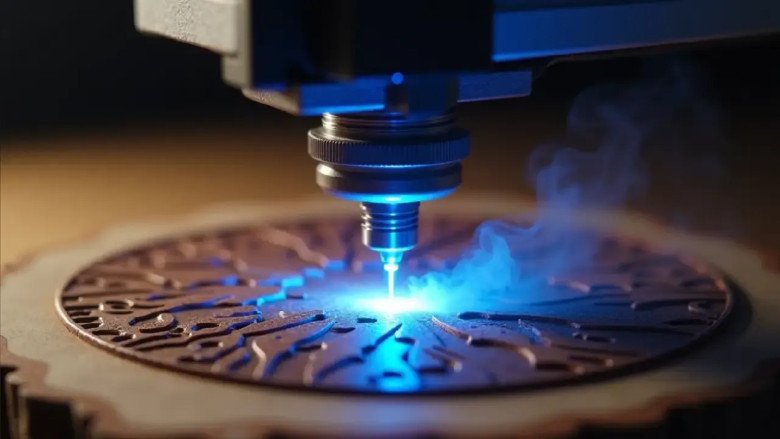
Imagine a tool capable of vaporizing steel with millimeter accuracy yet gentle enough to erase a scar on the human face. This duality defines the CO₂ Laser. Since its breakthrough creation by electrical engineer Kumar Patel at Bell Labs, the Carbon Dioxide Laser has transitioned from a laboratory curiosity to an indispensable powerhouse in virtually every field demanding supreme precision.
Operating at a fascinating wavelength of 10.6 micrometers in the far-infrared spectrum, this laser’s immense power is its secret weapon: it is absorbed almost perfectly by water. Given that water constitutes the majority of both biological tissue and many industrial materials, the CO₂ Laser offers unprecedented control over ablation and thermal energy transfer.
This isn't just technology; it’s a paradigm shift in how we approach manufacturing, medicine, and aesthetics. This comprehensive guide will peel back the layers, exploring the intricate science, the life-changing medical applications, and the industrial might of the omnipresent CO₂ Laser.
The Engine Room: Unraveling the Core Science of the CO₂ Laser
To truly appreciate the CO₂ Laser, we must first look inside the engine. It’s categorized as a molecular gas laser, distinguishing it from solid-state or diode lasers. The key to its high efficiency and continuous power lies in its active medium—a mixture of three primary gases working in perfect synergy: Carbon Dioxide (text CO_2), Nitrogen (text N_2), and Helium (text He). This cocktail isn't arbitrary; it’s a carefully engineered system designed to maximize light generation.
The CO₂ Laser operates on a sophisticated quantum principle, essentially utilizing a four-level energy system for lasing, which significantly boosts its efficiency. The process unfolds in a clean, systematic manner:
-
- The Pump (Nitrogen): An electrical discharge is applied to the gas mixture, causing the text N_2 molecules to become vibrationally excited. Think of the nitrogen as the battery charger in the system.
- The Transfer (Collision): The excited text N_2 molecules collide almost perfectly with the ground-state text CO_2 molecules, transferring their energy with near-perfect efficiency. This pumps the text CO_2 to its upper energy state, achieving the critical state of population inversion.
- The Emission: Once inverted, the text CO_2 molecules are ready to release photons. A single photon triggers stimulated emission, causing a cascade of identical photons to be released at the signature 10.6 mu m wavelength.
- The Stabilizer (Helium): Crucially, the text He gas rapidly cools the system and helps the text CO_2 molecules quickly drop from their lower lasing level back to the ground state. This crucial step prevents bottlenecks and allows the laser to operate continuously at high power levels, making it the workhorse of industrial and medical sectors.
It is this precise control over the energy transfer and cooling that gives the high-power CO₂ Laser the stability and reliability required for complex manufacturing and surgical environments.
The Aesthetic Revolution: CO₂ Laser for Skin Resurfacing and Rejuvenation
For decades, the CO₂ Laser has been the gold standard for dramatic skin resurfacing, offering results that topical creams or light peels simply cannot touch. The secret lies in its destructive yet regenerative power. When the 10.6 mu m beam hits the skin, the water molecules instantly absorb the energy, causing the targeted cells to vaporize (ablation). This intentional injury forces the skin to trigger a powerful wound-healing response, resulting in a phenomenal synthesis of fresh collagen and elastin—the skin's scaffolding proteins.
The evolution of the CO₂ Laser has made it safer and more accessible. Today, clinicians use two primary methods, each tailored to different patient needs and tolerance for downtime:
1. Fully Ablative CO₂ Laser (Traditional):
This method removes the entire top layer of the epidermis over the treated area. It delivers the most profound results for:
-
- Deep static wrinkles, particularly around the mouth and eyes.
- Severe sun damage (Photoaging).
- Significant acne and traumatic scarring.
- Pre-cancerous lesions (Actinic Keratoses).
While the transformation is unmatched, the trade-off is substantial downtime, often requiring several weeks for the new, pristine skin layer to fully heal and shed its redness. This treatment is a commitment, but the payoff is often an incredible, long-lasting restoration of youthful texture.
2. Fractional CO₂ Laser (Modern Innovation):
The introduction of fractional technology was a genuine breakthrough. Instead of hitting the entire skin surface, the CO₂ Laser beam is optically filtered into a grid of microscopic "columns" of thermal energy. It creates precise micro-injuries while leaving the surrounding tissue completely intact. This surrounding, untouched tissue acts as a vital reservoir for rapid healing, leading to:
-
- Dramatically reduced recovery time (often just a few days).
- Lower risk of side effects like infection or prolonged redness.
- Effective treatment of fine lines, textural irregularities, and general skin tightening.
The fractional approach harnesses the power of the CO₂ Laser while respecting the patient’s busy schedule, making this profound level of skin rejuvenation available to a much wider audience.
Surgical Mastery: Precision and Hemostasis with the CO₂ Laser in Medicine
In the operating room, the CO₂ Laser is more than a cutting tool; it’s an extension of the surgeon’s hand, offering unprecedented control. The characteristic of instant water absorption means that as the beam cuts tissue, it simultaneously seals (cauterizes) small blood vessels and nerve endings. This results in a nearly bloodless surgical field (hemostasis), reduced pain, less tissue swelling, and a sterile field due to the vaporization of bacteria.
Due to its minimal lateral thermal spread—meaning the heat doesn't damage the tissue right next to the incision—the CO₂ Laser is the preferred tool in numerous delicate surgical fields where preserving healthy tissue is paramount:
-
- Otolaryngology (ENT): Used for micro-surgery of the vocal cords and larynx, removing lesions with minimal damage to the delicate surrounding structures essential for voice function.
- Neurosurgery: Employed for the precise ablation of brain tumors, minimizing injury to critical neurological pathways.
- Plastic Surgery and Dermatology: Essential for the precise removal of benign and malignant skin lesions (moles, warts, skin tags) without deep scarring.
- Podiatry: Highly effective for the sterile removal of plantar warts and nail fungus, providing superior results compared to traditional methods.
The ability to perform non-contact surgery with such high precision not only enhances the outcome for the patient but also significantly improves the surgeon's ability to navigate complex anatomical structures, truly elevating the standard of surgical care.
The Industrial Workhorse: Cutting and Engraving with CO₂ Laser
Switching gears from the medical field, the high-power CO₂ Laser is the backbone of modern industrial fabrication. In this context, the laser acts as the ultimate digital-to-physical bridge. The CAD file on a computer screen is translated into the physical reality of a finished product with flawless accuracy, speed, and repeatability unmatched by any traditional mechanical cutting process. The laser's ability to focus kilowatt-level power into a micron-sized spot makes it an ideal heat source for material processing.
The 10.6 mum wavelength is exceptionally effective for processing a vast array of organic and non-metallic materials, making the industrial CO₂ Laser indispensable in sectors ranging from fashion to electronics:
The CO₂ Laser delivers a clean, sealed edge, which is particularly beneficial in the textile industry as it prevents fraying. Furthermore, because the cutting is non-contact, there is zero tool wear, translating into lower operational costs and consistent quality, a massive advantage over mechanical blades or routers.
Navigating Success: Essential Safety and Operational Considerations
The immense power that makes the CO₂ Laser revolutionary also demands the utmost respect. Whether operating a powerful industrial machine or performing a delicate medical procedure, strict protocols are necessary to ensure safety and optimal results. A powerful tool is only as good as the operator controlling it.
The most critical component of any CO₂ Laser operation is the human element. Rigorous training is essential in both spheres:
Medical Context:
-
- Eye Protection: Specialized eyewear is mandatory, as the invisible infrared beam can cause irreversible retinal damage.
- Smoke Plume Management: Laser plume (surgical smoke) is created during tissue vaporization and must be extracted using high-efficiency smoke evacuators to protect both the patient and the medical team from potential biological hazards.
Industrial Context:
Industrial settings require managing potential fire hazards (especially with highly flammable materials like acrylic or wood) and ensuring the beam path is entirely enclosed. Regular calibration of the optical system, including mirrors and lenses, is crucial for maintaining the laser's power and focus, directly impacting the final quality of the cut or engraving.
CO₂ Laser Treatment Benefits, Uses, and How It Works
You may also like
-

How to Optimize Your Website for Google SGE & Win AI Search
-
The Engineering Secrets Behind Ancient Megastructures
-
OpenAI Sora vs Midjourney v6: Best AI Tools for Marketers
-
Midjourney v6: The Complete Guide to Advanced Prompts & Photorealism
-
The Rise and Fall of OpenAI Sora: What Happened to the Video AI Giant?
-
Apple Watch Series 11 Review: Is It Worth the Upgrade?


















Comments
0 comment