

.webp)
 by Simo Naboussi
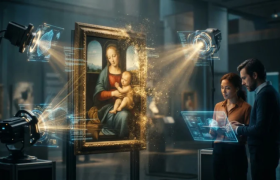
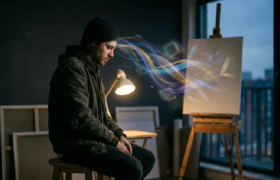
 The law regulates the use of artificial intelligence (AI) in the creation of artistic works (paintings, photographs, digital works, etc.) for the purpose of obtaining copyright protection. The principle enshrined in the law emphasizes the importance of the human element in the creative process, with AI serving only as an auxiliary tool.
Thus, the arts, along with healthcare, labor, intellectual professions, the judiciary, and cybersecurity, which are also covered by the same law, now have a framework for the use of AI.
These clear rules should reduce the numerous lawsuits that arose from the use of AI, particularly in the arts, in the early years. The law aims to promote the proper, transparent, and responsible use of AI, enabling the exploitation of available opportunities and ensuring the monitoring of economic and social risks and the impact of AI on fundamental rights.
This law complements Regulation (EU) 2024/1689, known as the "AI Act," adopted on 13 June 2024, the first international text on this subject, which contains the implementing regulations for each Member State.
The emergence of high-fidelity generative artificial intelligence has fundamentally altered the trajectory of digital creation. What began as a technological novelty has rapidly matured into a ubiquitous component of the global creative economy. By the mid-2020s, tools such as Midjourney, DALL-E, and Stable Diffusion have transitioned from experimental toys into industrial-grade engines capable of producing imagery that rivals human technical proficiency. This shift has democratized the ability to create visually stunning content, lowering the barrier to entry for aspiring artists, entrepreneurs, and content strategists.
However, this technological leap has outpaced the legal frameworks designed to regulate it. The ability to generate "art" via text prompts has sparked a fierce debate regarding the nature of creativity, the definition of authorship, and the validity of intellectual property rights in the age of automation. For the digital entrepreneur, this presents a landscape of immense opportunity tempered by significant legal ambiguity. The initial "gold rush," characterized by the unrestricted flooding of marketplaces with raw AI outputs, has largely subsided. In its place, a more complex, scrutinized, and regulated market has emerged—one where success depends not merely on the ability to generate an image, but on the strategic navigation of intellectual property laws, platform policies, and consumer sentiment.
At the heart of the modern AI art market lies a critical distinction that many new entrants fail to grasp: the difference between commercial usage rights and copyright ownership.
Commercial viability refers to the practical ability to sell a product. Under the Terms of Service (ToS) of major AI platforms, users are generally granted the right to use their generated images for commercial purposes. This allows an entrepreneur to print an AI-generated design on a t-shirt, list it on Etsy, and collect revenue from sales.
Legal protectability, specifically copyright ownership, refers to the exclusive legal right to control the reproduction and distribution of that work. This is where the conflict arises. In primary markets like the United States, the prevailing legal consensus is that images generated solely by AI are not eligible for copyright protection. They effectively fall into the public domain upon creation.
This creates a paradox: You can sell it, but you cannot own it.
For a business, this is a precarious position. It means that while a seller can market a successful design, they may lack the legal leverage to stop a competitor from copying that design pixel-for-pixel and selling it at a lower price. This "ownership gap" forces AI art sellers to rethink traditional business models, moving away from reliance on IP exclusivity and toward strategies based on brand strength, volume, curation, and value-added services.
The narrative of AI art has shifted from unbridled exploration to structured governance. In the early years of the generative boom, the focus was purely on capability—what could the models do? Now, the focus is on liability and legality.
Governments and regulatory bodies worldwide are actively defining the boundaries of AI authorship. The United States Copyright Office (USCO) has issued extensive guidance and rulings that set a high bar for human involvement. Conversely, jurisdictions like China have signaled a more pro-industry approach, recognizing rights in AI outputs to stimulate economic growth. The European Union has taken a transparency-first approach with the AI Act, prioritizing consumer awareness over copyright expansion.
For the professional SEO content strategist or legal analyst, understanding these geopolitical nuances is not an academic exercise; it is a business necessity. A strategy that works for a seller based in Beijing may be legally indefensible for a seller in New York. This report aims to provide a comprehensive, exhaustive analysis of these factors, offering a roadmap for navigating the complex intersection of generative art (AI art) and intellectual property rights.
The United States represents the most significant market for digital goods and sets the tone for global intellectual property discussions. The stance of the U.S. Copyright Office (USCO) and the federal courts has been consistent, rigorous, and restrictive regarding AI-generated works.
To understand why the U.S. has taken a hardline stance against AI copyright, one must look to the constitutional roots of the law. The Intellectual Property Clause (Article I, Section 8, Clause 8) empowers Congress to "promote the Progress of Science and useful Arts, by securing for limited Times to Authors and Inventors the exclusive Right to their respective Writings and Discoveries."
The term "Authors" has been interpreted by the courts to refer exclusively to human beings. This interpretation is grounded in the idea that copyright is a bargain between the creator and the public: the state grants a limited monopoly to incentivize the creative act. Machines, algorithms, and non-human entities do not respond to economic incentives—they do not need to pay rent, feed families, or build reputations. Therefore, granting copyright to a machine (or the human user of a machine who did not do the creative work) does not serve the underlying purpose of the law.
This "human authorship" requirement is the bedrock upon which all current USCO refusals are built. It is not a technicality; it is a fundamental philosophical and legal principle that prioritizes human creative expression over mechanical output.
The seminal case establishing the current legal reality is Thaler v. Perlmutter. Dr. Stephen Thaler, a computer scientist, attempted to register a visual work titled "A Recent Entrance to Paradise," listing his AI system, the "Creativity Machine," as the author and seeking to transfer the rights to himself as the machine's owner.
The USCO refused the registration, and Thaler sued. The U.S. District Court for the District of Columbia upheld the refusal in a ruling that has become the primary precedent for AI copyright.
Key Findings:
This ruling clarified that the user cannot simply claim ownership of raw AI output by virtue of owning the machine or the prompt. The "originator" of the work must be a human being.
Following Thaler, the debate shifted to the role of the human user. If the AI cannot be the author, can the user be the author based on their "prompt engineering"? This question was tested by Jason Allen and his award-winning work, Théâtre D'opéra Spatial.
Allen used Midjourney to create the image, refining it through over 624 prompts and making adjustments in Adobe Photoshop. He argued that his extensive "creative control" via prompting constituted authorship. He compared his use of Midjourney to a photographer using a camera—a tool that automates the image capture but is directed by the artist.
The USCO Review Board rejected this argument and refused registration.
The "Tool" Distinction:
The Board distinguished AI from tools like cameras or Photoshop.
Allen's refusal to disclaim the AI-generated content (i.e., to separate the AI's work from his Photoshop edits) led to the complete denial of the registration. This highlights a critical procedural trap: attempting to claim the entire work often results in protecting none of it.
The case of Kris Kashtanova and the graphic novel Zarya of the Dawn provided the first nuanced guidance on how the USCO handles mixed-media works involving AI.
Kashtanova registered the graphic novel, initially without disclosing the use of Midjourney. Upon discovering the AI involvement, the USCO canceled the registration and issued a new, limited one.
What Was Protected:
What Was NOT Protected:
In 2025, a shift occurred with the registration of A Single Slice of American Cheese by Kent Keirsey. Initially denied as a raw AI generation, Keirsey successfully appealed by demonstrating that the work was not a single prompt output, but a complex compilation.
The Winning Argument:
Keirsey provided video evidence showing the workflow. He generated multiple separate AI assets (a background, the cheese, specific textures) and then selected and arranged them into a composite image. The USCO granted registration for the work as a compilation.
Why This Matters: This ruling signals that the "compilation" defense is viable for single images if they are composed of multiple elements. It confirms that while the AI "ingredients" are public domain, the human "recipe" (the composition) is protectable. This provides a clear path for professional artists who use AI as a resource generator rather than a "one-click" solution.
While the U.S. holds the strictest line on human authorship, the global landscape is fractured. Sellers operating internationally must navigate a patchwork of regulations where an image might be public domain in New York but copyright-protected in Beijing or London.
The United Kingdom occupies a unique position in copyright law due to the Copyright, Designs and Patents Act (CDPA) of 1988. Section 9(3) of this act explicitly creates a category for "computer-generated works" (CGWs)—works generated in circumstances where there is no human author.
The Statutory Provision:
"In the case of a literary, dramatic, musical or artistic work which is computer-generated, the author shall be taken to be the person by whom the arrangements necessary for the creation of the work are undertaken."
Implications for AI Art: This statute, written decades before the advent of diffusion models, theoretically provides immediate copyright protection for AI art in the UK. The "author" is the person who made the arrangements—likely the prompter or the user. This protection lasts for 50 years. However, this is not a settled matter. Legal scholars debate whether the "arrangements necessary" refers to the user entering the prompt or the developer who built the neural network. Furthermore, the UK government is actively reviewing this provision to ensure it balances human innovation with AI development. For now, however, the UK remains a potential "safe harbor" for asserting copyright over AI works.
China has taken a divergent, pro-industry path, as evidenced by the landmark Li v. Liu decision by the Beijing Internet Court in late 2023.
The Case:
A plaintiff (Li) used Stable Diffusion to create an image of a woman, refining it through specific prompts and parameters. A defendant (Liu) used the image without permission. Li sued for copyright infringement.
The Ruling:
The court ruled in favor of Li, granting copyright protection to the AI-generated image.
Strategic Impact:
This ruling effectively splits the global copyright regime. An asset that is public domain in the U.S. may be fully protected in China. Sellers distributing content in Asian markets should be aware that they may have enforceable rights there that do not exist in the West.
The European Union has historically maintained a high standard for copyright, requiring a work to be the "author's own intellectual creation" (Infopaq standard). This generally excludes raw AI outputs. However, the EU's focus has shifted heavily toward transparency and data regulation via the AI Act.
The EU AI Act (2024-2026):
For sellers, the EU market presents a compliance challenge rather than a copyright opportunity. The focus is on disclosing AI use to consumers rather than securing ownership rights.
The global landscape for AI-generated copyright reveals sharp contrasts. In the United States, AI works generally cannot receive copyright protection, as courts insist on human authorship. Landmark cases like Thaler v. Perlmutter underscore the high risk for sellers, leaving AI-generated content in the public domain.
The United Kingdom, under Section 9(3) of the CDPA 1988, provides protection for AI-assisted works, with a statutory framework that favors economic incentives for investment and carries low risk for sellers.
China approaches AI copyright case-by-case, as illustrated by Li v. Liu, prioritizing industry growth and practical use, giving creators low-risk protection through judicial interpretation rather than strict statutory rules.
In the European Union, the emphasis is on transparency and fundamental rights; although some AI-generated works may theoretically qualify for protection, the high creative threshold and the forthcoming EU AI Act create medium compliance risk for sellers.
In short, sellers and developers must navigate a patchwork of regulations, balancing investment incentives, compliance burdens, and public domain exposure depending on the jurisdiction.
A fundamental source of confusion for new AI art sellers is the conflation of "ownership" as defined by a platform's Terms of Service (ToS) and "ownership" as defined by copyright law. These are two distinct legal concepts.
When a user subscribes to an AI service, they enter into a contract. This contract dictates what the platform allows the user to do. It does not, however, override federal law.
The lack of copyright protection creates a unique business risk: the Public Domain Trap.
In a traditional art business, if a seller creates a popular design, copyright prevents competitors from copying it. In the AI art business (in the U.S.), a competitor can theoretically purchase a seller's best-selling AI print, scan it, and resell it. Because the original seller does not hold a valid copyright, they have no legal standing to issue a DMCA takedown notice or sue for infringement.
Market Consequence: This dynamic forces a "race to the bottom" in pricing. Without IP exclusivity, the barrier to entry is zero. A seller's defense cannot be the image itself; it must be the brand, the curation, the product quality, or the trademark (discussed later).
To attract corporate clients, platforms like Adobe, Shutterstock, and Getty Images offer IP Indemnification. This means that if a user is sued by a third party (e.g., an artist claiming the AI ripped off their style), the platform will pay the legal costs and damages.
However, this protection is typically reserved for Enterprise customers. Individual sellers on Etsy or Redbubble using Midjourney or Stable Diffusion generally operate without this safety net. If an AI model inadvertently reproduces a protected character (e.g., Mickey Mouse) or a trademarked logo, the individual seller is fully liable for trademark infringement. The "I didn't know the AI did that" defense is rarely sufficient in trademark law.
Each marketplace has developed its own policies regarding AI content, balancing the influx of new material with the need to maintain quality and trust.
Etsy, the primary marketplace for many creative entrepreneurs, has implemented strict transparency rules as of 2025.
Kickstarter has faced significant backlash regarding AI projects, leading to a robust policy focused on transparency and consent.
POD platforms are inundated with AI content, leading to saturation.
Given the lack of copyright, successful monetization strategies must rely on factors other than IP exclusivity.
While the speculative NFT bubble has burst, the technology remains useful for provenance.
If copyright is the shield AI artists cannot use, Trademark is the fortress they must build.
Crucially, Trademarks do not require human authorship in the same way copyright does. They require distinctiveness and use in commerce. The USPTO cares that the mark functions as a source identifier, not who (or what) drew it.
Can you trademark an AI-generated logo? Yes.
If you generate a logo using Midjourney and use it to sell coffee, and consumers come to associate that logo with your coffee, you can register it as a trademark.
A powerful strategy is to treat an AI character not as a copyrightable drawing, but as a trademarked mascot.
For professional artists who require copyright protection, the only path is to integrate sufficient human labor to cross the USCO's threshold.
The USCO evaluates authorship based on creative control.
The "Sandwich" Workflow:
If you apply for copyright, the burden of proof is on you.
To rise above "de minimis," modifications must be creative.
The market for AI art is not just legal; it is social. A significant portion of the art-buying public views AI generation as unethical, theft, or "soulless."
Online communities, particularly on platforms like Reddit, Tumblr, and Twitter/X, effectively police the boundaries of “real art.”
Many creators report feeling "guilt" about using AI, fearing they are displacing traditional artists.
Market Sentiment: Reddit threads reveal a divide. Some users feel guilty; others view it as just another tool. However, the buyer sentiment is the metric that matters for sales. Transparency mitigates backlash. Buyers are less angry when they know it is AI and buy it for the aesthetic, rather than feeling tricked into thinking it is handmade.
Best Practice: Market honesty.
In a saturated market, visibility is the primary challenge.
Targeting keywords like "AI art," "Midjourney print," or "Computer generated" is a failing strategy.
Successful SEO targets the user's problem, not the creator's tool.
Data-Driven Clusters:
By targeting "Dark academia printable poster," you compete with other posters, not with the entire concept of AI. If the image is beautiful, the buyer cares less about the tool.
Legal experts predict the eventual creation of a "hybrid" or sui generis (unique) right for AI operators.
The binary distinction between "Human" and "AI" will blur.
In 2026, the question "Can you sell paintings created by artificial intelligence?" has a clear answer: Yes. But the more important question is "Can you build a sustainable business on them?"
The landscape is defined by a trade-off: Ease of Creation vs. Difficulty of Ownership.
The "AI Gold Rush" is over. The era of the AI Professional has begun.