Autonomous AI and Systems: The Future of Intelligent Machines
Discover how autonomous AI and systems are reshaping our world. Explore the technology, ethical challenges.

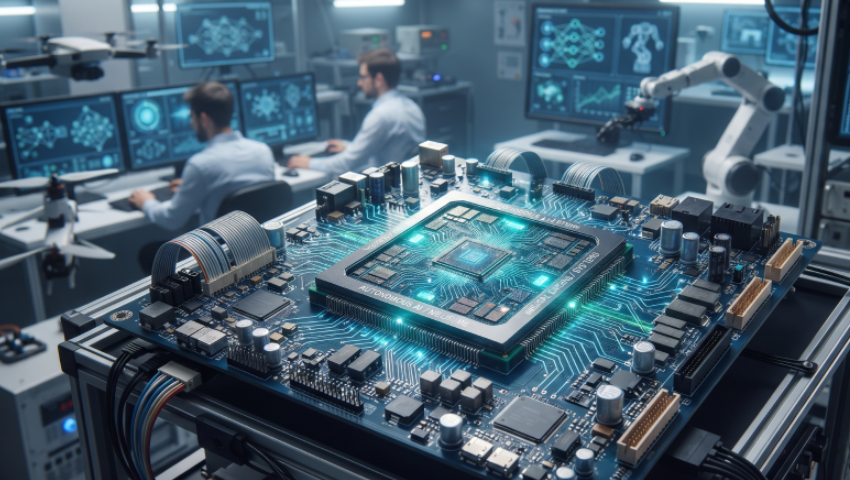
For decades, we’ve been promised a world where machines do the thinking for us. We’ve seen it in the flickering light of sci-fi cinema and read about it in the pages of Isaac Asimov. But today, the conversation has shifted from “what if” to “what now.”
We are no longer talking about simple automation or “if-then” logic. We are witnessing the birth of autonomous AI and systems—technologies that don’t just follow orders, but actually “decide” how to navigate a world that is messy, unpredictable, and constantly changing. This isn’t just a software update for the world; it’s a fundamental rewrite of how existence works.
When we talk about autonomous AI and systems, we aren’t talking about your smart vacuum cleaner that gets stuck under the sofa. We are talking about silicon-based minds capable of piloting massive cargo ships across the Atlantic, managing global energy grids in real-time to prevent blackouts, and even making split-second clinical decisions in a surgical suite.
The bridge between human intent and machine execution is dissolving. In this deep dive, we’ll peel back the layers of this technological shift, looking past the marketing buzzwords to see what is actually happening under the hood and what it means for our collective future.
Defining the Leap: From Automation to True Autonomy
Let’s get one thing straight: automation is old news. We’ve had machines that can repeat tasks since the Industrial Revolution. A dishwasher is “automated.” What makes autonomous AI and systems different is the departure from the script. True autonomy means the system has been given a goal, but not the specific steps to get there. It has to perceive its environment, filter out the noise, and choose a path. If an obstacle appears, it doesn’t just stop and wait for a human to press a button; it recalculates. It learns.
This “learning” aspect is what keeps engineers up at night—and what makes the technology so breathtakingly powerful. We are moving toward “General Purpose Autonomy,” where a single system can adapt to different contexts without being hard-coded for each one.
Think of it as the difference between a train on tracks (automation) and a bird in flight (autonomy). The bird knows the destination, but the path it takes depends on the wind, the predators, and its own internal state. That is the level of sophistication we are currently embedding into our digital infrastructure.
The Biological Blueprint: How These Systems ‘Think’
If you look at the architecture of modern autonomous AI and systems, you’ll notice it looks surprisingly familiar. That’s because we’ve spent the last decade trying to mimic the human brain. Neural networks are designed to process information in layers, just like our neurons firing in response to stimuli. But it’s not just about raw “thinking” power; it’s about “sensing.” For a system to be truly autonomous, it needs a sensory nervous system. This is where the fusion of LiDAR, high-speed cameras, and ultrasonic sensors comes in.
But the real magic happens in the feedback loops. Through Reinforcement Learning, these systems are essentially “raised” rather than programmed. They are put into simulated environments millions of times until they develop an “intuition” for the best outcome. It’s a trial-by-fire approach.
When an autonomous system operates in the real world, it’s drawing on the experience of those millions of simulated failures. It doesn’t just have data; it has a form of digital experience. This is what allows autonomous AI and systems to handle the “edge cases”—those weird, one-in-a-million scenarios that would baffle a traditional computer program.
Where It Hits the Ground: Real-World Chaos vs. Controlled Autonomy
It’s easy to talk about autonomy in a lab, but the real world is messy. The true test of autonomous AI and systems is occurring right now in environments we once thought were too complex for machines. Take agriculture, for example. We now have autonomous tractors that can analyze the health of individual plants while driving through a muddy field, deciding exactly how much fertilizer to drop. This isn’t just efficiency; it’s a level of precision that a human farmer, no matter how skilled, simply couldn’t achieve over hundreds of acres.
In the world of cybersecurity, the battle is already being fought between “good” and “bad” autonomous agents. Human hackers are too slow to keep up with modern threats. We now rely on autonomous security systems that can detect a breach, isolate the affected servers, and patch the vulnerability in milliseconds—all before a human admin has even finished their first cup of coffee. We are essentially building a digital immune system for the internet, one that operates with its own agency and logic.
The Invisible Hand: How Autonomy is Rewiring Global Economics
The economic implications of autonomous AI and systems are often framed as a “job killer” narrative, but the reality is much more nuanced and, frankly, more interesting. We are looking at a shift from labor-intensive industries to capital-intensive, intelligence-driven ones. This changes the “value” of human time. Instead of performing the task, the human role is shifting toward “System Orchestration.” We are becoming the conductors of an orchestra of autonomous players.
- Hyper-Personalization of Production: Factories powered by autonomous systems can switch from making one product to another instantly, allowing for “mass-customization” that was previously impossible.
- The End of the Traditional Supply Chain: Autonomous drones and trucks will eventually create a “physical internet” where goods move as fluidly as data packets, drastically lowering the cost of living.
- New Economic Sectors: We are seeing the rise of “Autonomy-as-a-Service,” where businesses can rent the decision-making power of an artificial intelligence to optimize their logistics or financial portfolios.
- Reshoring Industry: Because autonomy reduces the reliance on cheap labor, many countries are bringing manufacturing back home, using autonomous robots to compete with global markets.
The Friction Point: Ethics, Accountability, and the ‘Black Box’
We can’t have a honest conversation about autonomous AI and systems without addressing the elephant in the room: Who is responsible when things go wrong? When a human driver crashes, we know who to blame. When an autonomous system makes a mistake—or worse, makes a “correct” decision that results in harm—the legal and moral framework crumbles. This is the “Black Box” problem. The logic these systems use is often so complex that even their creators can’t fully explain why a specific decision was made.
There is also the creeping issue of algorithmic bias. If we train an autonomous system on data that reflects our own societal prejudices, the system won’t just mirror those biases—it will automate and scale them. Whether it’s in autonomous hiring platforms or predictive policing, the danger of “encoded injustice” is real. To move forward, we need more than just better code; we need a “Bill of Rights” for the autonomous age, ensuring that these systems remain transparent, auditable, and aligned with human values, not just corporate efficiency.
The Horizon: What Happens When the Training Wheels Come Off?
As we look toward the next decade, the integration of autonomous AI and systems will likely become so seamless that we stop noticing it. It will be baked into the walls of our “smart cities,” directing traffic flow to eliminate congestion and managing energy consumption to hit carbon-neutral goals. But the biggest shift won’t be in the technology itself; it will be in our psychology. We are learning to trust machines with our lives, our finances, and our planet’s health.
- Human-Machine Symbiosis: We will see more “cobots” (collaborative robots) that don’t replace humans but work alongside them, amplifying our physical and mental reach.
- Decentralized Autonomy: Using blockchain and AI, we might see autonomous organizations that own themselves and provide services without any human board of directors.
- The Quest for Safety: Expect a massive surge in “AI Safety” research, focusing on creating fail-safes that can shut down autonomous systems if they deviate from their intended goals.
Conclusion: The Responsibility of Co-existing with Autonomy
Ultimately, the story of autonomous AI and systems is a story about us. It is a reflection of our desire to transcend our own limitations and build tools that can handle the complexity of the world we’ve created. But as these systems gain more agency, we must be careful not to lose ours. The goal shouldn’t be to hand over the keys to the kingdom and walk away; it should be to build a partnership where technology handles the complexity, allowing humans to focus on what we do best: creativity, empathy, and moral judgment.
We are standing at the edge of a new era. The “Age of Autonomy” promises a world of unprecedented efficiency and safety, but it also demands a new level of vigilance. As we continue to integrate autonomous AI and systems into the fabric of our daily lives, our success will be measured not by how smart our machines become, but by how wisely we choose to use them. The machines are learning. Now, it’s our turn to learn how to live alongside them in a way that preserves our humanity while embracing the incredible potential of our own creations.