Samsung S26 Ultra vs iPhone 17 Pro Max: Is Professional Photography Dead?
In-depth camera comparison of the Galaxy S26 Ultra and iPhone 17 Pro Max. We analyze sensors, zoom, and AI to see if smartphones finally replace professional cameras in 2026.

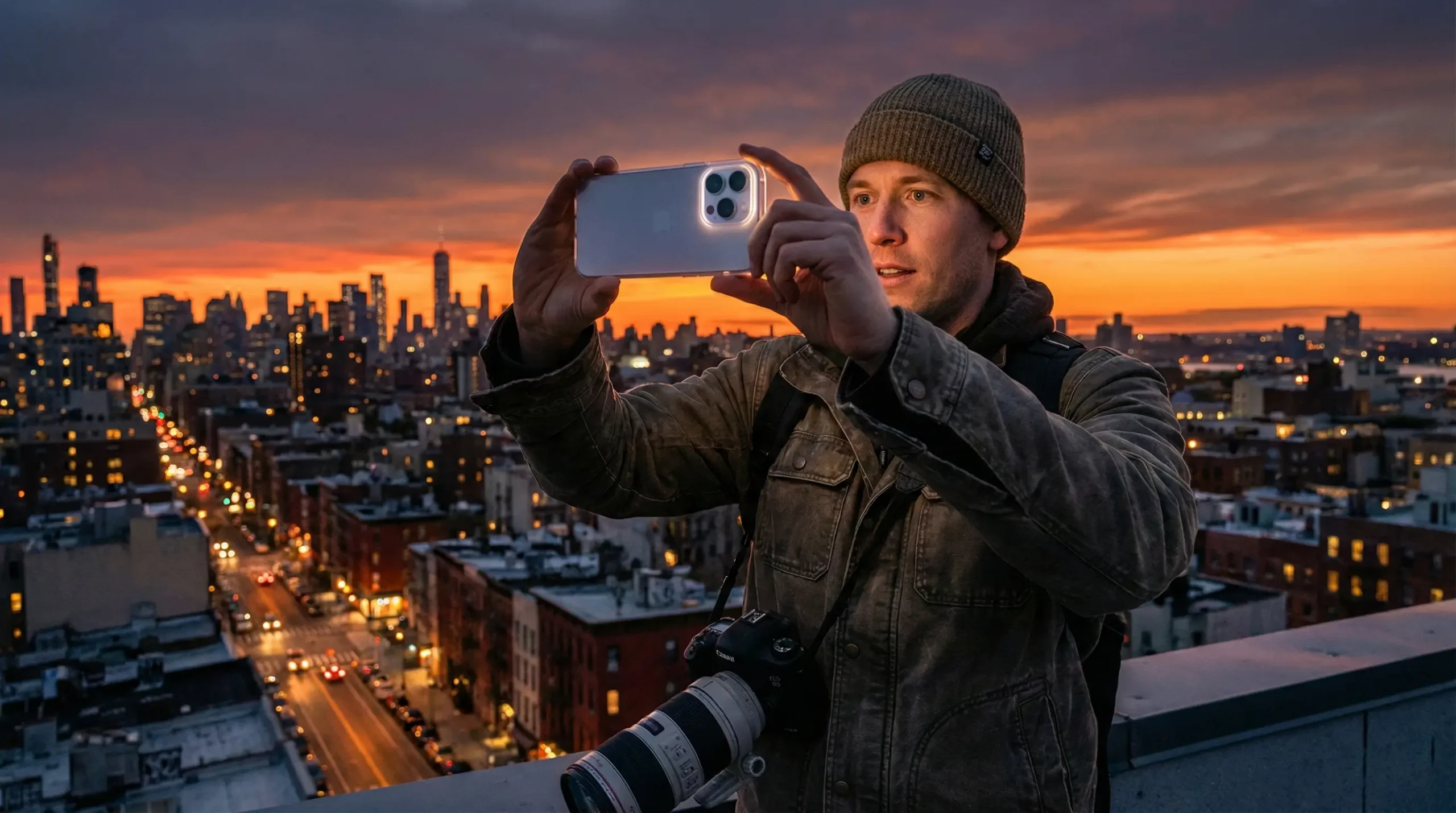
The trajectory of smartphone photography has effectively been an asymptotic curve crashing into the linear progression of traditional optics. For the better part of a decade, the refrain from the purist photographic community has been a consistent, reassuring chant: “Phones are convenient, but they cannot break the laws of physics.” They argued, correctly at the time, that a sensor the size of a fingernail could never gather the light, resolve the detail, or separate the subject like a full-frame sensor the size of a matchbook.
However, as we enter the first quarter of 2026, with the simultaneous dominance of the Samsung Galaxy S26 Ultra and the iPhone 17 Pro Max, we are witnessing devices that actively defy those traditional laws—not by changing the physics of light, but by fundamentally changing how that light is interpreted. We have moved from the era of optical photography, where the glass did 90% of the work, to the era of computational imaging, where the silicon does the heavy lifting.
This report is not merely a comparison of specifications; it is an existential audit of the photography industry. The release of the Samsung Galaxy S26 Ultra in early 2026 and the mature presence of the iPhone 17 Pro Max represent the pinnacle of two divergent philosophies in mobile computing. Samsung continues its “kitchen sink” approach, pushing resolution boundaries with a 200MP sensor and widening apertures to professional levels. Apple, conversely, has doubled down on workflow and consistency, utilizing a “Fusion” camera system that attempts to make three lenses feel like one continuous optical zoom.
The stakes are higher than ever. The entry-level point-and-shoot market has been dead for years, but now the mid-range enthusiast market—the $600 to $1,000 mirrorless and DSLR cameras—is facing extinction. Economic pressures and the sheer capability of these flagship phones are forcing casual photographers to abandon dedicated gear. If these phones can replicate the experience of a dedicated camera for 95% of use cases, the “era of professional camera photography” may not be over for the working professional shooting the Super Bowl or a Vogue cover, but it is certainly effectively over for the mass market and even the advanced enthusiast.
In this exhaustive analysis, we will dissect every photon, every algorithm, and every ergonomic decision that separates these two titans, and ultimately determine if the dedicated camera still deserves a place in your bag in 2026.
Design Philosophy and Ergonomics: The Physical Interface
A camera is not just a sensor; it is a physical tool that must be held, manipulated, and trusted. The ergonomics of a device dictate how steady a shot is, how quickly settings can be changed, and how long a photographer can shoot before fatigue sets in.
1. Chassis Evolution: Titanium vs. Aluminum Unibody
The iPhone 17 Pro Max has undergone a significant structural shift. Moving away from the titanium and glass sandwich of the iPhone 15 and 16 Pro eras, Apple has returned to a robust aluminum unibody design. This decision is not merely aesthetic; it is thermal. Aluminum dissipates heat far more efficiently than titanium, a critical factor when the device is recording 4K ProRes Log video at 60 or 120 frames per second. The “Pro” models now feature a “camera plateau”—a raised, body-wide bar that replaces the square bump, integrating the lenses more seamlessly into the chassis. This design change also accommodates a larger battery, addressing the power-hungry demands of the A19 Pro chip.
In contrast, the Samsung Galaxy S26 Ultra retains its sharp, monolithic aesthetic but has refined the materials. It utilizes a Titanium Grade 5 frame , which offers superior strength-to-weight capability, though it is thermally less conductive. Samsung counters the thermal issues with an advanced vapor chamber cooling system, essential for the Snapdragon 8 Elite Gen 5 processor. The S26 Ultra’s design remains boxy, with sharp corners that maximizing screen real estate for the S Pen but digging into the palm during extended handheld shooting sessions.
2. The “Camera Plateau” vs. The “Pill” Array
Visually, the camera modules tell a story of their optical heritage.
- Samsung: The S26 Ultra features a “pill-shaped” camera bar for three of its lenses, a departure from the floating lens rings of the S24/S25 series. This consolidation allows for better protection of the lens elements and a cleaner, more integrated look that mimics the robustness of traditional camera housing. The new metal rings are narrower and more premium, signaling a shift toward a “precision instrument” aesthetic.
- Apple: The “Camera Plateau” is a bold declaration of function. By raising the entire upper section of the phone, Apple acknowledges that the lenses require depth. The device sits surprisingly stable on a table compared to previous wobbling iterations, and the aluminum housing provides a heat sink directly attached to the sensor modules.
3. The Return of the Shutter Button: Camera Control and Gesture Swipe
Perhaps the most significant convergence in 2026 is the adoption of physical camera controls. Apple introduced the “Camera Control” button on the iPhone 16 series, and it returns on the 17 Pro Max with refined haptics and pressure sensitivity. This capacitive button allows for half-press focus, slide-to-zoom, and full-press capture, mimicking the tactile feedback of a DSLR shutter release.
Samsung, not to be outdone, has been rumored to include a similar feature. Leaks from supply chain insiders suggest a “camera button with swipe gesture functionality” for the Galaxy S26. This acknowledges a fundamental truth of photography: touching the screen introduces micro-jitters that degrade sharpness. A physical button on the frame allows for a stable grip, turning the phone into a true point-and-shoot camera. For street photographers, the ability to launch the camera and fire a shot without looking at the screen is a game-changer, and both devices now offer this capability.
4. Thermal Management in High-Bitrate Recording
Professional photography is rarely a single shot; it is often a burst of hundreds of images or minutes of high-resolution video. Heat is the enemy of image quality. As sensors heat up, thermal noise (grain) increases.
- iPhone 17 Pro Max: The switch to aluminum and a new internal graphite sheet structure allows the iPhone to sustain 4K ProRes recording for significantly longer periods before dimming the screen or throttling the processor.
- Samsung S26 Ultra: The vapor chamber is designed to cool the Snapdragon chipset, but the 200MP sensor generates significant heat during data readout. Samsung limits 8K recording to short bursts (typically 10 minutes) to prevent overheating, whereas the iPhone optimizes for continuous throughput.
The Viewfinder Experience: Display Technology as a Critical Tool
In the mirrorless era, the Electronic Viewfinder (EVF) is the photographer’s window to the world. On a smartphone, the display is the viewfinder. Its accuracy, brightness, and visibility determine whether you can judge exposure and focus correctly.
1. Peak Brightness Wars: 3000 Nits vs. 2600 Nits
The iPhone 17 Pro Max boasts a “Super Retina XDR” display with a peak outdoor brightness of 3,000 nits. This specification is not just for marketing; it is essential for reviewing photos in direct sunlight. A photographer shooting a beach landscape at noon needs to see the screen clearly to check for blown highlights. Apple’s display calibration remains the gold standard, offering P3 wide color gamut coverage that ensures what you see on the screen is exactly what the file contains.
The Samsung Galaxy S26 Ultra features a “Dynamic LTPO AMOLED 2X” panel with a peak brightness of 2,600 nits. While slightly dimmer on paper, the difference between 2600 and 3000 nits is marginally perceptible to the human eye. Samsung’s advantage lies in its anti-reflective coating. The “Gorilla Glass Armor 2” significantly reduces glare , which effectively increases the perceived contrast and visibility outdoors, arguably making it the better viewfinder in harsh lighting conditions despite the lower raw brightness number.
2. The “Privacy Display”: A New Tool for Photojournalists?
A fascinating innovation on the Galaxy S26 Ultra is the rumors of a “Privacy Display”. This software-driven feature narrows the viewing angles of the screen, similar to a physical privacy filter used on laptops. While marketed for banking apps, this has unintended utility for photojournalists and street photographers. It allows a photographer to review images or frame shots in public spaces without drawing attention from bystanders who might otherwise glance at the glowing screen. It essentially creates a private viewfinder experience, mimicking the isolation of putting one’s eye to a camera cup.
3. Color Accuracy and Gamut Coverage
- Samsung: Typically tunes its displays to “Vivid” mode out of the box, which oversaturates colors. While pleasing, this is inaccurate for photo editing. Users must switch to “Natural” mode to get sRGB/P3 accuracy.
- Apple: Ships with industry-leading color accuracy. The integration of “True Tone” matches the white point to ambient light, though professionals often disable this when color grading to ensure a neutral baseline. The iPhone supports full Dolby Vision HDR playback, allowing videographers to view their 10-bit footage in its full dynamic range immediately after shooting.
The Primary Sensor Battle: The Physics of Resolution
The heart of any camera is the sensor. In 2026, we see two diverging paths to image quality: pure resolution versus balanced photon collection.
1. Samsung’s 200MP ISOCELL HP2: The Brute Force Approach
The Galaxy S26 Ultra utilizes the 200MP ISOCELL HP2 sensor (with some leaks suggesting a newer HP9 variant or a refined HP2 with better microlenses).
- The Concept: 200 million pixels on a 1/1.3-inch sensor results in a pixel pitch of just 0.6µm. This is incredibly small. Small pixels generally suffer from low signal-to-noise ratios (more grain).
- The Solution: Samsung uses “Tetra2pixel” technology (pixel binning). In low light, it combines 16 pixels into one, creating a virtual 2.4µm pixel and a 12.5MP image. In moderate light, it combines 4 pixels for a 50MP image. In bright light, it uses all 200MP.
- The Benefit: The massive resolution allows for insane cropping capabilities. You can crop into the center of a 200MP wide shot and still have a 12MP image that looks like it was taken with a telephoto lens. This effectively gives the S26 Ultra a “lossless” digital zoom range from 1x to roughly 3x.
2. The Aperture Revolution: Analyzing the Shift to f/1.4
A critical rumor for the S26 Ultra is the shift to an f/1.4 aperture on the main lens. This is a massive engineering leap from the standard f/1.7 or f/1.8 found on most competitors.
- Light Gathering: An f/1.4 aperture admits roughly 50% more light than an f/1.8 lens. This means the Samsung sensor can stay at a lower ISO (sensitivity) in dark environments, reducing noise before the software even touches the image.
- Natural Bokeh: At f/1.4, the depth of field is very shallow. Close-up subjects will have a natural, optical background blur that looks distinct from the “fake” software blur of Portrait Mode. This optical separation is the hallmark of professional photography.
3. Apple’s 48MP Fusion System: The “Sweet Spot” Strategy
The iPhone 17 Pro Max uses a 48MP Fusion main camera with a 1/1.28-inch sensor and an f/1.78 aperture.
- The Concept: Apple believes 48MP is the “sweet spot” between resolution and file size. The pixels are physically larger (1.22µm) than Samsung’s un-binned pixels.
- The Pipeline: The default output is 24MP. Apple achieves this by taking a 12MP binned image (for noise data) and merging it with a 48MP high-detail image. This results in files that have the dynamic range of a low-resolution sensor but the detail of a high-resolution one, without the massive storage penalty of 200MP files.
Comparison Table: Main Sensor Architecture
| Specification | Samsung Galaxy S26 Ultra | iPhone 17 Pro Max |
| Sensor Resolution | 200 Megapixels | 48 Megapixels |
| Sensor Format | 1/1.3″ | 1/1.28″ |
| Aperture | f/1.4 (Rumored) | f/1.78 |
| Default Output | 12.5MP (can set to 50MP) | 24MP (Fusion) |
| Pixel Pitch (Raw) | 0.6µm | 1.22µm |
| Pixel Pitch (Binned) | 2.4µm (16-in-1) | 2.44µm (4-in-1) |
| Focus System | Super QPD (PDAF) + Laser AF | 100% Focus Pixels + LiDAR |
4. Insight: The Physics Wall
Despite these specs, both sensors are roughly 1/1.3 inches. A full-frame professional camera sensor is roughly 30 times larger in surface area. This physical disparity means that in scenes with extreme dynamic range (bright sun and deep shadow), the professional camera captures more photon data. The smartphones compensate with HDR stacking (taking 10 photos instantly), but this can lead to motion artifacts or “ghosting” if the subject is moving. The “Era of Professional Photography” is safe for sports and action photographers for this very reason.
The Telephoto Wars: Reach, Compression, and the “Gap”
The true differentiator in 2026 is the telephoto capability. This is where the physics of lens size conflicts most violently with the constraints of a smartphone body.
1. Focal Length Philosophy: 100mm vs. 120mm
- iPhone 17 Pro Max (4x / 100mm): Apple switched from the 5x (120mm) lens of the iPhone 16 Pro Max to a 4x (100mm) lens. Why reduce the zoom? Because 100mm is a classic portrait focal length. It offers flattering compression without forcing the photographer to stand too far away from the model. The sensor behind this lens is now 48MP , a massive upgrade from the previous 12MP. This allows for a “lossless” crop to 8x (200mm).
- Samsung S26 Ultra (5x / 120mm): Samsung retains the 5x optical periscope, paired with a 50MP sensor. This lens excels at “reach”—wildlife, sports from the sidelines, and architectural details.
2. The “Missing Link”: Samsung’s Dedicated 3x Lens
The critical advantage for Samsung is the inclusion of a secondary telephoto lens: a 10MP 3x (approx. 70mm) camera.
- The iPhone Problem: The iPhone has a gap between 1x (24mm) and 4x (100mm). If you zoom to 3x, the iPhone is digital cropping from the main sensor. While the 48MP sensor makes this decent, it is not optical.
- The Samsung Solution: The dedicated 3x lens fills this gap perfectly. 70mm is ideal for indoor portraits and medium shots. Having dedicated glass for this range ensures sharpness and natural background compression that digital cropping cannot fully replicate.
The “Space Zoom” Factor: Samsung continues to dominate in extreme reach. Using the 50MP 5x lens, the S26 Ultra can produce usable images at 10x, 30x, and even 100x using AI reconstruction. While 100x is often soft, the 10x to 30x range is genuinely useful for identifying distant objects or capturing the moon. Apple’s digital zoom caps out earlier and avoids aggressive AI reconstruction, resulting in a more “honest” but less capable zoom at extreme distances.
Ultra-Wide and Macro Capabilities: The Edge of Distortion
The ultra-wide lens is the unsung hero of the system, doubling as a macro lens.
- Samsung S26 Ultra: Features a 50MP Ultra-Wide camera. The high resolution allows for pixel-binned macro shots that are incredibly sharp. The field of view is 120 degrees.
- iPhone 17 Pro Max: Also features a 48MP Ultra-Wide camera. Apple’s strength here is edge distortion correction. Ultra-wide lenses naturally curve straight lines (barrel distortion). Apple’s software correction is industry-leading, keeping architectural lines straight at the edges of the frame.
Macro Photography:
By utilizing the autofocus capabilities of these ultra-wide lenses, both phones can focus as close as 2cm from the subject. This replaces the need for a dedicated macro lens for capturing textures, insects, or product details. The 48MP/50MP resolution allows photographers to crop into these macro shots, revealing details invisible to the naked eye.
The Computational Darkroom: ISP and Neural Processing
In 2026, the image is not captured; it is computed. The raw data from the sensor is merely the clay; the Image Signal Processor (ISP) is the sculptor.
1. Snapdragon 8 Elite Gen 5 vs. Apple A19 Pro
- Samsung (Snapdragon 8 Elite Gen 5): The “Cognitive ISP” on this chip uses real-time semantic segmentation. The camera identifies “sky,” “grass,” “skin,” and “hair” as separate layers before the image is saved. It applies different noise reduction and sharpening to each. For example, it might smooth the sky to remove grain while sharpening the hair to enhance detail.
- Apple (A19 Pro): Apple’s “Photonic Engine” applies “Deep Fusion” earlier in the pipeline, on uncompressed data. This focuses on pixel-by-pixel texture optimization.
Philosophical Divergence:
- Samsung Look: Prioritizes impact. Shadows are lifted, colors are vibrant, and the image looks “finished.” It is ready for Instagram immediately.
- Apple Look: Prioritizes consistency. The tone curve is flatter, preserving the natural hierarchy of light. With the “Photographic Styles” feature, users can now preset a “Vibrant” look to mimic Samsung if desired, but the default remains neutral.
2. Generative AI: “Best Face,” “Clean Up,” and the Ethics of Reality
2026 brings generative AI directly into the camera workflow.
- Samsung “Best Face”: This feature analyzes a burst of group photos and allows the user to swap individual faces to ensure everyone is smiling and has their eyes open. It is a “computational composite.”
- Apple “Clean Up”: Integrated into the Photos app, this tool removes distractions (power lines, trash cans) with a tap, filling in the background using generative AI.
- Samsung “Object Eraser”: Similar to Apple, but often more aggressive and capable of moving objects within the frame.
The Professional Dilemma:
These features blur the line between photography and digital art. For a photojournalist, using “Best Face” or “Clean Up” is a violation of ethics. A Reuters photographer cannot alter the reality of a scene. Therefore, while these phones are powerful tools, their default reliance on AI manipulation disqualifies them from strict documentary work unless these features are carefully disabled.
Video Cinematography: The Pocket Cinema Camera
If Samsung wins on zoom versatility, the iPhone 17 Pro Max reigns supreme in video. This has been the status quo for years, and 2026 reinforces it.
1. Resolution vs. Dynamic Range: The 8K Myth vs. ProRes Log
- Samsung: Touts 8K video at 30fps. While the resolution is immense, 8K suffers from significant rolling shutter (jello effect) and massive file sizes. It is often more of a marketing spec than a practical tool.
- Apple: Focuses on 4K ProRes Log. “Log” is a flat color profile that preserves the maximum dynamic range of the sensor. It looks grey and washed out on the phone but holds incredible data for color grading in post-production.
- ProRes Codec: This is an industry-standard format used in Hollywood. It is less compressed than standard MP4, meaning it edits smoothly on computers and doesn’t fall apart when color corrected.
- External Recording: The iPhone 17 Pro Max allows recording 4K 120fps ProRes Log directly to an external USB-C SSD. This mimics the workflow of a cinema camera like the ARRI Alexa.
2. Audio Engineering: Audio Mix vs. Audio Zoom
- Apple “Audio Mix”: Uses machine learning to separate background noise from speech after capture. You can dial down the wind noise and dial up the voice, creating a “studio” sound from a street recording.
- Samsung “Audio Zoom”: Uses the microphones to focus audio on the subject you are zooming into. If you zoom in on a singer, the phone amplifies the sound coming from that direction.
The Professional Workflow: Power, Storage, and Speed
A camera is only as good as its integration into the creative process.
1. Transfer Protocols and Ecosystem
- iPhone 17 Pro Max: The USB-C port supports USB 3 speeds (10Gbps). Combined with AirDrop, a photographer can shoot a photo and have it on their MacBook Pro screen in seconds. This seamlessness is why creative agencies dominate with Apple hardware.
- Samsung S26 Ultra: Supports USB 3.2 and Quick Share (which now works with Windows PCs). Samsung’s “DeX” mode allows the phone to plug into a monitor and act as a desktop computer. A photographer can plug their phone into a hotel TV, connect a mouse, and edit photos in Lightroom Mobile on a big screen without a laptop. This is a unique advantage for the traveling pro.
2. Battery Endurance
- iPhone 17 Pro Max: Reports indicate the iPhone 17 Pro Max has superior battery life for video capture, thanks to the efficiency of the A19 Pro chip.
- Samsung S26 Ultra: Compensates with 60W Wired Charging. While the battery drains faster during 8K recording, it can be topped up to 80% in roughly 30 minutes, whereas the iPhone charges slower (capped around 30-40W).
Conclusion: The Verdict on the “Death” of the Pro Camera
To answer the core question: Is the era of professional camera photography over?
The answer is nuanced: No, but the walls are closing in.
The comparison between the Samsung Galaxy S26 Ultra and the iPhone 17 Pro Max reveals that we have reached “sufficiency” for 99% of visual communication.
Where the Smartphone Wins:
- Computational HDR: In high-contrast scenes (sunset with a person in the foreground), the phone’s ability to merge 10 frames instantly often produces a better exposure than a single RAW file from a professional camera, which would require manual editing to balance.
- Convenience: The best camera is the one you have with you. These phones are always there.
- Video Stabilization: The “Action Mode” on iPhone and “Super Steady” on Samsung outperform mechanical gimbals for casual movement.
The Physics Wall: Where the Dedicated Camera Holds the Line:
- Glass Physics: A 70-200mm f/2.8 lens on a professional camera is the size of a water bottle for a reason. It compresses space and renders background blur in a way that the tiny periscope lenses of the S26 Ultra cannot replicate without digital artifacts. Hair, glass, and mesh fences still confuse smartphone Portrait Modes.
- Action Stopping: The small sensors of phones require slower shutter speeds to gather light. In low light, photographing a moving subject (a running dog, a dancing bride) often results in blur. A professional full-frame camera with a large sensor can shoot at 1/1000th of a second in a dim reception hall and get a sharp shot. Phones cannot yet beat this physics limitation.
- Flash Photography: Phones cannot sync with studio strobes effectively. The ability to shape light with off-camera flash is the defining skill of a professional portrait photographer.
Final Buying Advice:
- Choose the Samsung Galaxy S26 Ultra if: You are a photographer who values versatility. You want the “Swiss Army Knife”—the 3x lens for portraits, the 10x range for wildlife, and the macro capabilities. You want a sharp, punchy image that is ready to share immediately.
- Choose the iPhone 17 Pro Max if: You are a filmmaker, a creative professional, or a “hybrid” shooter. The ProRes Log workflow, the consistency of color across lenses, and the seamless integration with the Mac ecosystem make it a legitimate B-camera for professional sets. It is the closest thing to a cinema camera that fits in your pocket.
In 2026, the era of the dedicated camera is not over, but it has been forced to retreat to the highest peaks of performance—sports, studio fashion, and wildlife—leaving the vast, beautiful plains of general photography to the computational marvels in our pockets.