Samsung Galaxy S26 Ultra: Release Date, Leaked Specs, and Should You Wait?
Thinking about your next upgrade? Get the expert's honest take on the Samsung Galaxy S26 Ultra: Release Date, Leaked Specs, and Should You Wait? Discover why the jump to 16GB RAM and 60W charging might be the game-changer you’ve been expecting.

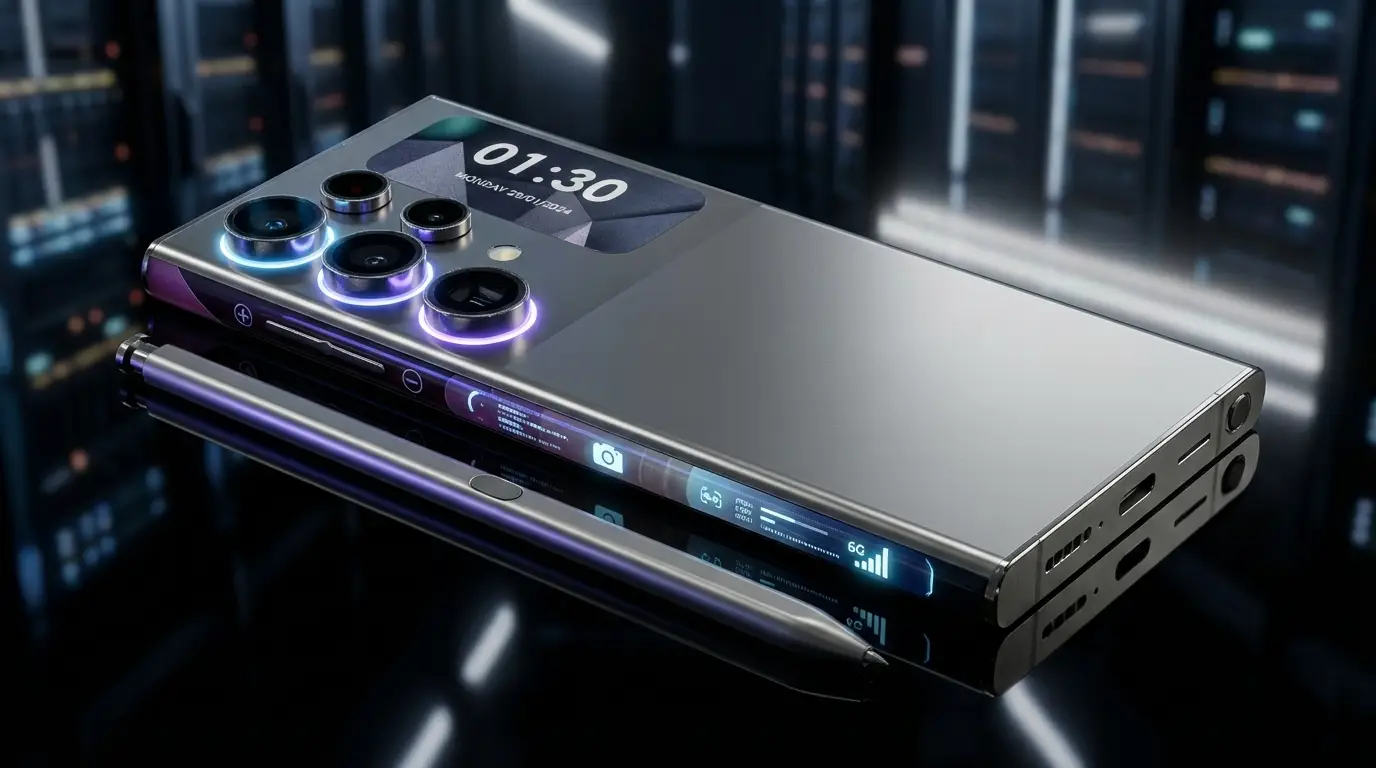
Samsung is gearing up to launch its next generation of premium smartphones, and according to South Korea’s Money Today, the new Galaxy S26 will be officially unveiled on February 25, 2026, at the Galaxy Unpacked event in San Francisco.
Observers have undoubtedly noticed the change in the launch date, which is usually held between late January and early February. This change is likely significant, as reports indicate that the company is making adjustments to its devices and aligning the launch with a new strategy focused on artificial intelligence.
Timing and Market Availability
The scheduling of flagship technology reveals much about a company’s strategic priorities and supply chain confidence. While the preceding three cycles followed a trend of early-year announcements, the upcoming release is projected to deviate from this pattern slightly. High-confidence leaks from industry insiders suggest that the Galaxy Unpacked event for the new series is scheduled for February 25. This timing marks a departure from the mid-January launches seen in the previous two cycles, potentially indicating a move to align with the global technological showcase events typically held in late February.
The rationale for this slight delay is multifaceted. Analysts suggest that the shift allows for a “product lineup adjustment,” ensuring that global stock levels for the newest chipsets are sufficient to meet day-one demand across all major territories. This is particularly critical as the manufacturer moves toward more advanced fabrication nodes for its silicon. Following the late February announcement, a standard pre-order window is expected to commence on February 26, leading to a general market release on March 11. This timeline ensures that by the middle of the first quarter, the new hardware will be available to consumers worldwide.
For those tracking the Samsung S26 release date, the importance of this window cannot be overstated. It represents the point at which trade-in values for older devices typically begin their steepest descent. Observations of past cycles indicate that the value of a three-generation-old device, such as the S23 series, remains relatively buoyant until the official reveal, after which the market begins to adjust for the newer hardware’s presence. Understanding these cadence shifts is essential for any consumer looking to maximize the economic efficiency of an upgrade.
Ergonomics and the Shift to Rounded Geometry
Perhaps the most visually striking change in the upcoming Ultra flagship is the abandonment of the sharp, rectangular corner aesthetic that has defined the series since the transition from the Note line. The S26 leaks indicate a concerted effort to improve handheld comfort through rounded corner geometry and a thinner overall chassis. CAD renders and dummy units suggest that the new design will feature corners that are more ergonomic, reducing the pressure on the palm that was a frequent complaint among users of the previous two generations.
Beyond the curvature, the device is expected to reach a new milestone in slimness. Rumored specifications place the thickness at approximately 7.9mm, a noticeable reduction from the 8.2mm profile found on the current generation. This thinning of the frame, when combined with a slightly increased height and width, suggests a device that feels more balanced and less like a “brick” in the hand. The use of grade 5 titanium for the frame is expected to continue, maintaining a high strength-to-weight ratio while offering a premium tactile experience.
Another notable ergonomic refinement concerns the placement of the S Pen. Reports suggest the stylus silo could be relocated to the right side of the device, a move that would likely be welcomed by the majority of right-handed users who currently have to reach under their palm to extract the pen. Furthermore, the rear camera layout is expected to evolve from individual lens rings to a unified, raised “camera island” design, similar to the aesthetic seen in the latest foldable devices, signaling a move toward a more cohesive visual identity across the entire product ecosystem.
M14 OLED and the Privacy Display Revolution
The display remains the primary interface for every smartphone interaction, and the next-generation Ultra is set to receive a significant panel upgrade. While the diagonal size is expected to remain consistent at 6.9 inches, the substrate is reportedly moving to the M14 OLED standard. This new material stack is designed for higher luminous efficiency, meaning the screen can achieve greater brightness with less power consumption. Peak brightness is anticipated to surpass the 3,000-nit threshold, ensuring exceptional legibility even in direct sunlight.
One of the most discussed features in the S26 leaks is the introduction of a built-in “Privacy Display.” This technology, sometimes referred to as a “Flex Magic Pixel,” utilizes specialized optics to limit viewing angles so that only the person directly in front of the phone can see the content. This represents a significant leap forward for professional users who frequently handle sensitive information in public spaces, such as on airplanes or in shared workspaces. Unlike aftermarket privacy screen protectors that often degrade touch sensitivity and color accuracy, this native solution is expected to maintain high-fidelity visual performance while providing on-demand security.
The shift to the M14 panel also brings potential improvements in refresh rate management. While the current 1-120Hz LTPO (Low-Temperature Polycrystalline Oxide) technology is already highly efficient, the M14 substrate may allow for even more granular control over the refresh cycle, further reducing the battery drain associated with the always-on display and high-frame-rate gaming. This intersection of material science and display hardware is a key reason why the upcoming model is viewed as a significant “under the hood” overhaul rather than a cosmetic refresh.
Silicon Architecture and the 16GB RAM Standard
Performance in the upcoming flagship is expected to be anchored by the Qualcomm Snapdragon 8 Elite Gen 5 chipset across all major global markets. While some regional models in the standard series may utilize the Exynos 2600, the Ultra is tipped to remain a Snapdragon-exclusive platform to ensure a consistent high-performance baseline for its most demanding users. This silicon is predicted to be a “Made for Galaxy” edition, featuring higher clock speeds and optimized thermal management compared to the standard versions found in other devices.
One of the most critical upgrades for future-proofing is the rumored jump to 16GB of LPDDR5X RAM as the base configuration for the Ultra. This increase is not merely for marketing purposes; it is a direct response to the demands of on-device generative AI. Large Language Models (LLMs) and advanced image processing requires substantial memory headroom to operate with low latency. By providing 16GB of RAM, Samsung ensures that the next-generation Ultra can handle the complex AI updates expected over the next several years without performance degradation. The RAM itself is also expected to be more efficient, utilizing the latest 1-gamma manufacturing process to deliver speeds up to 10.7 Gbps while reducing power draw by 20%.
Connectivity is also receiving a major boost with the integration of the Qualcomm X85 5G modem. This hardware promises peak download speeds of up to 12.5 Gbps and incorporates AI-tuned signal management to maintain stable connections in high-density or fringe-coverage areas. For users who rely on their devices for high-bandwidth professional tasks or cloud gaming, the combination of the Gen 5 chipset and the X85 modem represents a massive leap in raw capability.
Wider Apertures and the Future of Low-Light Imaging
The camera system of the Ultra has long been its defining characteristic, and while the 200MP resolution of the main sensor is expected to remain unchanged, the optics surrounding it are undergoing a significant transformation. The primary lens on the upcoming flagship is rumored to feature a wider aperture, compared to the aperture found on the current generation. In the world of optics, a wider aperture allows substantially more light to reach the sensor, which is the single most important factor in determining low-light performance.
The move from to allows the sensor to capture approximately 47% more light. This physical improvement translates to less digital noise in nighttime photos, faster shutter speeds for freezing motion in dim environments, and a more pronounced, natural shallow depth-of-field (bokeh) effect for portraits. This shift suggests that the manufacturer is moving away from the “megapixel race” and toward “optical quality,” focusing on how light is gathered rather than just how many pixels it is divided into.
Beyond the main sensor, the secondary lenses are also seeing refinement. The 3x telephoto lens is tipped for a resolution bump from 10MP to 12MP, while the ultrawide camera is expected to utilize a 50MP sensor to ensure consistency in detail and color when switching between focal lengths. Software enhancements, including a new “Advanced Professional Video” (APV) codec and a 24MP default photo resolution, are expected to leverage the increased processing power of the new chipset to deliver more cinematic video and higher-fidelity still images.
The Long-Awaited Transition to 60W Charging
For multiple generations, the “Ultra” series has been capped at 45W wired charging, a figure that has increasingly fallen behind international competitors. The S26 leaks suggest that the next iteration will finally move to 60W “Super Fast Charging 3.0”. This upgrade is a direct response to user feedback, addressing the long-standing complaint that Samsung’s flagships take too long to reach a full charge compared to other high-end devices on the market.
While a jump of 15W may seem modest, the real-world impact is expected to be substantial due to a more efficient charging curve. The new system is rumored to maintain higher wattages for a longer duration of the charging cycle, potentially allowing the device to reach a 75% charge in under 30 minutes. Battery capacity is also expected to see a boost, with some reports pointing toward a move to a 5,400mAh cell through the use of “stacked battery” technology—a method that increases energy density without increasing the physical footprint of the battery pack.
Furthermore, the introduction of Qi2 wireless charging is a game-changer for the ecosystem. This standard incorporates a ring of magnets similar to Apple’s MagSafe, ensuring perfect alignment with wireless chargers and enabling a new world of magnetic accessories like wallets, car mounts, and snap-on battery packs without the need for specialized cases. This move toward a magnetic standard simplifies the user experience and brings the Android flagship experience on par with the accessory ecosystem of its main competitor.
Pricing Stability and Economic Influences
The financial context of the upcoming release is complicated by global supply chain shifts. DRAM and NAND flash memory prices have seen a significant increase—up nearly 35% year-over-year—due to the massive demand for AI-optimized hardware in data centers. This puts immense pressure on smartphone manufacturers to either raise prices or absorb the cost increases to maintain market share. For the upcoming Ultra, current reports suggest that the manufacturer is aiming to keep the base price in the United States steady at $1,299.
However, this pricing stability may not be universal. Analysts note that some regional markets could see moderate price hikes to account for local taxes and the increased cost of the 16GB RAM and M14 OLED components. To offset the margin compression on the hardware itself, there is an expected push toward “ecosystem monetization,” where the sale of higher-margin accessories like the new Qi2 chargers and magnetic cases will become more central to the brand’s financial strategy.
For investors and consumers alike, the success of the next-generation Ultra will be measured by its ability to maintain premium status while navigating these cost pressures. The inclusion of 16GB of RAM as a standard feature across more regions could be the “killer app” that justifies the price point, as it ensures the device remains capable for the full seven-year software support window that has now become the brand’s standard promise.
Strategic Advice for Current Smartphone Owners
When evaluating the Samsung Galaxy S26 Ultra: Release Date, Leaked Specs, and Should You Wait?, the final decision rests on the age of your current device and your specific usage patterns. The upcoming flagship is not just a collection of specs; it is a refinement of the entire user experience, from how the phone feels in your palm to how quickly it recovers energy.
- If you currently own a Galaxy S24 Ultra, the upcoming iteration represents a tactical refinement. While the move to 60W charging and a more comfortable rounded design are welcome, your current device is still performing at a peak level and will receive many of the same AI software features. Upgrading after only one cycle may be unnecessary unless you find the current “boxy” corners a significant hindrance to your daily use.
- If you are using a Galaxy S23 Ultra or an older model, the leap to the next generation is profoundly different. You would be moving from the older “Note” ergonomics to a vastly more comfortable, lighter, and slimmer frame. Furthermore, the jump from 10-12GB of RAM to 16GB, combined with the 3,000-nit display and 60W charging, provides a level of future-proofing that makes this the perfect time to trade in. The shift to a main lens alone will be a revelation for those who take many photos in low-light environments.
- For users considering switching from another brand or an older non-Ultra Samsung phone, the “Privacy Display” and the native Qi2 magnetic ecosystem are game-changing features. They solve the two biggest practical complaints—privacy and charging convenience—making this the most well-rounded entry point into the Ultra ecosystem in years.
- The 16GB RAM standard is perhaps the most critical “hidden” feature. As AI becomes more integrated into the OS, devices with lower memory will start to feel the strain within two to three years. Investing in the 16GB configuration now ensures that your device remains snappy through the end of the decade.
- Finally, the ergonomic shift cannot be overstated. A phone is something you hold for hours every day. The move to rounded corners and a sub-8mm thickness is not just a visual change; it is a fundamental improvement in the physical relationship between the user and the tool.
In summary, the next-generation Ultra appears to be a definitive “correction” year. It addresses the slow charging, the ergonomic discomfort, and the memory bottlenecks that have lingered as minor frustrations for the last several iterations. If you can wait until the March release window, you will likely be rewarded with the most complete and refined flagship the series has ever produced. For those who need a phone today, the current flagship remains a top-tier choice, but for the patient consumer, the upcoming cycle offers a rare convergence of design overhaul and hardware maturity that is well worth the short wait.