VR and Education: The Ultimate Guide to the Future of Immersive Learning
Discover how VR and Education are transforming classrooms globally. Explore the benefits, real-world examples, and future trends.

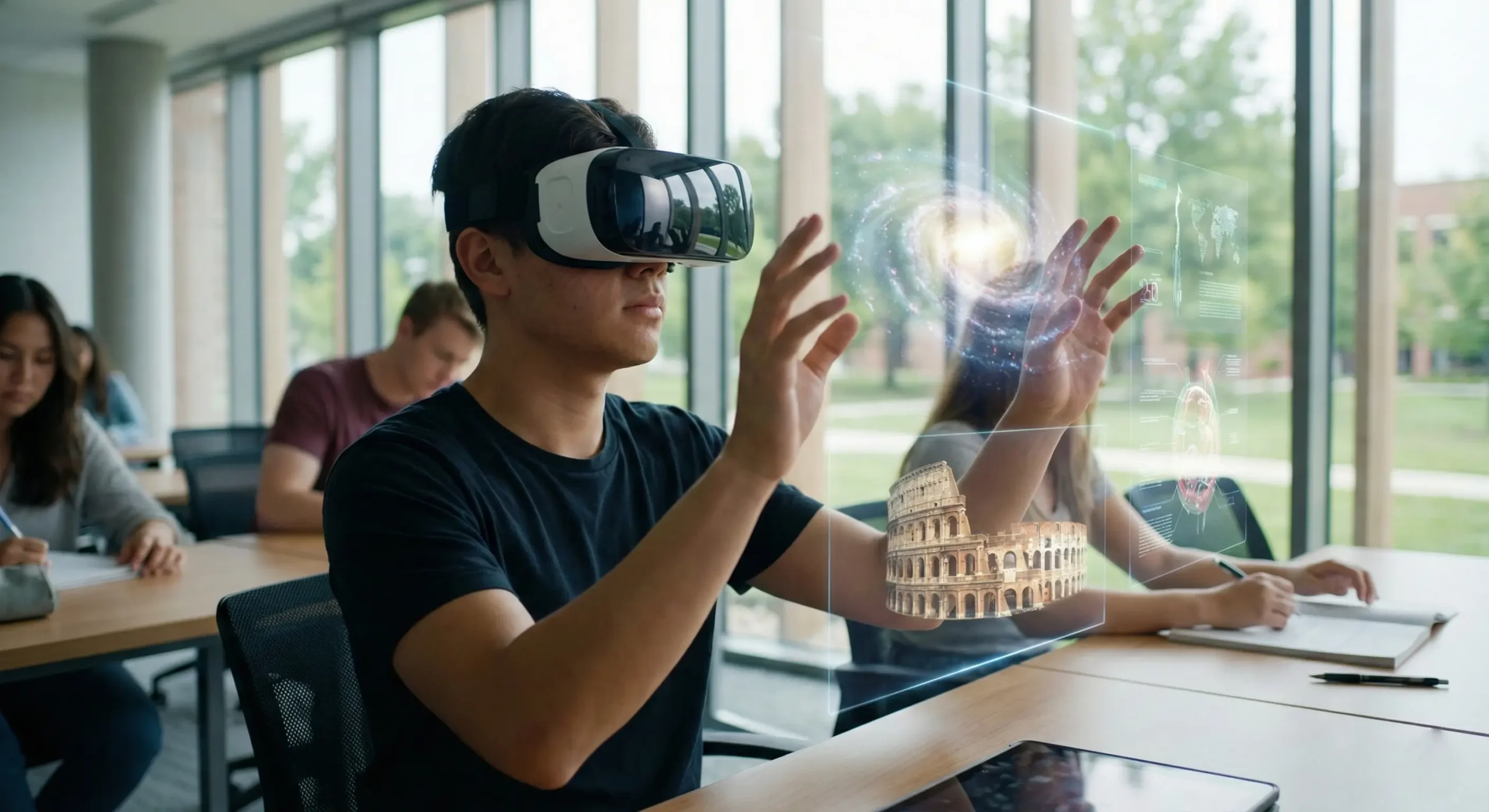
The history of education has been defined by a persistent struggle to bridge the gap between abstract information and concrete understanding. For centuries, the primary mechanism of instruction has been symbolic transmission—text on a page, words in a lecture, or images on a screen—requiring the learner to perform a complex cognitive translation to convert these symbols into mental models. Virtual Reality (VR) represents a fundamental disruption to this lineage, offering a medium where information is not transmitted but experienced.
We stand at a critical inflection point where VR is transitioning from a niche technological novelty to a central pillar of pedagogical strategy. The global VR in education market is projected to experience explosive growth, potentially reaching nearly $19 billion by 2026, driven by a confluence of affordable hardware, sophisticated software, and a deepening understanding of the cognitive benefits of immersion. This shift is not merely about better visuals; it is about a structural change in how the brain encodes new information. When a student stands on the surface of Mars, manipulates a strand of DNA, or navigates a difficult negotiation with a virtual avatar, they are engaging neural systems evolved for spatial navigation and social interaction—systems that are vastly more powerful than those used for processing text.
However, the narrative of VR in education is not one of unmitigated triumph. It is a complex landscape of high potential and significant friction. While studies show that VR learners can train four times faster than classroom learners, institutions face formidable barriers ranging from “digital divide” inequities to the practical logistical nightmares of battery management and sanitation. Furthermore, the integration of Artificial Intelligence (AI) is beginning to reshape the very definition of a “virtual environment,” moving us toward adaptive, intelligent simulations that personalize learning in real-time.
This report provides an exhaustive, evidence-based analysis of the current state and future trajectory of VR in education. Drawing on data from cognitive psychology, K-12 case studies, medical training statistics, and corporate learning ROIs, we will dissect the mechanisms that make VR effective, the challenges that hinder its adoption, and the emerging trends that will define the next decade of human learning.
The Cognitive Architecture of Immersive Learning
To truly understand the value proposition of VR, we must look beyond the technology and into the cognitive science of learning. Traditional educational models often treat the mind as an information processing unit distinct from the body. VR, conversely, aligns with the biological reality that human cognition is deeply embodied and situated.
1. Constructivism and the Dissolution of Passive Observation
At its core, VR education is the technological realization of Constructivist Learning Theory. Constructivism posits that learners do not passively absorb knowledge; they actively construct it through experiences and interactions with the world. In a traditional classroom, “active learning” might involve discussion or worksheets. In VR, it involves physical manipulation of the environment.
When a student enters a virtual laboratory to mix volatile chemicals or construct a bridge, they are engaged in experiential learning that provides immediate, intrinsic feedback. If the bridge collapses, the failure is visceral and immediate, prompting a cycle of hypothesis, testing, and revision that is difficult to replicate with textbooks. This moves the learner from a state of “spectator” to “actor,” a shift that significantly enhances engagement and motivation. Research indicates that this agency—the ability to control and manipulate the 3D environment—leads to deeper conceptual understanding compared to passive media.
2. The Neuroscience of Presence: Why the Brain Treats VR as Reality
The defining psychological characteristic of VR is Presence—the subjective sensation of “being there”. This is distinct from “immersion,” which refers to the objective technical fidelity of the system (resolution, field of view). Presence is the brain’s response to that immersion.
Neurobiological research suggests that the brain often fails to distinguish between a highly immersive virtual experience and a physical one at a primitive level. When a user looks over a virtual cliff, their heart rate rises and their palms sweat, despite knowing they are safe in a classroom. This phenomenon is linked to the brain’s perception of VR as “real rather than mediated”.
The implications for education are profound. Memory formation is closely tied to emotion and spatial location. Because VR experiences utilize the brain’s spatial navigation grid cells (in the hippocampus) and trigger emotional responses (in the amygdala), the memories formed are often more durable and vivid than those formed by reading. This “episodic memory” allows students to recall a history lesson not as a set of facts they memorized, but as an event they lived through.
3. Embodied Cognition: Learning Through Sensorimotor Engagement
Perhaps the most compelling theoretical framework supporting VR is Embodied Cognition. This theory argues that cognitive processes are not restricted to the brain but are distributed across the entire body and its interactions with the environment. We think with our hands, our gestures, and our movements.
In traditional education, students are often required to sit still, suppressing the motor systems that support cognition. VR unleashes these systems. When a learner uses a controller to rotate a complex molecule or sweep their arm to paint in 3D space, they are engaging in perception-action coupling. This physical action creates a “motor trace” that reinforces the “memory trace.”
Research has demonstrated that this is not just a feeling. A study involving medical students found that those who were allowed to physically manipulate 3D images of anatomical structures in VR (active manipulation) outperformed those who merely watched a replay of those manipulations (passive viewing). The interactivity and motoric engagement were the decisive factors in learning the spatial configuration of the anatomy. The body’s movement became a scaffold for the mind’s understanding.
4. The Four Degrees of Embodiment in Educational Design
Scholars have proposed a taxonomy of embodiment in VR to help educators design more effective experiences. Understanding these levels is crucial for moving beyond low-impact VR applications:
| Degree of Embodiment | Description | Example | Cognitive Impact |
| 1st Degree | Minimal physical interaction; largely observational. | Using a mouse to click through a desktop simulation. | Passive knowledge acquisition; low sensorimotor engagement. |
| 2nd Degree | Active but sedentary; limited gestures. | Using a touchscreen to rotate a 3D model. | Improved engagement; slight motoric reinforcement. |
| 3rd Degree | Significant gestures; body movement corresponds to content. | Using VR controllers to sculpt clay or trace planetary orbits. | “Cognitive extension”; motor actions reinforce conceptual understanding. |
| 4th Degree | Full-body interaction and locomotion. | Walking through a virtual gallery; dodging obstacles in a safety drill. | Maximum presence; strong episodic memory formation; high emotional resonance. |
Effective VR pedagogy strives for the higher degrees (3rd and 4th), where the boundary between the tool and the user dissolves. For instance, in the application Tilt Brush, the artist does not think about the controller; they think through the movement of their arm, a phenomenon described as “cognitive extension”.
Optimizing the Mind: Attention, Cognitive Load, and Generative Strategies
While the potential of VR is vast, it is not a magic bullet. The very immersiveness that makes it powerful can also be its Achilles’ heel if not designed with cognitive architecture in mind.
1. The Paradox of Seductive Details and Cognitive Overload
A persistent challenge in multimedia learning is the “seductive details” effect. This occurs when interesting but irrelevant information diverts the learner’s attention from the core instructional message. In VR, the environment is often rich with seductive details—a bird flying overhead in a history simulation, or the texture of a table in a chemistry lab.
Because VR consumes a massive amount of “working memory”—the brain’s limited processing workspace—learners can easily suffer from Cognitive Overload. Research comparing VR to video and text has sometimes found lower performance in immediate factual recall for VR groups, precisely because the students were so overwhelmed by the visual spectacle that they failed to process the specific data points.
For example, a study on business case studies found that while VR enhanced the recall of visual information (e.g., the layout of a factory), it reduced the recall of numerical facts compared to reading a text case. This suggests that VR increases the “intrinsic load” (the difficulty of the content) and “extraneous load” (the distraction of the medium), potentially crowding out the “germane load” (the effort used to actually learn).
2. Mitigating Distraction: The Role of Generative Learning Activities
To counteract cognitive overload, educational psychologists advocate for Generative Learning Strategies. These are active behaviors that compel the learner to select, organize, and integrate new information. Examples include summarizing, self-explaining, or drawing.
In the context of VR, simply “experiencing” is often insufficient for deep learning. Studies have shown that breaking up a VR lesson with pauses for generative activities significantly boosts retention. For instance, in a biology lesson, students who paused to collaboratively build a virtual model of a cell or summarize what they had just seen performed significantly better on post-tests than those who watched the continuous lesson.
This finding is critical: Integration breaks are necessary. The most effective VR lessons are not continuous 30-minute cinematic experiences but segmented modules interspersed with active knowledge construction tasks.
3. Attention Dynamics: Impact on ADHD and Neurodiverse Learners
While cognitive overload is a risk for neurotypical learners, VR appears to offer unique benefits for students with attention deficits, such as ADHD. These students often possess a high threshold for arousal; they need significant stimulation to maintain focus, yet they are easily distracted by irrelevant external stimuli (a pencil tapping, a window).
VR creates a “walled garden” for attention. The headset physically blocks out the classroom environment, removing external distractions. Simultaneously, the high sensory fidelity and interactivity of the VR content provide the necessary stimulation to keep the ADHD brain engaged.
- Sustained Attention: Experts have observed that ADHD students who typically struggle to focus for 10 minutes can maintain attention in VR for 20–30 minutes.
- Reduced Mind-Wandering: Comparative studies show significantly reduced episodes of mind-wandering in VR compared to textbook learning.
This suggests that for neurodiverse populations, the “immersive” quality of VR acts as a cognitive prosthetic, filtering out the noise of the real world and amplifying the signal of the learning material.
K-12 Education: Visualizing the Abstract and Cultivating Empathy
In the K-12 sector, VR is evolving from a novelty used for “reward time” into a rigorous instructional tool integrated into the core curriculum.
1. STEM Education: Manipulating the Microscopic and Macroscopic
Science, Technology, Engineering, and Mathematics (STEM) subjects are often plagued by the abstraction problem. Students must conceptualize things they cannot see: the atomic bond, the cellular organelle, the galactic orbit. VR acts as a scalar manipulator, allowing students to shrink to the nanolevel or expand to the cosmic scale.
Research confirms that this visualization capability leads to measurable gains. In mechanical engineering and physics labs, students using VR simulations before physical labs saw test score increases of up to 20% compared to traditional groups. The ability to visualize complex geometric shapes in 3D also aids mathematics instruction, moving students beyond static 2D textbook representations.
2. Case Study: Collaborative Biology in Cellverse and Looking Inside: Cells
A prime example of high-efficacy STEM VR is the move toward Collaborative Virtual Environments (CVEs). The “Cellverse” project illustrates this shift. It is a cross-platform game designed for high school biology where two students work together to diagnose a cellular disease.
- The Roles: One student wears the VR headset (the “Explorer”), immersed inside the cell at the micro and nano scales. The other student uses a tablet (the “Navigator”), accessing a library of data, protein structures, and disease profiles.
- The Mechanic: The VR player sees the structures but lacks the context to identify them; the Tablet player has the context but cannot see the environment. They must communicate to succeed.
- The Outcome: This asymmetry forces students to use precise scientific language (“I see a folded membrane near the nucleus”) and engage in joint hypothesis testing. It mirrors real scientific collaboration.
Similarly, the Looking Inside: Cells application allows students to build cells from scratch and specialize them (e.g., into neurons), applying constructivist principles where they learn the function of an organelle by physically placing it into the system.
3. History and Humanities: The “Empathy Machine” and its Ethical Complexities
In the humanities, VR’s value lies in its ability to foster historical empathy. By transporting students to reconstructed historical sites or allowing them to witness events from a first-person perspective, VR can transform history from a list of dates into a lived experience.
- Holocaust Education: Projects involving the co-creation of VR testimonies with survivors allow students to virtually visit concentration camps. This “commemorative VR” creates a sense of immediacy and relationality that textbooks cannot convey.
- Perspective Taking: Applications like ClassVR allow students to experience life as a refugee or visit varied cultural festivals, promoting Social-Emotional Learning (SEL).
However, this power comes with ethical responsibilities. There is a risk of “trauma tourism” or the blurring of lines between historical fact and dramatic fiction. Educators must ensure that the high emotional arousal of VR does not overshadow critical historical analysis.
4. Case Study: Climate Action and Civic Engagement at Nagel Middle School
VR can also serve as a catalyst for civic action. At Nagel Middle School in Cincinnati, 7th-grade science classes used VR not just to learn about climate change, but to solve it.
- The Project: Students utilized VR to design a city with reduced carbon emissions. They actively experimented with placing wind turbines, solar panels, and other green infrastructure within the simulation.
- The Impact: The immersive nature of the simulation allowed students to see the immediate environmental consequences of their policy decisions. This moved the learning from abstract theory to concrete cause-and-effect.
- Broader Context: This aligns with research from Stanford’s Virtual Human Interaction Lab, which found that VR experiences can reduce “climate indifference” by making distant threats feel psychologically close. Students like Gabriel Nagel, who have faced real-world climate impacts like wildfires, emphasize that such immersive, emotional connections are vital for motivating youth activism.
5. The Rise of the Virtual School: Optima Classical Academy and “Ambulatory Learning”
Perhaps the most radical application of VR in K-12 is the fully virtual school. Optima Classical Academy, the world’s first VR charter school, challenges the model of remote learning established during the pandemic.
Unlike Zoom-based schooling, which is sedentary and isolating, Optima utilizes “ambulatory learning.” Students attend class as avatars in a virtual campus. They can walk around, interact with peers, and manipulate objects. The founder, Adam Mangana, argues that this returns the “relational” aspect to distance education, allowing students from any socioeconomic background to attend a “top-notch school” regardless of their zip code. This model attempts to solve the equity/access problem while avoiding the engagement pitfalls of 2D video conferencing.
Higher Education: Simulating the High-Stakes Environment
In higher education, the focus shifts from engagement to the acquisition of complex, often dangerous, professional skills. VR allows universities to create high-fidelity simulations that would be prohibitively expensive or unethical to replicate in the real world.
1. Medical Education: The Osso VR Revolution in Surgical Proficiency
The traditional medical training model—”see one, do one, teach one”—is increasingly viewed as insufficient and risky. VR offers a “safe-to-fail” environment where residents can practice complex surgeries repeatedly.
Osso VR is a leading platform in this space, offering clinically accurate simulations for orthopedics and other specialties.
- Haptic Feedback: The system uses advanced hand controllers to replicate the tactile resistance of sawing bone or hammering a pin, creating a multisensory learning loop.
- Measurable Outcomes: The results are staggering. A validation study showed that surgeons trained with Osso VR performed 230% better in varied procedures than those trained with traditional methods.
- Proficiency Metrics: VR-trained learners achieved procedural competence scores up to 300% higher and required significantly fewer prompts from attending surgeons during real operations.
This efficiency allows teaching hospitals to “break onboarding bottlenecks” and produce floor-ready surgeons faster and with fewer resources.
2. Teacher Preparation: Bridging the Capability Gap at the University of Helsinki
One of the greatest bottlenecks in ed-tech adoption is teacher readiness. Recognizing this, the University of Helsinki launched the “VR in Teacher Education” project to integrate immersive tech into pre-service training.
- Curriculum Integration: In courses like “Alice in Wonderlands,” student teachers learn to create virtual worlds using tools like Tilt Brush. They learn not just to use the tech, but to facilitate creative processes within it.
- Pedagogical Simulation: VR is also used to simulate difficult classroom scenarios, such as managing disruptive behavior or conducting sensitive parent-teacher conferences. This allows student teachers to practice “soft” pedagogical skills in a low-stakes environment, building confidence before they enter a real classroom.
3. Academic Credentialing: The Emergence of VR Certificates and Minors
Universities are acknowledging that VR literacy is a distinct professional skill. Institutions like the University of St. Thomas now offer undergraduate certificates in “Business in a Digital World,” combining VR with AI and blockchain education. Similarly, the University of Maryland Global Campus offers an 18-credit certificate in AR/VR Design, focusing on the technical creation of immersive content. These programs signal a shift from VR as a teaching tool to VR as a subject of study, preparing a workforce for the “spatial computing” economy.
Corporate Training and the Soft Skills Renaissance
While technical skills were the early proving ground for VR, a surprising trend has emerged: VR is exceptionally effective for teaching “soft skills” like leadership, empathy, and communication.
1. The Economics of V-Learning: Speed, Scale, and Cost Parity
A landmark study by PwC (PricewaterhouseCoopers) redefined the business case for corporate VR training (V-learning). The study analyzed the efficacy and cost of VR compared to classroom and e-learning for diversity training.
Key Findings:
- Speed: VR learners completed training 4 times faster than classroom learners and 1.5 times faster than e-learners.
- Focus: VR learners were 4 times more focused than e-learners and 1.5 times more focused than classroom peers.
- Confidence: VR-trained employees were 275% more confident in applying their skills after training—a critical metric for soft skills where hesitation can lead to failure.
Cost Dynamics: While VR has a higher upfront cost (headsets, content development), it achieves economies of scale rapidly. PwC found that VR reaches cost parity with classroom training at 375 learners. At 3,000 learners, VR becomes 52% cheaper than classroom training due to savings on travel, venue rental, and instructor time.
2. The PwC Study: Quantifying Confidence and Emotional Connection
The PwC study also highlighted the emotional impact of VR. Learners felt 3.75 times more emotionally connected to the content than classroom learners. In the context of soft skills, emotional connection is a proxy for retention and behavioral change. If an employee feels a visceral connection to a simulation about unconscious bias, they are more likely to alter their behavior in the real world.
3. Diversity, Equity, and Inclusion (DEI): Behavioral Change via Body-Swapping
Platforms like Bodyswaps leverage this emotional connection for Diversity, Equity, and Inclusion (DEI) training. These simulations use “virtual humans” and AI to create realistic roleplay scenarios.
- The Mechanism: A user might practice giving feedback to a subordinate or intervening in a microaggression.
- The Twist: After the interaction, the user can “swap bodies” and watch the replay from the other person’s perspective. They see themselves and hear their own voice through the eyes of the person they were speaking to.
- The Result: This induces a powerful moment of self-reflection. In the PwC study, 75% of learners reported a “wake-up call” moment, realizing they were not as inclusive as they believed. This capacity for perspective-taking makes VR a uniquely powerful tool for empathy-driven behavioral modification.
The Ecosystem of Implementation: Barriers, Economics, and Infrastructure
Despite the compelling evidence, the road to widespread VR adoption is paved with logistical and economic potholes.
1. The Hardware, Bandwidth, and Sanitation Logjam
The “Digital Divide” is a significant threat to equitable VR implementation. While costs are dropping, the Total Cost of Ownership (TCO) extends far beyond the headset price.
- Bandwidth: Immersive streaming is data-intensive. A single VR device may require 50 Mbps for high-fidelity content. However, 33% of US schools operate on backbone connections under 1 Gbps, and 19% cannot exceed 5 Mbps per user during peak times. This infrastructure gap makes class-wide implementation technically impossible for many districts.
- Sanitation and Maintenance: Shared headsets require rigorous hygiene protocols. Consumables like sanitation wipes and replacement face gaskets add approximately $18 per student/year.
- Lifecycle: Battery degradation typically forces hardware refreshes every three years, creating a recurring capital expense that many school budgets cannot sustain.
2. The Content Gap: Curriculum Alignment and Assessment Silos
A major friction point for educators is the lack of seamless integration with existing systems.
- Curriculum Mismatch: Only 38% of educational VR apps align with standards like Common Core or NGSS. Teachers often find “cool” experiences that do not fit their lesson plans, relegating VR to a supplementary role.
- The “Data Silo” Problem: Fewer than 30% of XR platforms export grades or assessment data directly to Learning Management Systems (LMS) like Canvas or Google Classroom. This forces teachers to manually record grades, adding administrative burden and disincentivizing use.
3. Health and Safety: Cybersickness and Ergonomic Constraints
Physical safety is a non-trivial concern.
- Space: Safe VR usage requires approximately 60 sq ft per student to prevent collisions. The average classroom offers only 28 sq ft per student. Crowded classrooms lead to accidents; studies record a 12% incident rate of minor bumps in standard rooms.
- Cybersickness: The vergence-accommodation conflict in VR headsets can cause nausea and dizziness. Experts recommend limiting sessions to 15–20 minutes to mitigate this, which constrains lesson planning.
The Intelligent Future: The Convergence of AI, Haptics, and Mixed Reality
The next generation of educational VR will be defined by its convergence with Artificial Intelligence and Mixed Reality (MR).
1. Generative AI as the Architect of Personalized Pedagogy
The integration of Generative AI (GAI) into VR creates “Intelligent Virtual Reality” (IVR). Current VR experiences are often static; AI makes them dynamic.
- Intelligent Tutors: AI-powered avatars can act as personalized tutors, answering student questions in natural language and adapting the difficulty of the simulation in real-time.
- Generative Content: AI can generate unique 3D assets or scenarios on the fly. If a student is interested in a specific historical building not in the database, AI could theoretically generate a 3D model of it instantly.
- Adaptive Assessment: AI algorithms can analyze biometric data (gaze, hesitation) to infer a student’s confidence and confusion, adjusting the learning path automatically.
2. From Isolation to Connection: The Social Metaverse and Mixed Reality
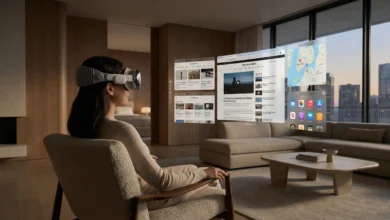
The “isolation” of VR—where a student is cut off from their peers—is being addressed by Mixed Reality (MR). New headsets like the Meta Quest 3 and Apple Vision Pro offer high-fidelity “passthrough” modes.
- The Classroom of the Future: In MR, students can see their physical teacher and classmates while 3D holograms (e.g., a solar system or a human heart) float in the shared physical space. This preserves the social dynamic of the classroom while adding the immersive layer.
- The Social Metaverse: Platforms like Engage VR enable “global classrooms” where students from different continents can meet as avatars in a shared virtual lecture hall, collaborating on projects in real-time. This fosters a sense of global connection and allows for “virtual placemaking,” where groups build shared memories in digital spaces.
Conclusion: Assessing the Long-Term Trajectory of Immersive Education
The integration of Virtual Reality into education is not a fleeting trend; it is a structural evolution in how humans acquire knowledge. The data is robust: VR engages the brain’s spatial and emotional centers, accelerates skill acquisition in technical fields, and fosters deep behavioral changes in soft skills training.
However, realizing this potential requires moving beyond the “gadget” phase. Success depends on a holistic ecosystem approach that addresses the unglamorous realities of bandwidth, sanitation, and teacher training. It requires a pedagogical shift from “consuming content” to “constructing knowledge”.
As AI and Mixed Reality mature, the friction costs will decrease, and the capabilities will expand. We are moving toward a future where the boundaries of the classroom are permeable—where a student in a rural town can perform surgery in a London operating theater, debate philosophy in a virtual Ancient Greece, or collaborate on a climate model with peers from around the globe. In this new reality, experience is the curriculum, and the world—virtual or physical—is the classroom.