Biotechnology Explained: 7 Breakthroughs Reshaping Medicine and Our Future
Unlock the incredible power of Biotechnology. This definitive guide covers genetic engineering, CRISPR, and bio-innovation in medicine, agriculture.

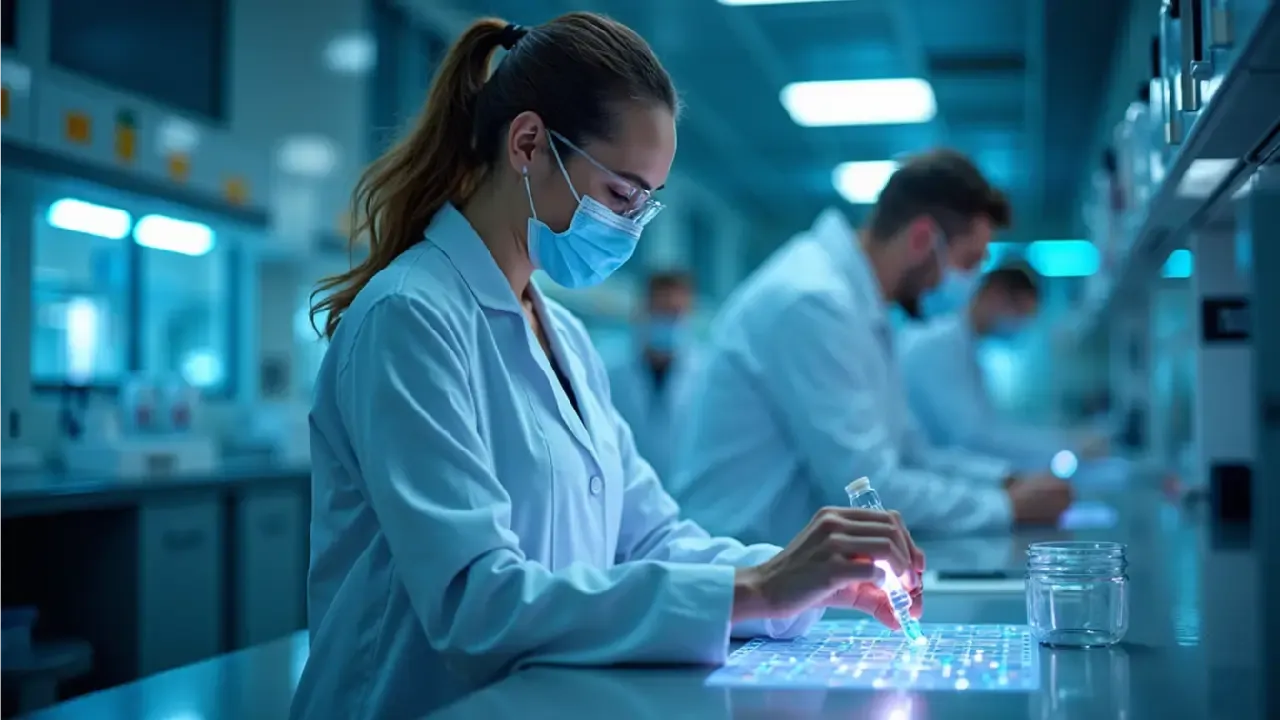
When you strip away the scientific jargon, Biotechnology is simply the application of scientific and engineering principles to the processing of materials by biological agents to provide goods and services.
Think about that for a moment: we’re taking the complex, millennia-old processes of life and directing them for our own benefit. This isn’t just about laboratory breakthroughs; it’s about applied biology making a tangible impact on our daily lives.
Whether it’s developing a specialized enzyme that makes your laundry detergent work better in cold water or engineering a cell line to mass-produce an essential therapeutic protein, the field of Biotechnology is inherently practical. It pulls knowledge from genomics, proteomics, biochemistry, and bioinformatics, synthesizing them into practical, real-world solutions. It’s a field built on the elegant premise that life itself—in its simplest forms—is the greatest machine we can ever hope to utilize.
From Ancient Fermentation to DNA Sequencing: Biotechnology’s Evolution
It’s easy to think of Biotechnology as a purely modern marvel, but its roots stretch back to the dawn of civilization. The story of biotechnology is a tale of continuous refinement—from accidental discovery to intentional design.
1. The Hidden Pioneers: Ancient Biotechnology
Our ancestors were practicing Biotechnology long before the word even existed. For nearly 6,000 years, humanity has leveraged microorganisms without knowing they existed. The production of cheese, yogurt, wine, and leavened bread all rely on the metabolic pathways of bacteria and yeast—a pure, early form of fermentation biotechnology.
Furthermore, the selective breeding of crops and livestock, intentionally choosing organisms with desirable traits to reproduce, is arguably the world’s first-ever genetic engineering project, albeit an incredibly slow one.
2. The Scientific Awakening: Classical Biotechnology
The game changed dramatically in the 19th and early 20th centuries. With the work of Louis Pasteur and his profound insights into microbiology, we began to understand why fermentation worked.
This scientific understanding allowed for the scale-up of production. This era gave us the industrial production of antibiotics like penicillin, developed during the challenges of World War II, a monumental application of microbial Biotechnology that saved countless lives. It was the moment the field moved from craft to science.
3. The Era of Precision: Modern Biotechnology
The discovery of the DNA double helix in 1953, followed by the groundbreaking development of Recombinant DNA technology in the 1970s, launched the modern era. Suddenly, scientists had the power to precisely cut, paste, and stitch together genetic material.
This breakthrough led directly to the creation of the first synthetic human insulin—produced by bacteria—a truly remarkable feat that demonstrated the raw, transformative power of Biotechnology in medicine and beyond.
Red Biotechnology: Our Lifeline for Health and Medicine
Red Biotechnology, the medical branch, is perhaps the most visible and impactful area, directly affecting human well-being. This is where scientific imagination meets life-saving reality, continually pushing the boundaries of what was once considered incurable.
1. The Drug Makers: Biopharmaceuticals and Personalized Treatment
The shift from chemically synthesized drugs to biopharmaceuticals—drugs derived from living systems—has revolutionized pharmacology. Instead of simply treating symptoms, these complex molecules, like monoclonal antibodies, target disease mechanisms with incredible specificity.
The rapid development of mRNA vaccines, a triumph of modern Biotechnology, showcased the field’s agility in responding to global health crises.
Furthermore, Red Biotechnology is driving personalized medicine, where treatments are tailored based on an individual’s unique genetic code, promising a future of highly effective and side-effect-minimized drug regimens.
2. Repairing the Code: Gene Therapy and Regenerative Medicine
Imagine being able to fix a faulty gene responsible for a debilitating disease. That’s the promise of gene therapy. The introduction of tools like CRISPR-Cas9, which acts as a highly accurate molecular editing tool, has brought this dream closer to reality.
In addition, regenerative medicine, utilizing stem cell technology, seeks to regenerate damaged tissues and organs. This could one day mean regrowing a damaged heart muscle or repairing spinal cord injuries, fundamentally changing the landscape of chronic disease management.
This work demands immense precision and care, representing the cutting edge of Biotechnology’s potential.
Green Biotechnology: The Key to a Sustainable Food Future
The agricultural application of Biotechnology is a critical global endeavor, focused on feeding a rapidly expanding population while mitigating the environmental impact of farming. This is a field deeply concerned with sustainability and resilience.
Green Biotechnology primarily involves the creation of Genetically Modified (GM) crops to introduce beneficial traits that nature either couldn’t or wouldn’t select quickly enough. These are not trivial changes; they are designed to solve existential problems. Key benefits include:
- Pest Resistance: Engineering crops to inherently resist common pests (like the Bt crops) drastically reduces the need for external chemical pesticides, benefiting both the environment and farmer health.
- Environmental Tolerance: Developing crops that can thrive under harsh, changing climates, such as those resistant to extreme drought or high soil salinity, is essential for maintaining global food security.
- Nutritional Fortification: Projects like ‘Golden Rice’, which has been engineered to produce Vitamin A, demonstrate how Biotechnology can directly address nutrient deficiency and public health crises in vulnerable populations.
White Biotechnology: Building a Cleaner, Greener Industry
White, or industrial, Biotechnology often flies under the radar but might be the most crucial player in the shift towards a truly sustainable, circular economy. It champions the use of biological processes to replace traditional, often polluting, chemical and industrial methods.
Industrial Biotechnology leverages microorganisms and their isolated enzymes to perform chemical reactions faster, cleaner, and under less severe conditions (lower heat and pressure). This makes manufacturing processes dramatically more energy efficient and less wasteful. The impact is seen everywhere:
- Sustainable Products: Creating biodegradable bioplastics and biopolymers from renewable biomass instead of petroleum-based resources.
- Clean Energy: The production of advanced biofuels like cellulosic ethanol and biodiesel from non-food agricultural waste, offering a carbon-neutral alternative to fossil fuels.
- Enzyme Use: Using bio-engineered enzymes in paper processing to reduce chlorine use, and in textiles to naturally soften fabrics, leading to a much smaller ecological footprint.
The Engine Room: Core Tools Driving Modern Biotechnology
The incredible applications we see in Red, Green, and White Biotechnology are all underpinned by a few core, revolutionary technologies that allow us to manipulate the very blueprints of life. Understanding these tools is key to appreciating the field’s power.
1. The Game-Changer: CRISPR and Gene Editing
The arrival of CRISPR-Cas9 in the 2010s was a seismic event. Unlike older, cumbersome methods, CRISPR offers a simple, incredibly precise, and cost-effective way to edit DNA.
It has been described as a “find-and-replace” function for the genome, allowing scientists to correct mutations, insert new genes, or silence faulty ones with pinpoint accuracy.
Its speed and ease of use have accelerated research across all areas of Biotechnology, from discovering new drug targets to creating hardier crops in record time. It’s the tool that promises to democratize genetic manipulation.
2. The Engineers of Life: Synthetic Biology
Synthetic Biology takes a truly engineering approach to biology. It involves designing and constructing new biological parts and devices, or redesigning existing natural biological systems. This isn’t just about fixing what’s broken; it’s about building new biological functions from scratch.
Researchers are creating custom-made microbes that can churn out complex drugs, produce sustainable chemicals, or even act as biological computing devices. It’s the ultimate goal of Biotechnology: complete, intentional control over biological function.
The Crossroads: Navigating the Ethics and Societal Impact of Biotechnology
With great power comes great responsibility. The rapid advances in Biotechnology compel us to pause and engage in serious ethical and philosophical discussions. This science is too important, and its potential impact too vast, to proceed without careful consideration.
1. The Moral Maze of Human Genetics
The possibility of editing the human germline (changes that would be passed down to future generations) presents a profound ethical dilemma. While it offers the possibility of eradicating hereditary diseases forever, it opens the door to eugenics and the concept of “designer babies,” potentially widening societal divides based on genetic enhancement.
Furthermore, ensuring equitable access to costly biotech therapies—preventing a future where only the wealthy can afford a genetic cure—is a core ethical challenge the field of Biotechnology must address head-on.
2. Environmental Safety and Regulatory Oversight
In the agricultural sector, the long-term environmental consequences of widespread GM crop cultivation remain a significant public concern. Key questions revolve around gene flow (the potential for engineered genes to transfer to wild relatives) and its impact on biodiversity.
Strong, transparent regulatory frameworks are absolutely essential to manage the risks and maintain public trust in the incredible benefits that responsible Biotechnology promises to deliver.
Looking Ahead: The Limitless Horizon of Biotechnology
If the last few decades were about mapping the genome, the next few will be about writing it. The future of Biotechnology is one defined by deep convergence, where biology merges seamlessly with data science and artificial intelligence.
1. AI and the Digital-Biological Fusion
Bioinformatics and AI/Machine Learning are becoming the field’s new powerhouse.
AI can analyze vast genomic datasets in days—work that would take human scientists decades—accelerating the discovery of new drug candidates and disease mechanisms.
This synergy means we’re moving faster than ever toward predictive diagnostics and truly individualized health strategies, making Biotechnology more intelligent and efficient.
2. Cellular Factories and Climate Solutions
The focus on sustainability will only intensify. Future Biotechnology breakthroughs will include microbes engineered to sequester carbon dioxide directly from the atmosphere, creating biological sponges to fight climate change.
We will see the rise of cellular agriculture, where meat and dairy products are grown directly from cells in bioreactors, drastically reducing land use, water consumption, and greenhouse gas emissions associated with traditional farming. This is where Biotechnology becomes the ultimate tool for global survival.
Conclusion: Standing at the Dawn of the Biotechnological Era
The journey through Biotechnology reveals a story of humanity’s unrelenting quest to master the forces of nature—a quest that has taken us from simple fermentation in ancient pots to the precise, targeted editing of the human genome. It is a staggering field, one that offers unprecedented hope for a future free from disease, starvation, and crippling pollution.
However, the path ahead requires vigilance. The true power of Biotechnology lies not just in the science itself, but in the ethical, careful, and inclusive application of its tools.
For every global citizen, understanding the principles and debates surrounding Biotechnology is no longer optional; it is essential, as this science is actively shaping the world we will all live in. Embrace the era of Biotechnology—the future is truly alive.